 Aula· Spain, city by city
Navarra
Puente la Reina
«Puente la Reina une los caminos de Santiago medievales.»Puente la Reina unites the medieval Santiago ways.
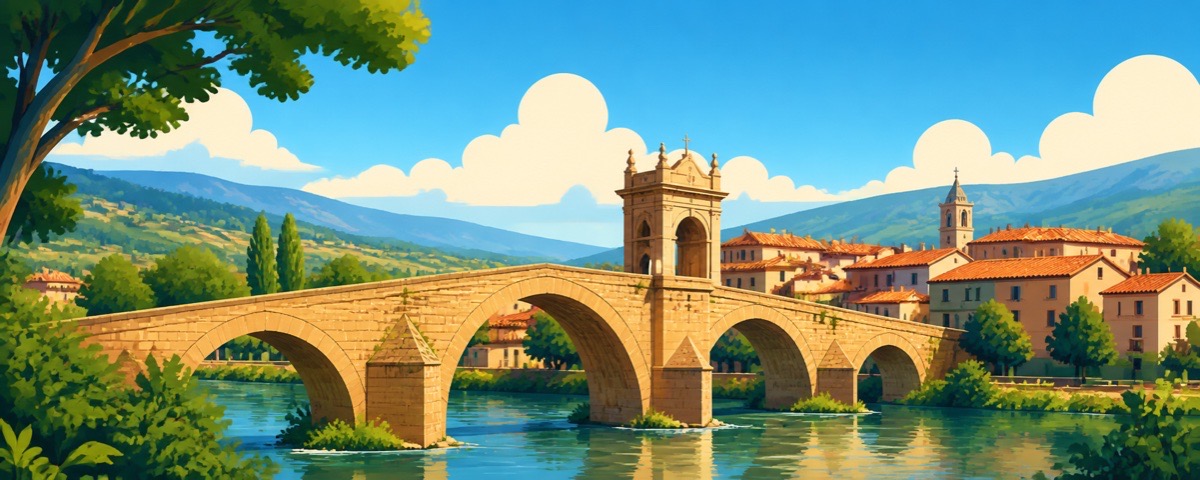
Puente la Reina stands on the banks of the Arga, twenty kilometres from Pamplona, and is the point where the French and Aragonese ways join into a single road. The Romanesque bridge from which it takes its name was built in the 11th century specifically for pilgrims.
Did you know
Here the two ways become one.
Here the two main historical branches of the French Way of St. James join before continuing towards Compostela.
How they talk in Puente la Reina
«Gares» is the Basque name for Puente la Reina. «Peregrino», «albergue» and «credencial» are everyday words because important branches of the Camino converge here.
auzolan
Community or neighborhood work done together. Basque term for a practical collaboration in which the inhabitants contribute to the good of the neighborhood or the town.
Everyday life in Puente la Reina
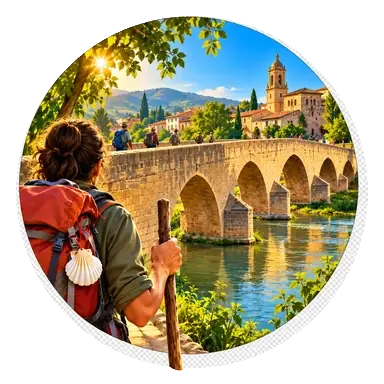
The 11th-century «puente» is still used
The six-arched bridge from the eleventh century is still the pedestrian crossing over the river: pilgrims cross it at dawn and the inhabitants to go to the other side.
«Se cruza el puente a pie.» — The bridge is crossed on foot.
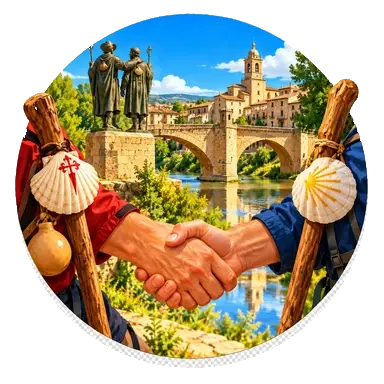
Here the two paths join
The route from Roncesvalles and the one from Somport meet right in this town, and from here on it is one: there is a monument to the pilgrim at the exact spot.
«Aquí se juntan los dos caminos.» — Here the two paths join.
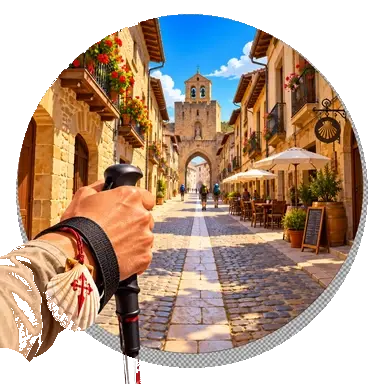
The straight road of the «Camino»
The Rua Mayor crosses the town from one gate to the other and is all medieval houses: the bars are there, and the life of the town takes place on that line.
What to eat in Puente la Reina
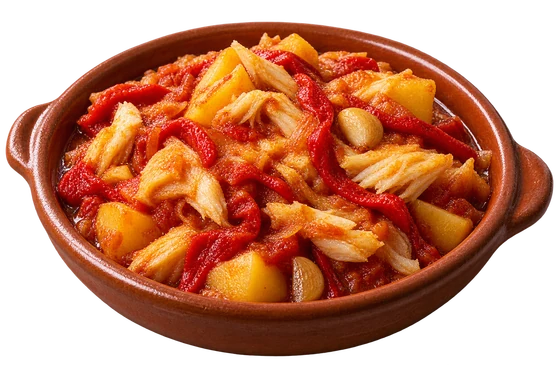
Ajoarriero
Salt cod with garlic, tomato, potatoes and peppers, cooked slowly.
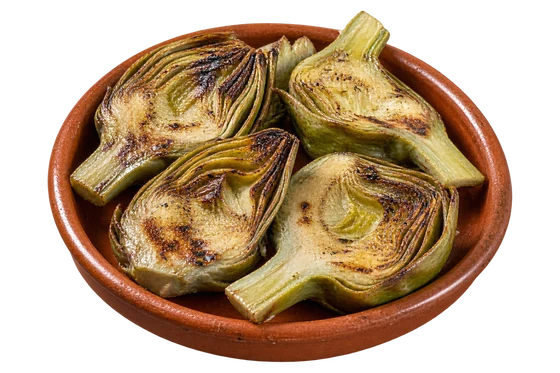
Alcachofas de Tudela
Tender artichokes from the Ribera, cooked naturally or grilled.
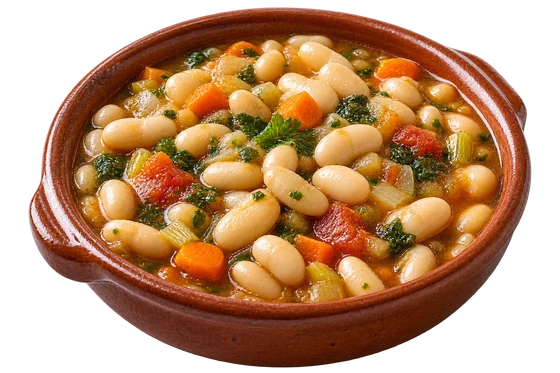
Pochas
Fresh white beans cooked with vegetables or with quail.
Festivals in Puente la Reina
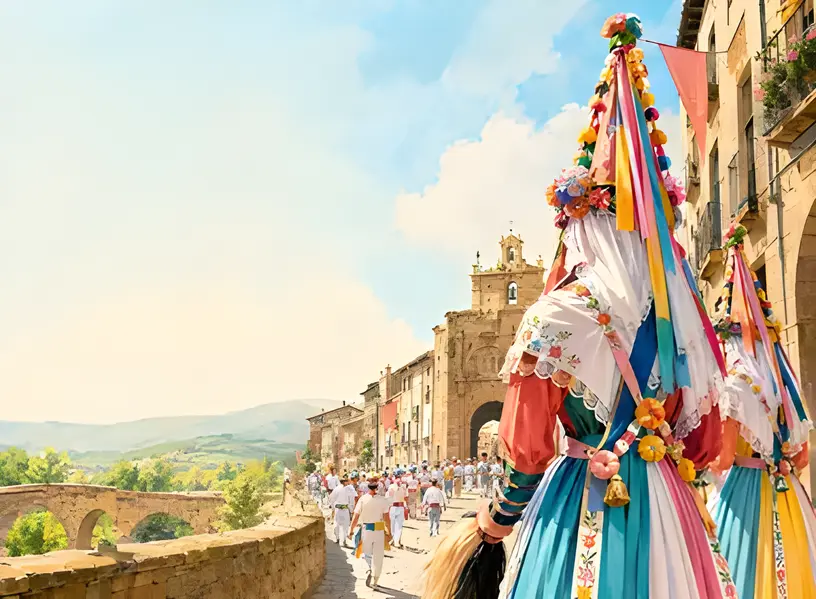
Carrera de layas
in July
People run jumping with «layas», the wooden pitchforks of a farmer: a race that no other place has.
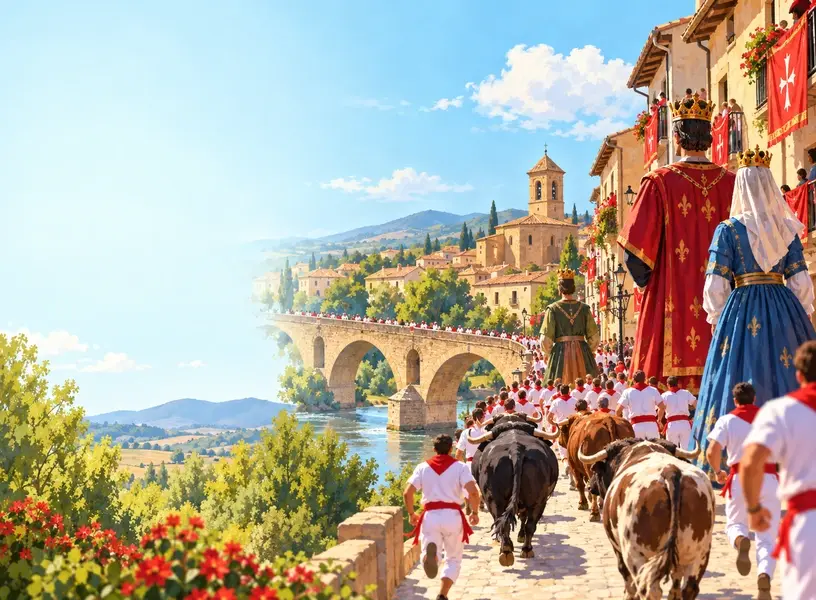
Fiestas de Santiago
around 25 July
Giants and encierros in the straight road of the Camino, which ends on the 11th-century bridge.
What to see in Puente la Reina
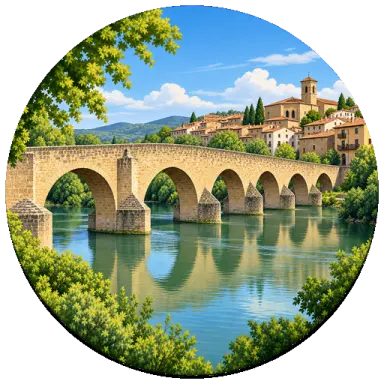
Puente románico
Six arches from the 11th century where the French and Aragonese paths become a single road.
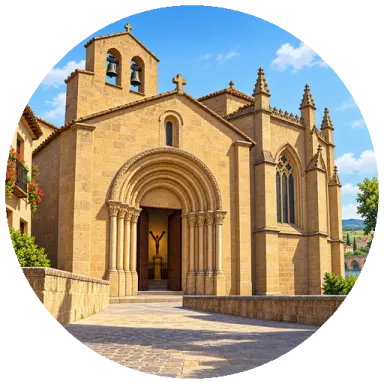
Iglesia del Crucifijo
The Y-shaped crucifix, brought from Germany, which has almost no equals in Spain.
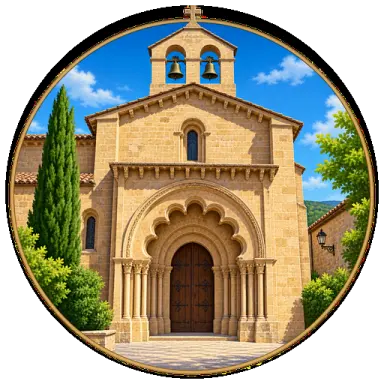
Iglesia de Santiago
Romanesque church with a Moorish-style portal, with lobes.
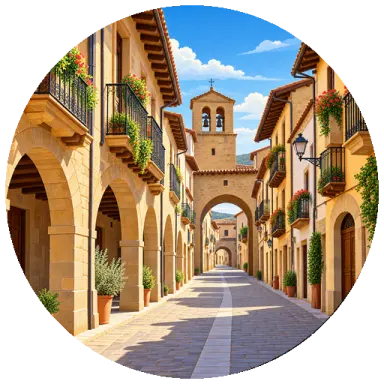
Calle Mayor
The street that crosses the whole town, from one gate to the other: it is the Camino.
Where Puente la Reina comes from
Where the two paths become one
11th century
The bridge
A queen — it is not known which one — has the Romanesque bridge built for pilgrims.
12th century
The Templars
The Order of the Temple takes the church of the Crucifijo and the hospital next to it.
12th century → today
The junction
Here the French and Aragonese paths join: from there on the road is one.
Want to learn Spanish by travelling across Spain?
In Aula every lesson is a city lighting up on the map — Puente la Reina is one of them. Two hundred lessons from A1 to C2, free, starting from your level.
Start from Puente la Reina →