 Aula· Spain, city by city
Navarra
Tudela
«Tudela es conocida por sus excelentes verduras de la huerta.»Tudela is known for its excellent garden vegetables.
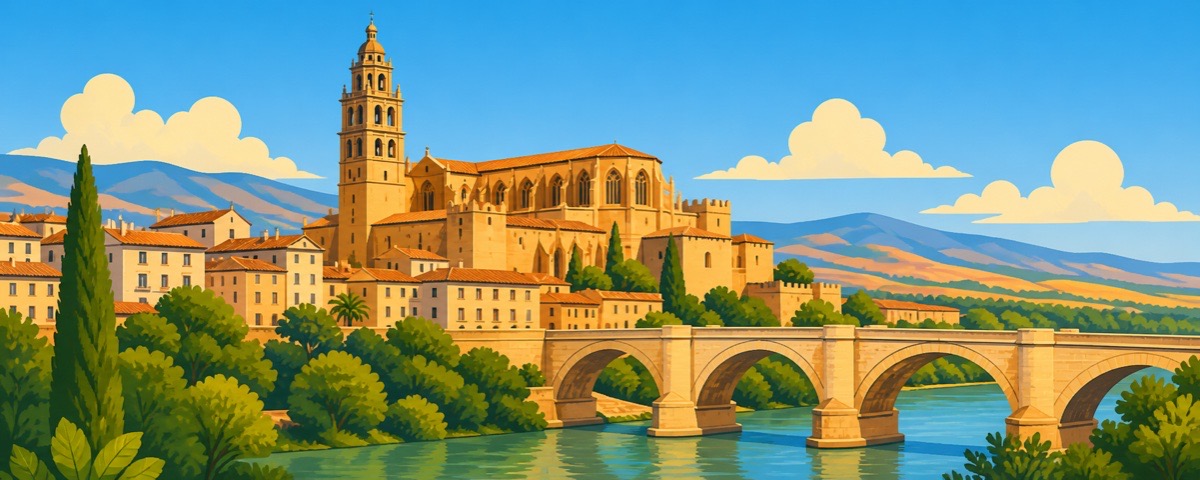
Tudela is the second city of Navarre and stands on the banks of the Ebro, in the Ribera, on a plain of irrigated vegetable gardens. It was founded by Muslims in 802—one of the few documented Spanish cities of Islamic foundation—and for four centuries, Muslims, Jews, and Christians lived there together.
Did you know
Three cultures, still visible today.
For centuries, Tudela was a crossroads of Jewish, Islamic, and Christian cultures, the traces of which are still visible in the old Jewish quarter.
How they talk in Tudela
«Ribera» here indicates the agricultural southern Navarre and has a strong identity of its own. Euskera is much less present in everyday speech compared to the north of the community.
auzolan
Community or neighborhood work done together. Basque term for a practical collaboration in which the inhabitants contribute to the good of the neighborhood or the town.
Everyday life in Tudela
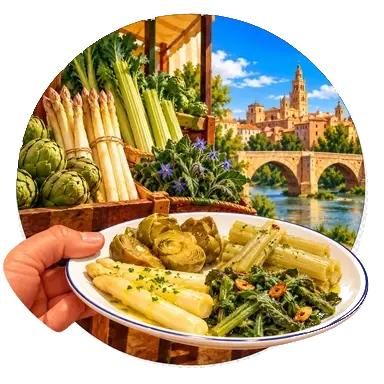
The «verduras» of the Ribera
Tudela's vegetables have a reputation that no one in Spain disputes: artichokes, cardoons, borage and asparagus are eaten on their own, in dishes that contain nothing else. In season, the menus change every week.
«Menestra de verduras de Tudela.» — Menestra of Tudela vegetables.

The «Volatín» on Holy Saturday
A puppet hanging from a rope above the square undresses while crossing from one balcony to another, and at the end it explodes: you watch from the full square, and it is the thing that the Tudelanos wait for.
«El Volatín es el Sábado Santo.» — The Volatín is on Holy Saturday.
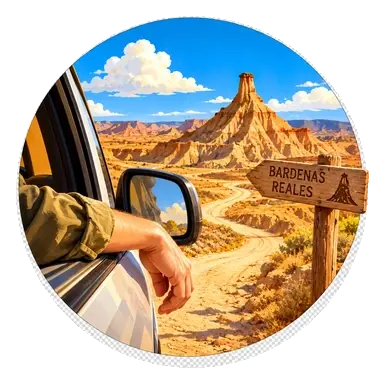
The Bardenas just around the corner
A few kilometres away begins a clay desert with badlands, without vegetation: you enter by car or bike on dirt tracks, and it is the place where you go for a walk when it is cool.
«Nos vamos a las Bardenas.» — We are going to the Bardenas.
What to eat in Tudela
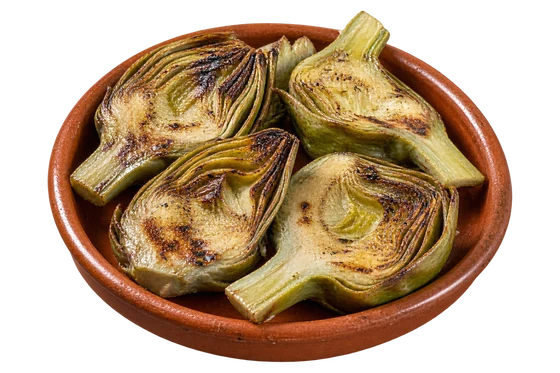
Alcachofas de Tudela
Tender artichokes from the huerta, cooked plain, grilled or stewed with clams.
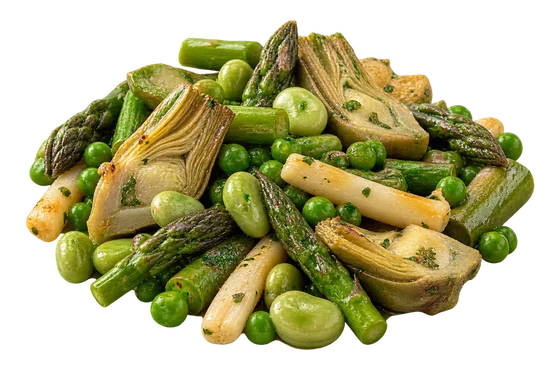
Menestra navarra
Garden vegetables stewed one by one and then put together, with ham and egg.
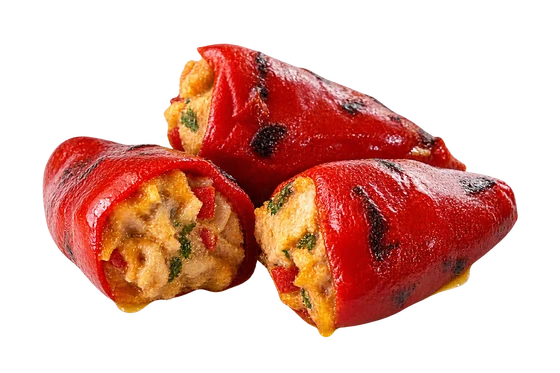
Pimientos del piquillo
Small peppers roasted on the grill and peeled by hand, stuffed with meat or salt cod.
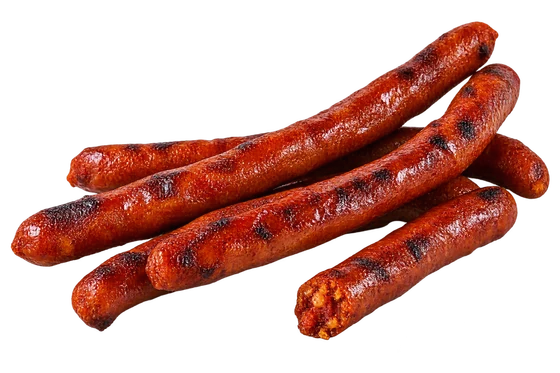
Chistorra
Thin pork sausage with paprika, roasted and served in pieces in bread.
Festivals in Tudela
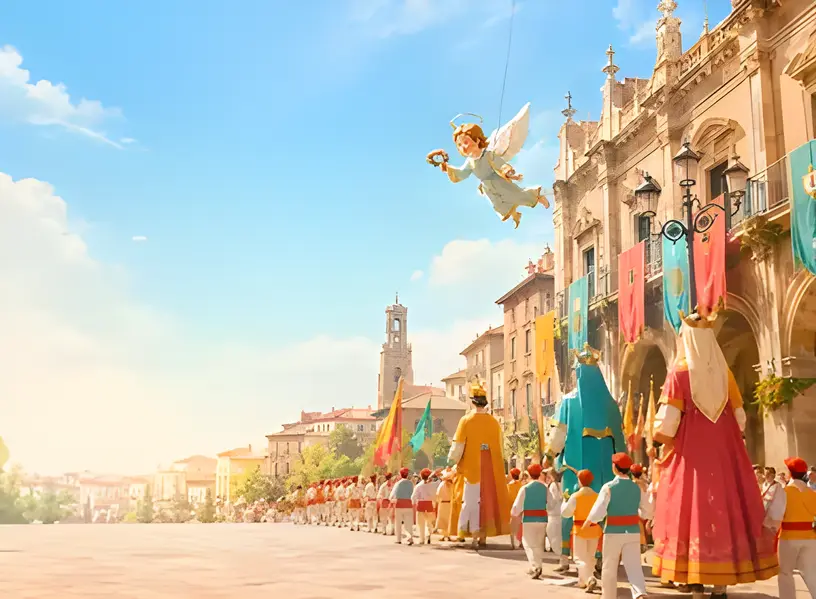
Bajada del Ángel
Easter Sunday
A child dressed as an angel descends from a rope above the square and removes the black veil from the Virgin: it has been done this way since the 16th century.
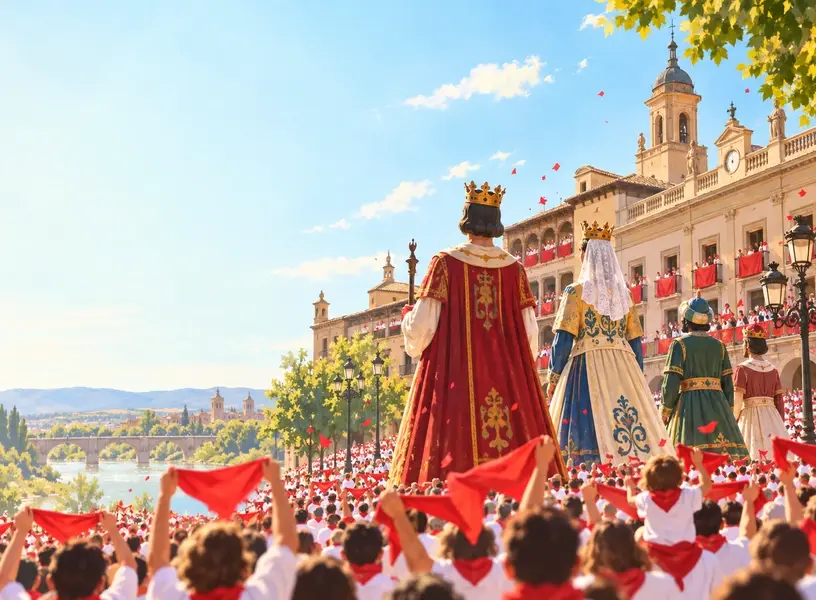
Fiestas de Santa Ana
from 24 to 30 July
Giants, red handkerchiefs and the Plaza de los Fueros full: the big festival of the Ribera.
What to see in Tudela
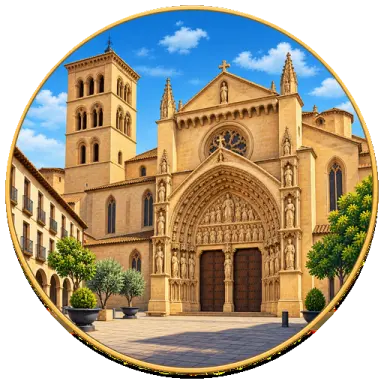
Catedral de Santa María
In the Puerta del Juicio, the damned are sculpted one by one with their punishment.

Puente sobre el Ebro
Seventeen arches for almost four hundred metres, rebuilt in different eras.
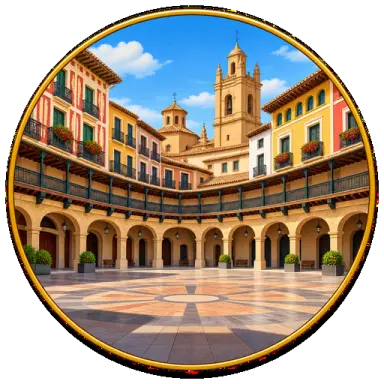
Plaza de los Fueros
It was the bullring: the painted balconies are the old stands, with the seat numbers.
Where Tudela comes from
Founded by the Muslims, one of the few in Spain
802
Tutila
The Muslims found it as a stronghold on the Ebro: it is one of the few Spanish cities of documented Islamic foundation.
9th–12th century
The three cultures
Muslims, Jews and Christians live together; the judería is among the most important in the kingdom.
1119
The conquest
Alfonso I the Battler takes it: the main mosque becomes a cathedral.
20th century → today
The huerta
Artichokes, asparagus and cardoons of the Ribera support the city's economy.
Want to learn Spanish by travelling across Spain?
In Aula every lesson is a city lighting up on the map — Tudela is one of them. Two hundred lessons from A1 to C2, free, starting from your level.
Start from Tudela →