 Aula· Spain, city by city
País Vasco
Eibar
«Eibar es una ciudad famosa por la industria metalúrgica.»Eibar is a city famous for the metallurgical industry.
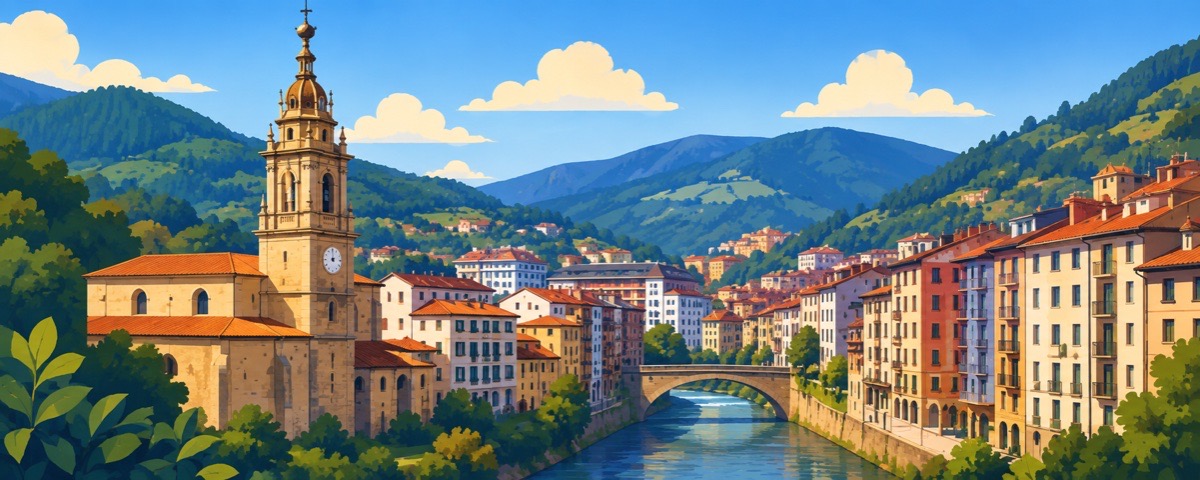
Eibar is located at the end of a narrow valley in Gipuzkoa, on the road between Bilbao and San Sebastián. For centuries it was the city of gunsmiths, and from their craft was born damascening, the art of inlaying gold threads into burnished steel; in 1937 it was bombed and almost entirely burned down.
Did you know
Twenty thousand inhabitants in top division
Despite its small size, the city's football team, Eibar, played for years in the top tier of Spanish football while playing in a very small stadium.
How they talk in Eibar
Euskera and Castilian coexist and «eibartarra» is the Basque demonym. The eibarrés dialect of Euskera has a strong local tradition and perceptible differences compared to standard batua.
agur
Greeting used to take leave and, depending on the context, also to say hello. Short greeting formula in Basque, very recognizable in the daily life of the Basque Country.
Everyday life in Eibar
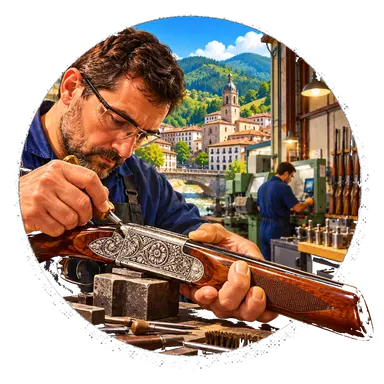
The «armerías» turned into workshops
Eibar manufactured pistols and rifles for five centuries, and from there the valley's precision industry was born: the workshops are still everywhere, often at the back of houses.
«Aquí se hacían armas, ahora máquinas.» — Qui si facevano armi, adesso macchine.
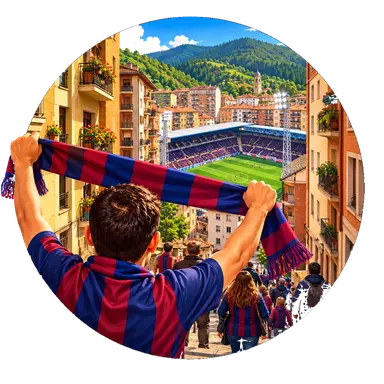
Ipurua in the middle of the buildings
The team's stadium is wedged between the houses, on a slope, with twenty thousand inhabitants and a club that has played in the first division: you can walk there from any point in the town.
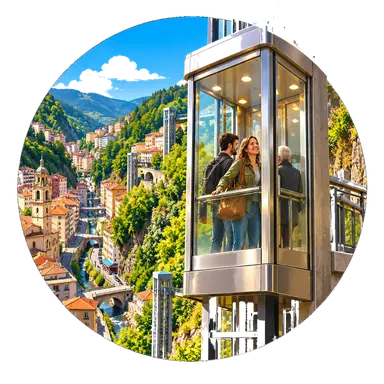
The «igogailuak», the public lifts
The town is at the bottom of a very narrow gorge and climbs up the two sides: there are public lifts to reach the upper neighbourhoods, and without them you would be walking uphill every day.
«Se sube en ascensor, si no es mucha cuesta.» — Si sale con l'ascensore, se no è troppa salita.
What to eat in Eibar
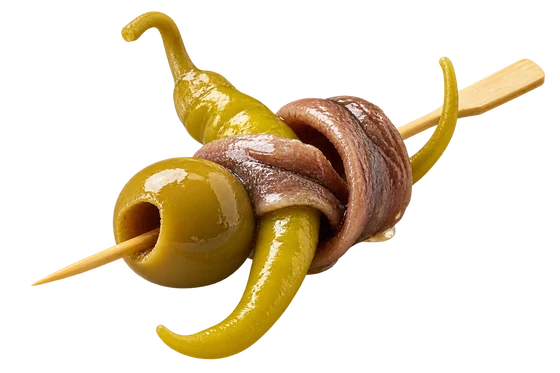
Gilda
Olive, anchovy and green chilli on a toothpick, in one single bite.
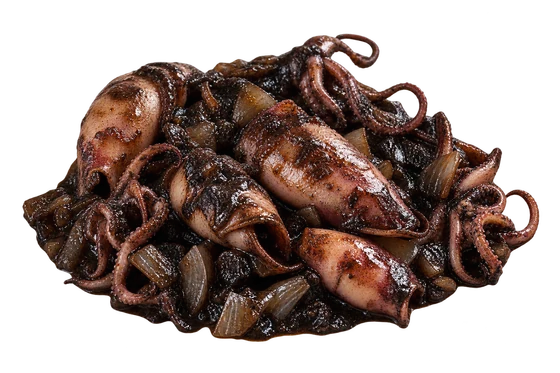
Txipirones en su tinta
Baby squid cooked in their own ink with onion, served with white rice.
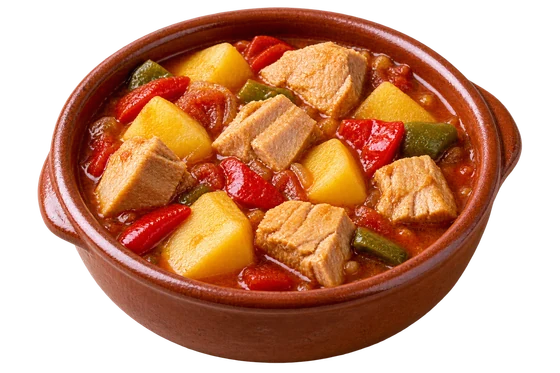
Marmitako
Tuna soup with potatoes, onion and choricero pepper.
Festivals in Eibar
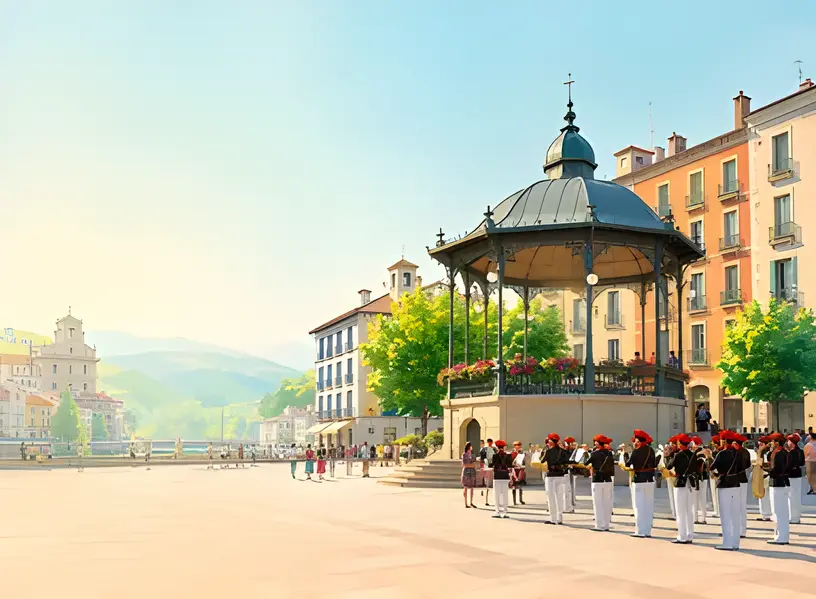
Fiestas de San Juan
from 23 to 27 June
The bonfire is lit in Unzaga, the «soka-dantza» is danced holding hands and the tamborrada goes around the narrow valley.
What to see in Eibar
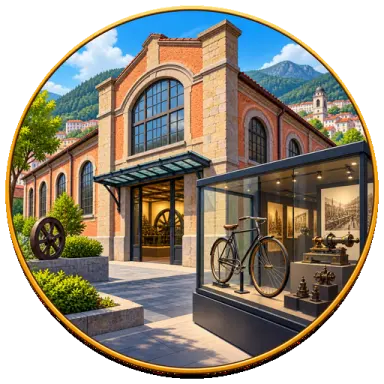
Museo de la Industria Armera
The museum of arms and damascening, the trade that made the city.
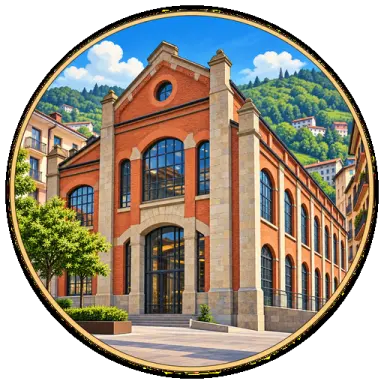
Portalea
The early 20th-century industrial building that became the city's cultural centre.
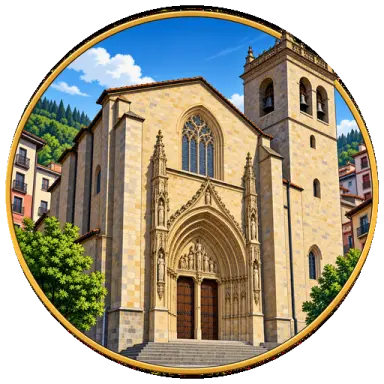
Iglesia de San Andrés
The Gothic church rebuilt after the destruction of 1937, with the portal saved.
Where Eibar comes from
From weapons to gold embedded in steel
1346
The foundation
Alfonso XI gives it the town charter in the narrow valley of the Ego.
16th–19th century
Weapons
The gunsmiths of Eibar supply the crown: the valley lives off barrels and rifle stocks.
19th century
Damascening
The same craftsmen begin to embed gold threads into burnished steel.
1937
The destruction
The city is bombed and burnt: almost nothing remains of the old centre.
Want to learn Spanish by travelling across Spain?
In Aula every lesson is a city lighting up on the map — Eibar is one of them. Two hundred lessons from A1 to C2, free, starting from your level.
Start from Eibar →