 Aula· Spain, city by city
País Vasco
Getxo
«Getxo es conocido por sus grandes palacios señoriales.»Getxo is known for its large stately palaces.
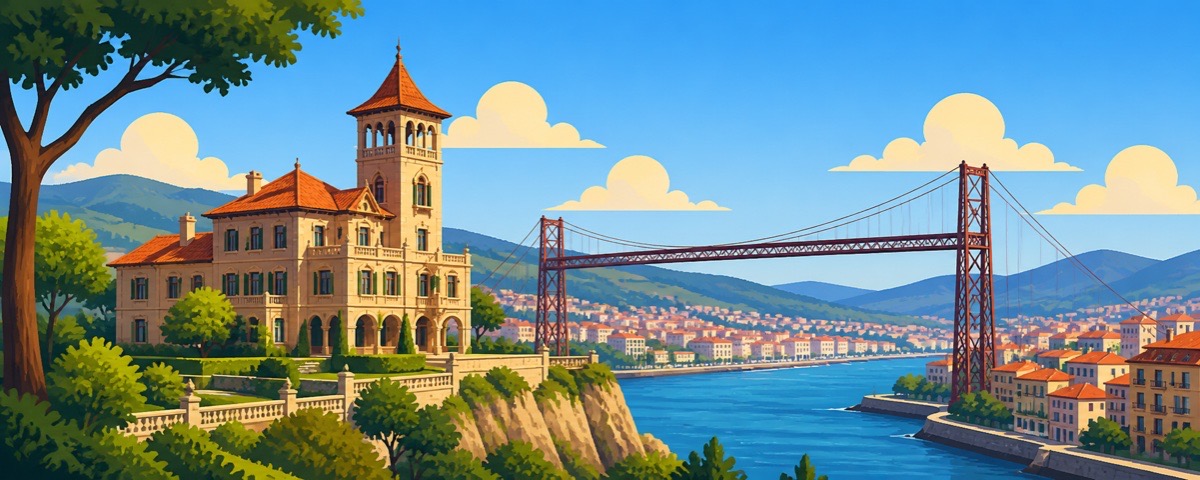
Getxo is located at the mouth of the Bilbao estuary, on the right bank, where the river enters the sea. It was a fishing village until the 19th century, when the owners of the steelworks built villas on the seafront; today it is one of the wealthiest municipalities in the Basque Country.
Did you know
The world's oldest transporter bridge
The Hanging Bridge in Getxo is the oldest transporter bridge in the world still in operation and has been declared a UNESCO World Heritage site.
How they talk in Getxo
«Getxotarra» is the Basque demonym and «Areeta» is the Basque name for Las Arenas. «Poteo» and «txikito» are common words in local social life.
agur
Greeting used to take leave and, depending on the context, also to say hello. Short greeting formula in Basque, very recognizable in the daily life of the Basque Country.
Everyday life in Getxo
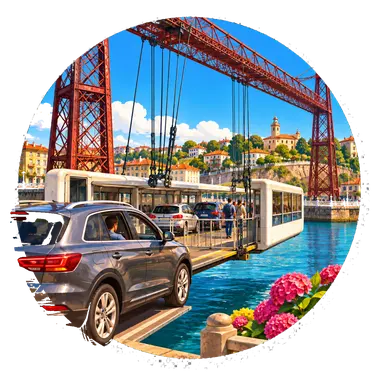
The «Puente Colgante» that transports cars
An 1893 shuttle bridge, the first of its kind in the world, carries a suspended platform from one bank to the other in a minute and a half: you board by car or on foot, and it is used to get to work.
«Pasamos con la barquilla.» — We are crossing with the shuttle.
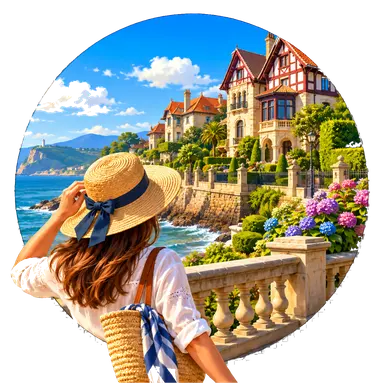
The shipowners' palaces
The Neguri seafront is a row of villas built by the families who owned the ships and steel mills: people stroll there on Sundays, looking at the gardens.
«Estas casas eran de los navieros.» — These houses belonged to the shipowners.
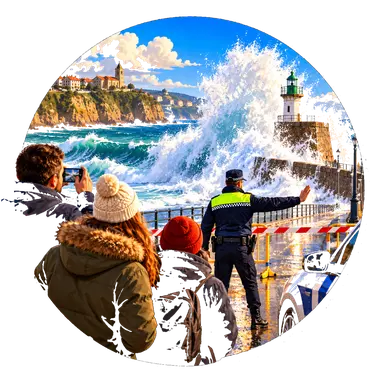
The rough sea against the wall
With winter storms, the waves go over the Arriluze pier and reach the road: people go to watch them, and the local police close the passage.
«Hoy hay mucha mar.» — The sea is rough today.
What to eat in Getxo
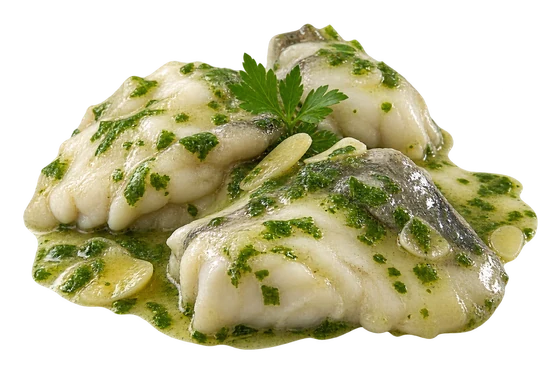
Kokotxas en salsa verde
Cod «throats» cooked slowly in oil with garlic and parsley, until the sauce thickens on its own.
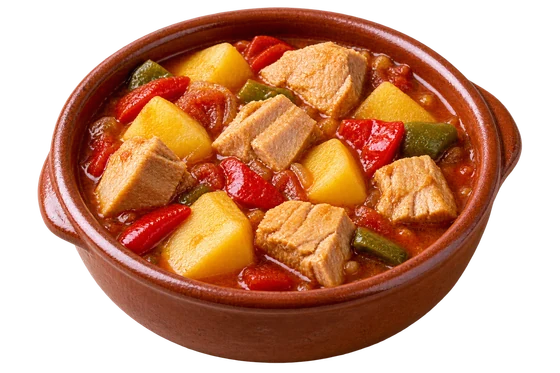
Marmitako
Tuna soup with potatoes, onion and choricero pepper.

Talo con chistorra
Small corn flour flatbread cooked on a griddle, wrapped around chistorra.
Festivals in Getxo
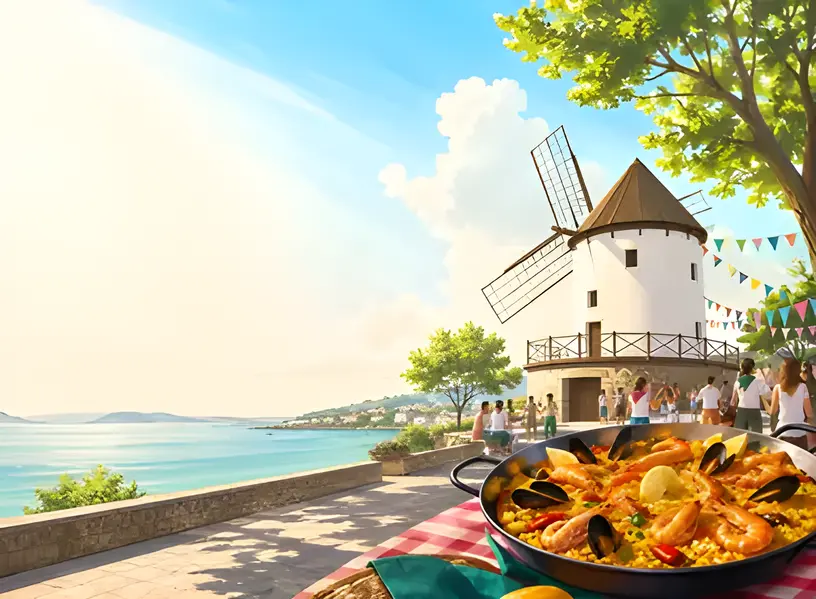
Paellas de Aixerrota
25 July
Thousands of people go up to the lawn facing the sea to cook paella in a cuadrilla, each with their own fire.
What to see in Getxo
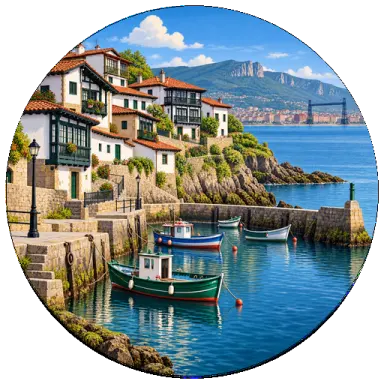
Puerto Viejo de Algorta
The old fishing port, with white houses stepped along the rock.
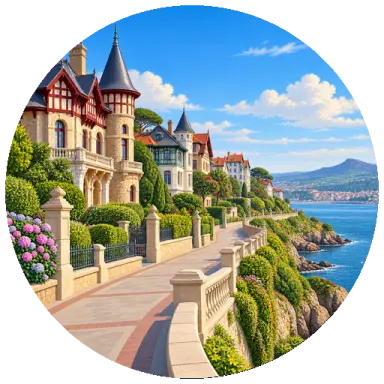
Paseo de las Grandes Villas
The seafront promenade with villas built by steel mill owners in the late 19th century.
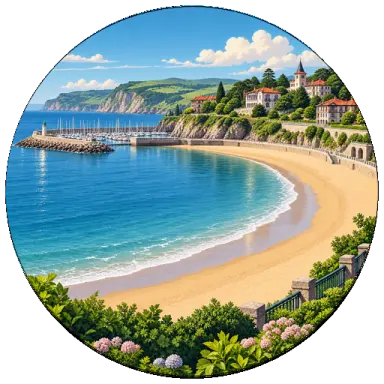
Playa de Ereaga
The bay's beach, with the sports harbour at one end and the villas behind.
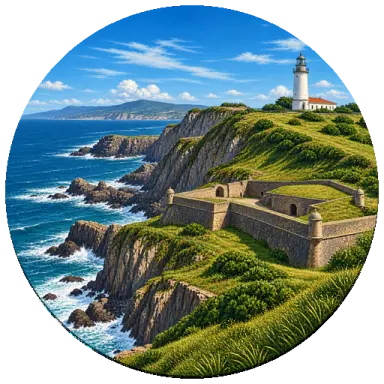
La Galea
The cliff to the north, with the 18th-century fort and the lighthouse.
Where Getxo comes from
The villas of those who got rich from iron
14th century
The village
A fishing village on the point where the ría enters the sea.
19th century
The villas
The owners of the Bilbao steel mills build their villas on the seafront.
1893
The bridge
The Puente Bizkaia opens, connecting Getxo to Portugalete without closing the ría.
20th century → today
The port
The commercial port moves here, and with it the economic life of the bank.
Want to learn Spanish by travelling across Spain?
In Aula every lesson is a city lighting up on the map — Getxo is one of them. Two hundred lessons from A1 to C2, free, starting from your level.
Start from Getxo →