 Aula· Spain, city by city
Valencia
Castellón
«Castellón produce la famosa cerámica tradicional en su provincia.»Castellón produces the famous traditional ceramics in its province.
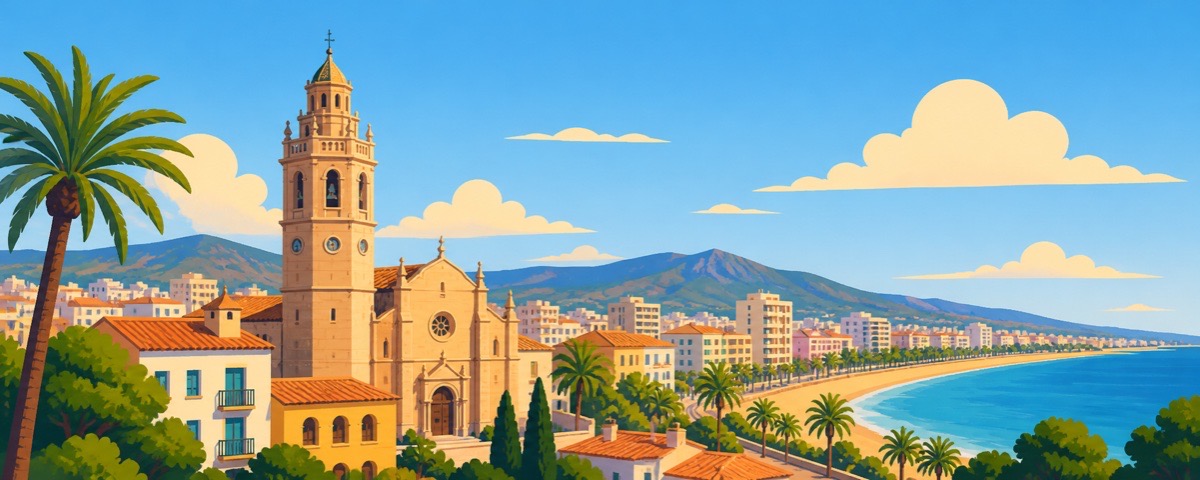
Castellón de la Plana is the capital of the northernmost province of the Valencian community, in an agricultural plain between the sea and the inland mountains. The centre is organised around the main square and the isolated bell tower called El Fadrí, while the port of Grao, four kilometres further east, functions in effect as a second city.
Did you know
The bell tower not touching church.
The bell tower El Fadrí is detached and stands completely autonomous from the main church of the city.
How they talk in Castellón
Valencian is very present and the official name is Castelló de la Plana. «Xe» and «esmorzar» belong to the regional daily vocabulary and are heard even outside formal contexts.
xe
Interjection that can express surprise, enthusiasm, joy, or irritation. Used as an autonomous exclamation or to call attention, with a value determined by the tone and the situation.
Everyday life in Castellón
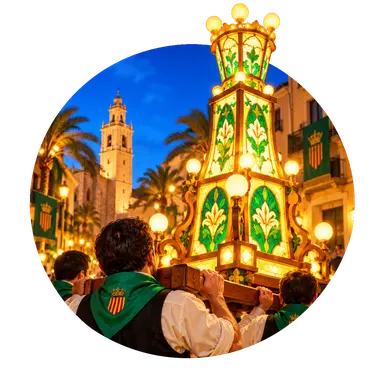
The «gaiatas» of March
At the Magdalena, light structures without fire and without smoke are carried around: they recall the sticks with which the inhabitants descended from the hill in 1251. Each neighbourhood builds one, and they are judged.
«Las gaiatas salen esta noche.» — The gaiatas are going out tonight.
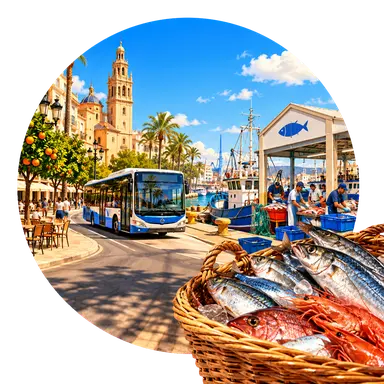
The Grao is another city
The port is four kilometres further east than the centre, and is effectively a town in its own right: it has its own market, its own fish restaurants and its own festival. People go back and forth between the two parts all day.
«Me voy al Grao a comer.» — I am going to the Grao to eat.
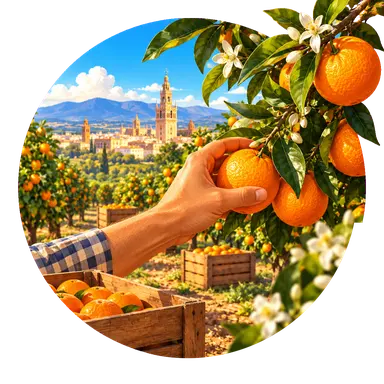
The orange groves around
The Plana is covered in citrus groves, and from November to March the morning air smells of orange blossom. Harvesting is still done by hand, and you can see the crates left at the edges of the fields.
«Huele a azahar.» — It smells of orange blossom.
What to eat in Castellón
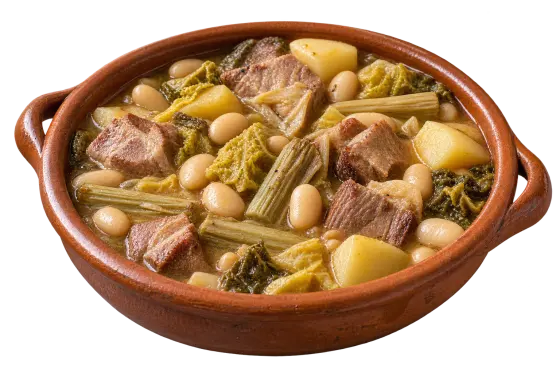
Olla de la Plana
Winter stew with pork, beans, cardoons, potatoes and cabbage, cooked slowly for hours.
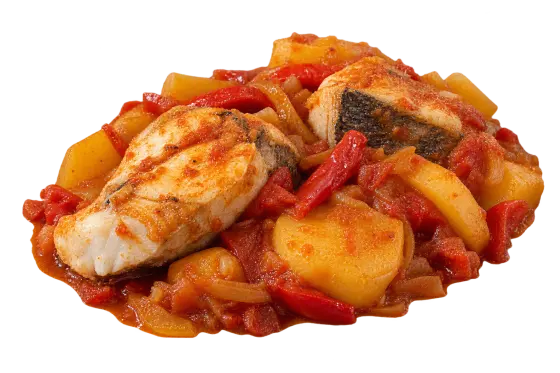
Tombet de peix
Fish and potatoes stewed with bell pepper, tomato and paprika, a dish of the fishermen of the Grao.

Pastissets
Crescent-shaped pastries filled with candied pumpkin or sweet potato, dusted with icing sugar.
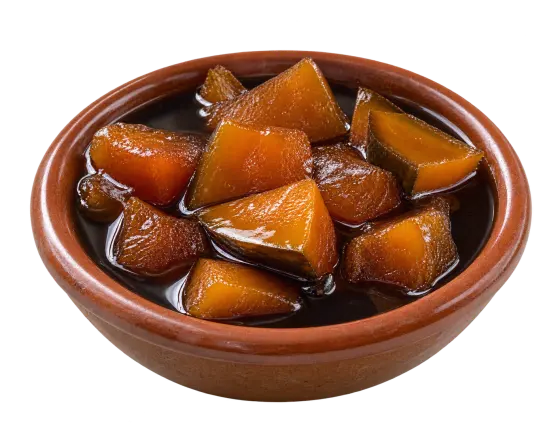
Arrop i tallaetes
Grape must cooked until it becomes a dark syrup, with pieces of candied pumpkin inside.
Festivals in Castellón

Magdalena
the third Sunday of Lent
You go up to the hermitage with the «canyes» — the green reeds with ribbons — to remember when the city descended from the mountain to the plain.
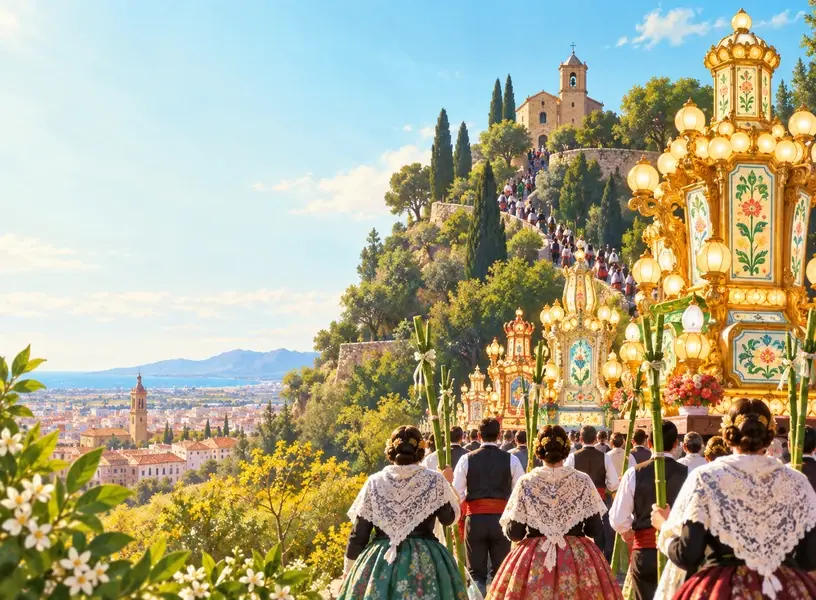
Fiestas de la Magdalena
the third Sunday of Lent, between February and March
The illuminated «gaiatas» parade at night, and at the romería you go up to the old settlement with a reed in your hand.
What to see in Castellón
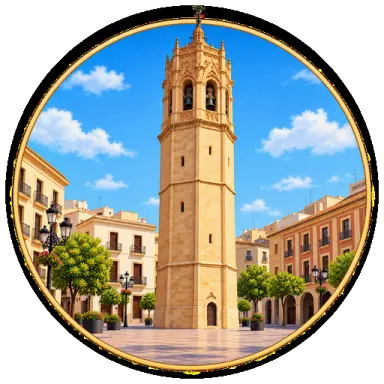
El Fadrí
Octagonal bell tower almost sixty metres high, built between 1440 and 1604. It stands in the square alone, detached from the church.

Concatedral de Santa María
Gothic church with a single nave, burnt in 1936 and rebuilt stone by stone in the post-war period.
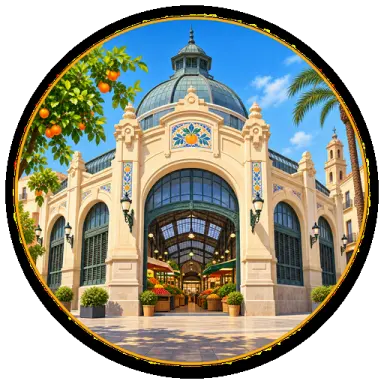
Mercat Central
The covered market, on the same square as the bell tower and the town hall. Fish arrives from the Grao every morning.
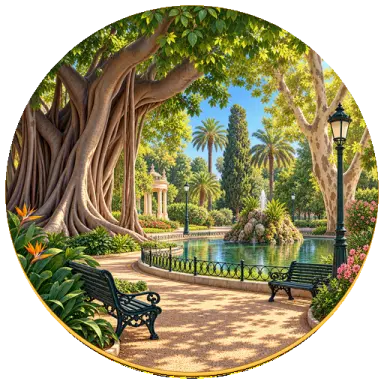
Parc Ribalta
Nineteenth-century garden between the station and the centre, with avenues of enormous ficus trees.
Where Castellón comes from
The town that descended from the hill
Iberian era
The castle
A settlement on the hill of Castell Vell, defensible but inconvenient.
1251
The descent
James I authorises the inhabitants to descend to the plain: the city is refounded next to the vegetable gardens.
16th–18th century
The Plana
The irrigated plain and the port of the Grao make the economy grow.
19th century → today
Citrus fruits
The oranges of the Plana become the province's main export.
Want to learn Spanish by travelling across Spain?
In Aula every lesson is a city lighting up on the map — Castellón is one of them. Two hundred lessons from A1 to C2, free, starting from your level.
Start from Castellón →