 Aula· Spain, city by city
Valencia
Elche
«Elche posee el palmeral más grande de toda Europa.»Elche possesses the largest palm grove in all of Europe.
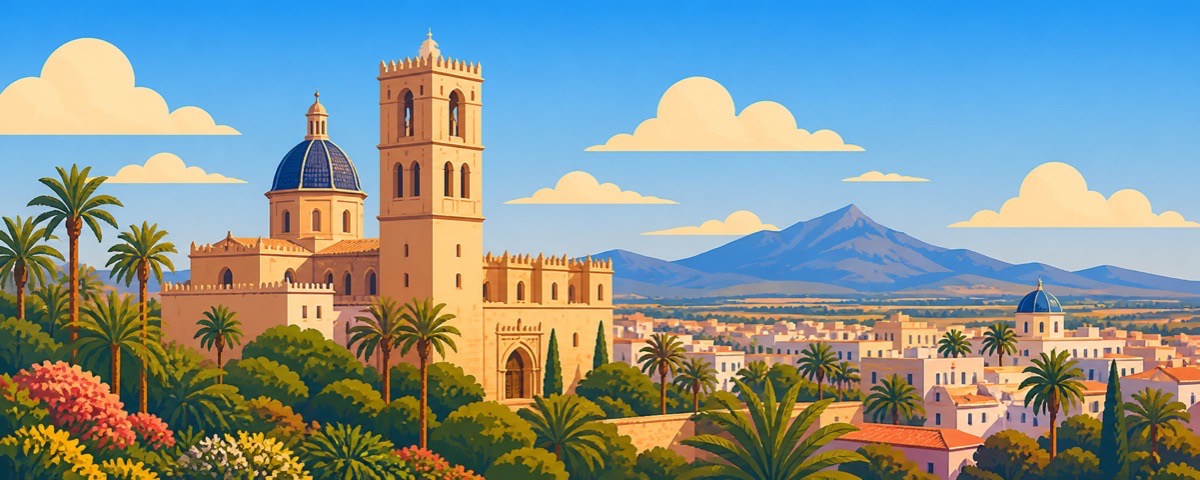
Elche rises in the inland part of the province of Alicante, around the Vinalopó river, and is surrounded by a palm grove of hundreds of thousands of plants, planted in the Islamic era to irrigate the fields. The old city tightens around the basilica of Santa María, while all around it the footwear industry that supports its economy has developed.
Did you know
The Lady, found by chance.
In 1897, the famous Dama de Elche was found in this city, a refined sculptural bust dating back to the 5th century BC.
How they talk in Elche
Here Valencian has a strong historical presence and in the local language one hears forms like «Elx», the Valencian name of the city, and «palmerar». The daily contact between Valencian and Castilian is visible above all in the names of streets, schools and institutions.
xe
Interjection that can express surprise, enthusiasm, joy, or irritation. Used as an autonomous exclamation or to call attention, with a value determined by the tone and the situation.
Everyday life in Elche
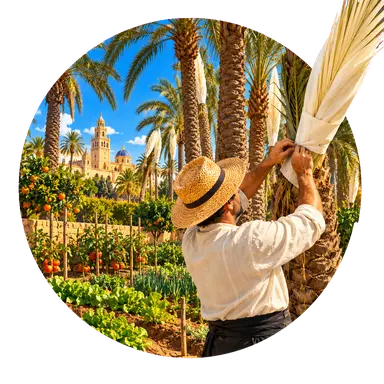
The palm grove is a vegetable garden
The palms are not a park: they are an agricultural system, and farming is still done underneath. The owners of the individual «huertos» have tended them for generations, and the cutting of the leaves for Palm Sunday is done by hand, hooding them to make them turn white.
«El huerto de palmeras es privado.» — The palm grove is private.
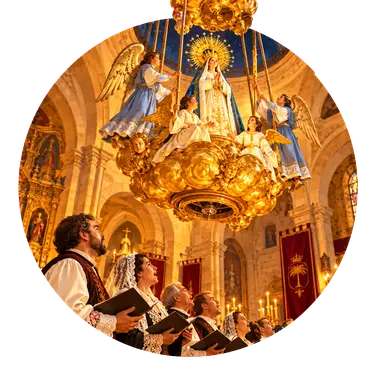
The «Misteri» of August
On 14 and 15 August inside the basilica, a sacred drama is sung that has been going on for five hundred years, with stage machinery that descends from a hole in the vault. It is sung by citizens of Elche, not actors, and seats sell out.
«El Misteri es en agosto.» — The Misteri is in August.
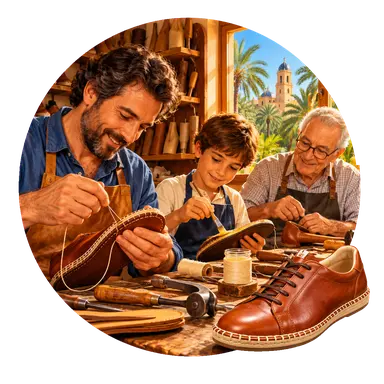
The shoes of Elche
One in three companies works in footwear, and in many homes people have sewn or glued for someone. It is a trade that is inherited, and the city has felt the crisis in the sector house by house.
What to eat in Elche
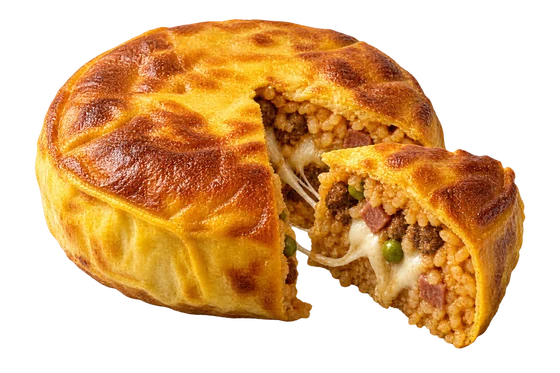
Arroz con costra
Baked rice with meat and sausages, covered by a crust of beaten egg cooked on top. It is brought to the table in the same terracotta pot.
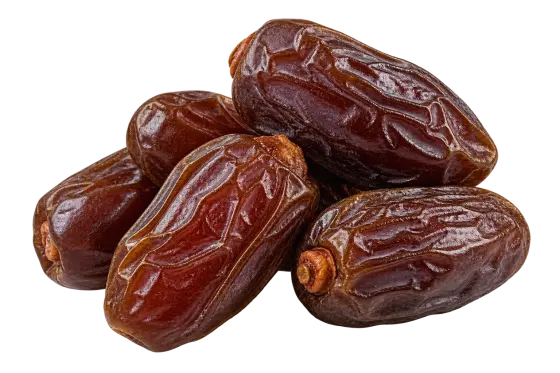
Dátiles de Elche
The dates of the palm grove, soft and dark. They are eaten alone or wrapped in bacon and baked.
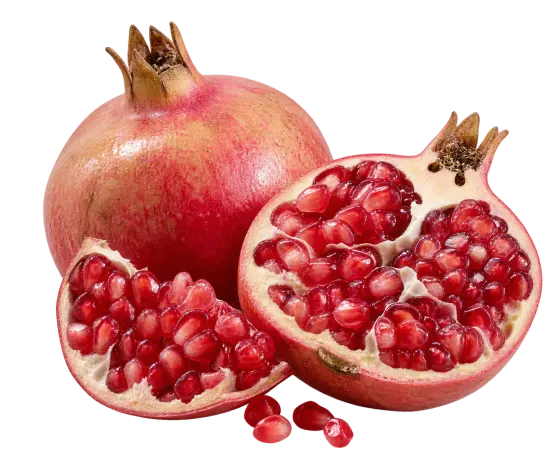
Granada mollar
The pomegranate of Elche, sweet and with tender seeds: it is eaten with a spoon, without spitting anything out.
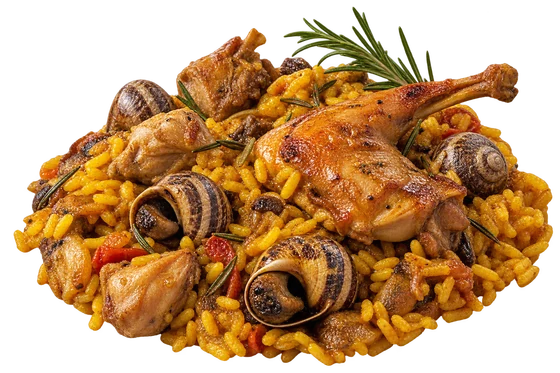
Arroz con conejo y caracoles
Dry rice with rabbit and land snails, rosemary and paprika. It is the rice of the hinterland, not the seafood one.
Festivals in Elche
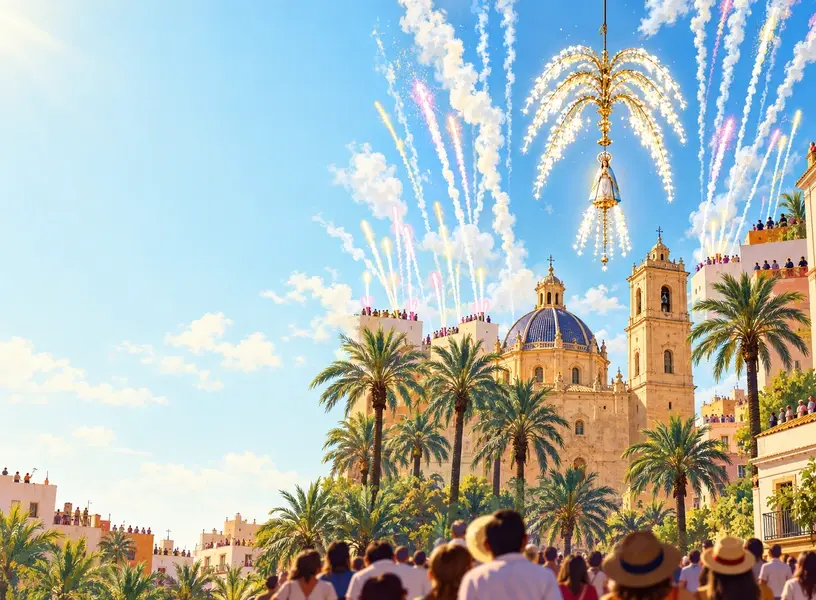
Nit de l'Albà
the night of 13 August
The sky fills with fireworks fired from the roofs of the whole city, and at the end the «Palmera de la Virgen» is lit, which descends from above.
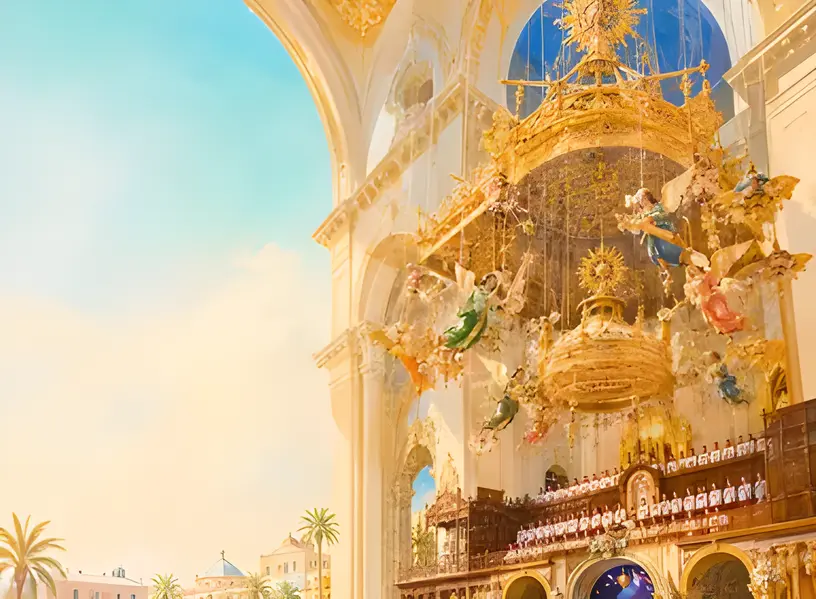
Misteri d'Elx
14 and 15 August
A sacred drama sung in Valencian inside the basilica, performed since the 15th century.
What to see in Elche
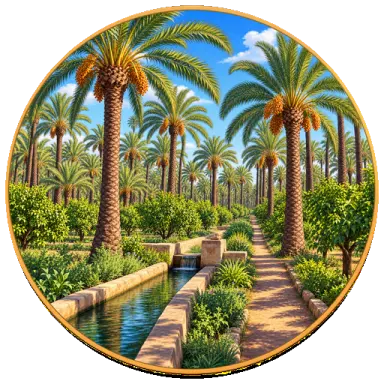
Palmeral de Elche
The largest palm grove in Europe, over two hundred thousand palms planted on a system of canals of Islamic origin. It is not a park: it is a way of farming, with vegetables in the shade of the palms.
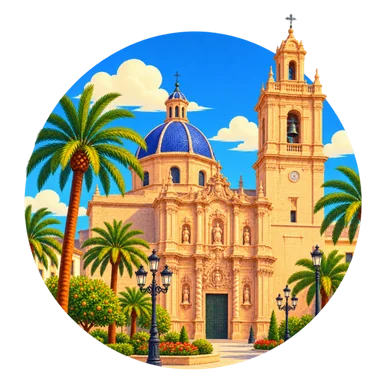
Basílica de Santa María
Baroque church of the 17th-18th century, built over the mosque. It is the theatre of the Misteri d'Elx: the vault opens and the stage machinery descends from there.
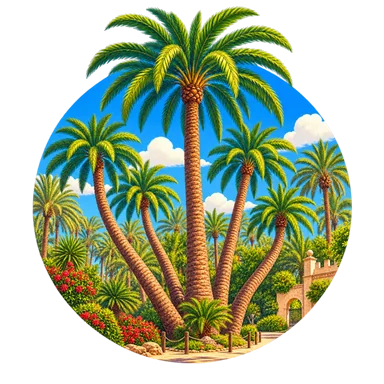
Huerto del Cura
A «huerto» that has become a botanical garden, with palms, cacti and ponds of still water.
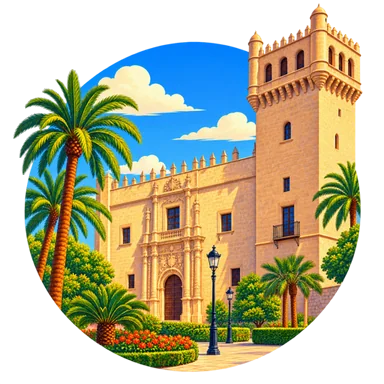
Palacio de Altamira
15th-century palace-fortress on the Vinalopó, with a square tower on the corner. It has been a palace, a prison and a factory.
Where Elche comes from
The Lady found in a field
5th century BC
L'Alcúdia
An Iberian settlement two kilometres from the centre: the Lady of Elche comes from there.
1st century BC
Ilici
Roman colony for veterans, with the port on the lagoon.
8th–13th century
Ils
The Muslims move the city and plant the palm grove to irrigate the fields.
1265
The conquest
James I takes it: the palm grove remains, and with it the way of farming.
Want to learn Spanish by travelling across Spain?
In Aula every lesson is a city lighting up on the map — Elche is one of them. Two hundred lessons from A1 to C2, free, starting from your level.
Start from Elche →