 Aula· Spain, city by city
Valencia
Gandía
«Gandía destaca por su gran playa de arena fina y el palacio ducal.»Gandía stands out for its large fine-sand beach and the ducal palace.
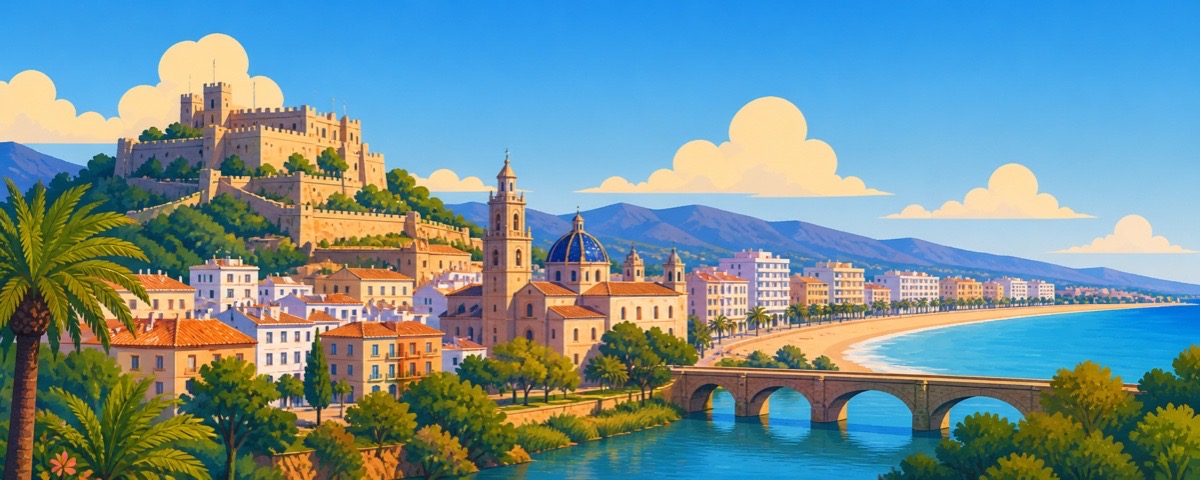
Gandía is located on the coast of the province of Valencia and is divided into two parts: the historic core inland and the beach area, which was built much later. In the old part is the Palau Ducal of the Borgias, who held their duchy here, while the Safor plain of orange groves stretches around the city.
Did you know
The palace of the Borgias.
Pope Alexander VI, born Rodrigo Borgia, and his controversial family made this ducal palace their centre of power.
How they talk in Gandía
Valencian is very alive and you hear «Gandia» without an accent in the local name, together with formulas like «bon dia» and «moltes gràcies». The coast and the hinterland use both languages with natural alternation.
xe
Interjection that can express surprise, enthusiasm, joy, or irritation. Used as an autonomous exclamation or to call attention, with a value determined by the tone and the situation.
Everyday life in Gandía
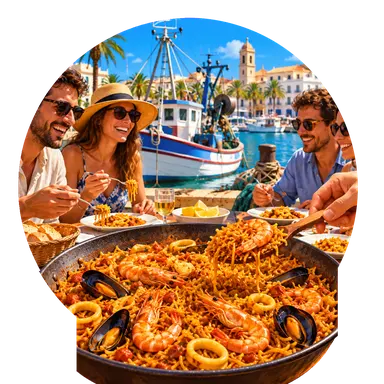
The «fideuà» was born on a boat
Legend says that a ship's cook ran out of rice and used vermicelli. It is eaten at midday, in a group, and is served in the pan, exactly like paella.
«Una fideuà para dos, por favor.» — A fideuà for two, please.
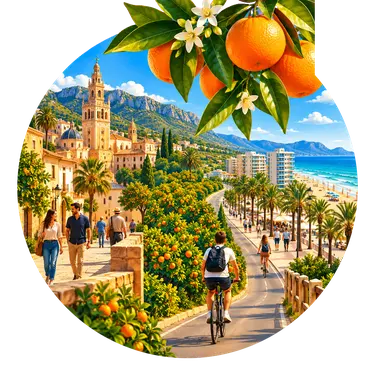
Three kilometres between two cities
The historic centre and the beach are two worlds separated by three kilometres of orange groves: in winter the former lives, in summer the latter. Those who live there commute all year round.
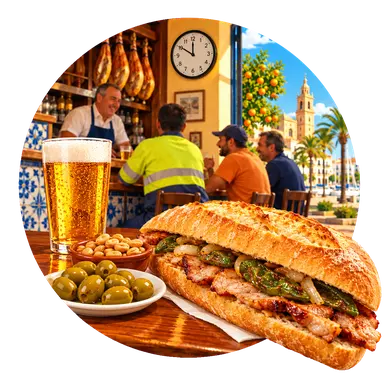
The «esmorzaret» here too
As in the whole area, in the mid-morning people stop and have a large sandwich with olives and peanuts. Bars write it on the blackboard, and at midday they don't serve it anymore.
«Nos paramos a esmorzar.» — We are stopping for a savoury breakfast.
What to eat in Gandía
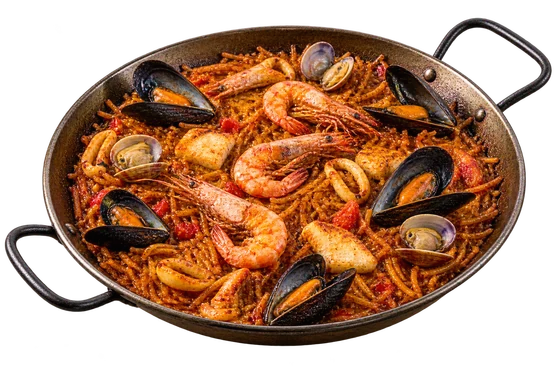
Fideuà
Like paella but with vermicelli instead of rice, with fish and seafood. It was born here, on a boat.
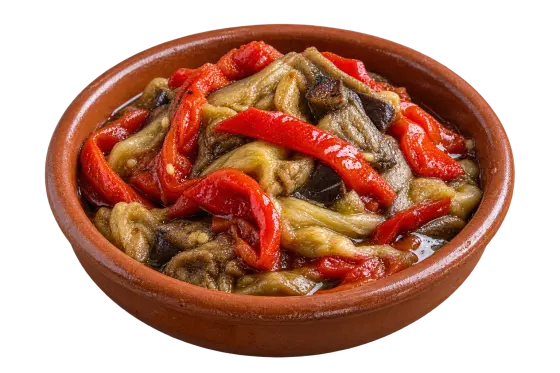
Espencat
Bell peppers and aubergines roasted in the oven, peeled by hand and cut into strips, with oil and sometimes salt cod.
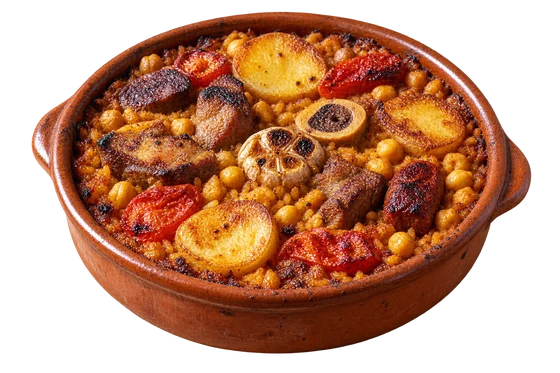
Arròs al forn
Rice baked in the oven in a terracotta pot, with chickpeas, sliced potatoes, ribs and a head of garlic in the middle.

Bunyols de carabassa
Pumpkin fritters fried and rolled in sugar, soft inside. They are made especially in October.
Festivals in Gandía
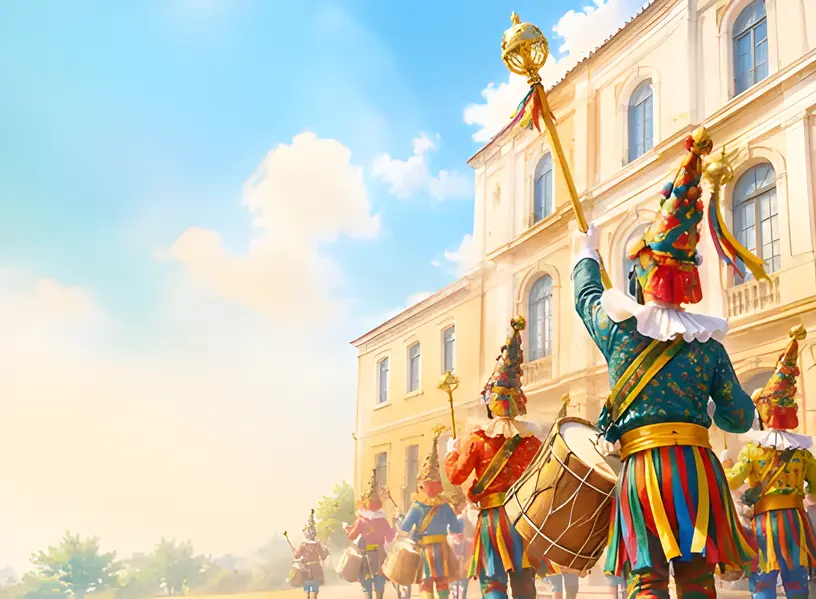
Tio de la Porra
in September
A man with a hat and a club enters the schools and chases all the children out: the holidays start there, and the festivals too.
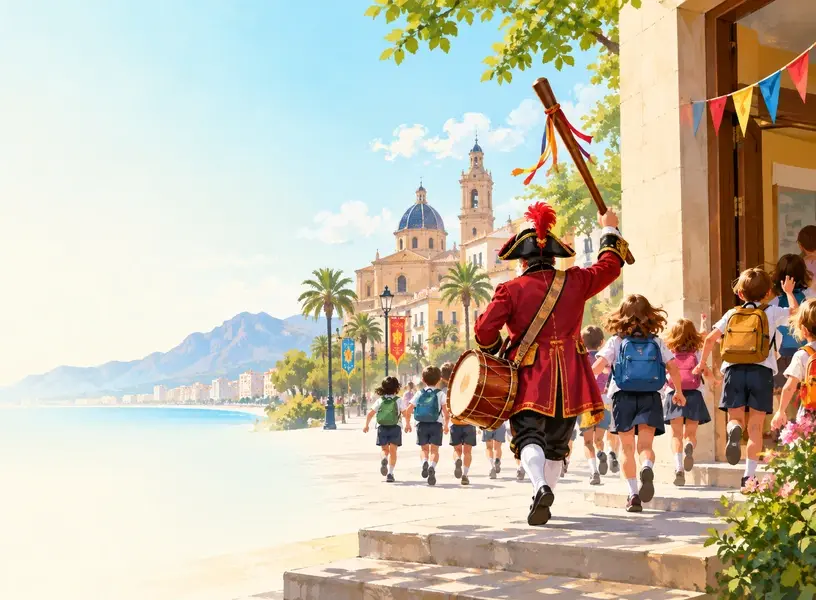
Fira i Festes
the first days of October
It opens with the «Tio de la Porra», a drummer who enters the schools and takes the children away: from that moment the lessons are over.
What to see in Gandía
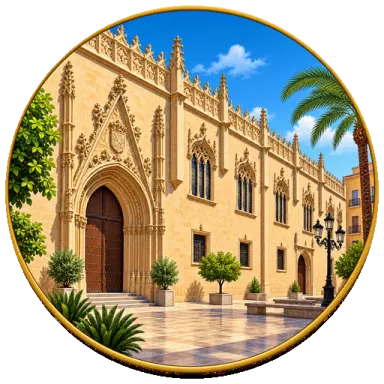
Palau Ducal dels Borja
The house of the Borgias, Gothic outside and Baroque inside: Saint Francis Borgia, the duke who left everything, was born here.
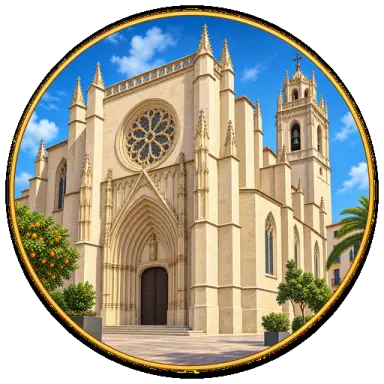
Col·legiata de Santa María
The large church of the city, Valencian Gothic, which in town they call «la Seu» as if it were a cathedral.

Platja de Gandia
Three kilometres of sand almost a hundred metres wide, three kilometres from the historic centre.
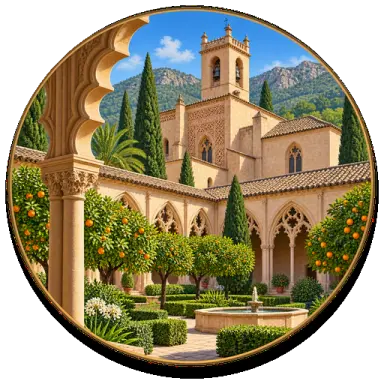
Monestir de Sant Jeroni de Cotalba
Gothic and Mudéjar monastery eight kilometres from the city, which the Borgias used as a refuge.
Where Gandía comes from
The duchy of the Borgias
Muslim era
The farmhouse
An agricultural settlement in the Safor plain, in the middle of the sugar cane.
1240
The conquest
James I takes it and incorporates it into the kingdom of Valencia.
1399
The duchy
The duchy of Gandía is born, which in 1485 passes to the Borgias.
19th century → today
Orange groves
Sugar cane gives way to citrus fruits, and the port ships them to Europe.
Want to learn Spanish by travelling across Spain?
In Aula every lesson is a city lighting up on the map — Gandía is one of them. Two hundred lessons from A1 to C2, free, starting from your level.
Start from Gandía →