 Aula· Spain, city by city
Valencia
Sagunto
«Sagunto guarda un importante castillo romano y un teatro antiguo.»Sagunto guards an important Roman castle and an ancient theatre.
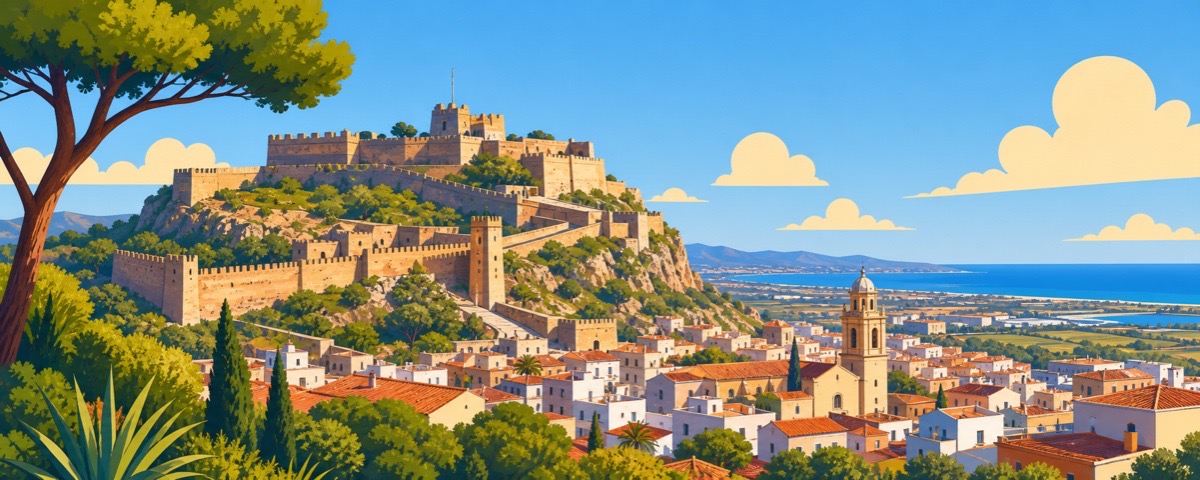
Sagunto rises north of Valencia, where a fortified hill dominates the plain and the coast. At the top, the castle walls stretch for almost a kilometre, with the Roman theatre further down, while to the east, the industrial and steel-making hub of the Puerto de Sagunto constitutes a separate part of the same municipality.
Did you know
The siege that sparked war.
The Carthaginian siege of Sagunto by Hannibal in 219 BC was the triggering event of the Second Punic War against Rome.
How they talk in Sagunto
Valencian is traditionally strong in the historic centre, while Port de Sagunt has a more Castilianised linguistic history due to the industrial immigration of the 20th century. The inhabitants themselves often distinguish between «Sagunt» and «el Port» as two urban identities.
xe
Interjection that can express surprise, enthusiasm, joy, or irritation. Used as an autonomous exclamation or to call attention, with a value determined by the tone and the situation.
Everyday life in Sagunto
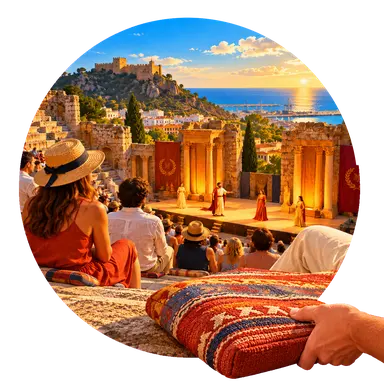
The «Sagunt a Escena» in August
In the Roman theatre, a season of performances is held in August, with the sea in the background behind the stage. You walk up from the centre, and bring a cushion because the stands are made of stone.
«Este año hay teatro en el castillo.» — There is theatre at the castle this year.

Two cities in one
The upper city with the castle and the Puerto with the blast furnace are six kilometres apart and are two worlds: one medieval and uphill, the other industrial and flat. Buses shuttle all day.
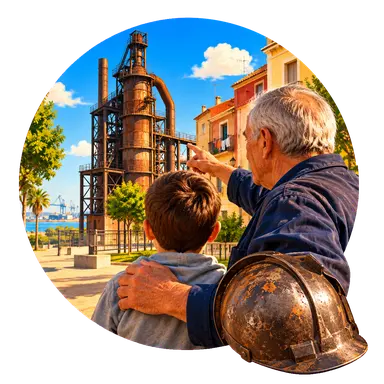
Steel in memory
The blast furnace closed in 1984 is still standing in the middle of the Puerto, and in the city almost every family has had someone who worked there. It is not a monument: it is something everyone saw working.
What to eat in Sagunto
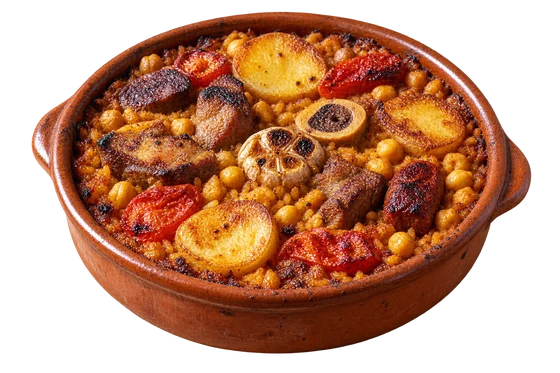
Arròs al forn
Baked rice in an earthenware dish, with chickpeas, potatoes, ribs and a head of garlic in the middle.
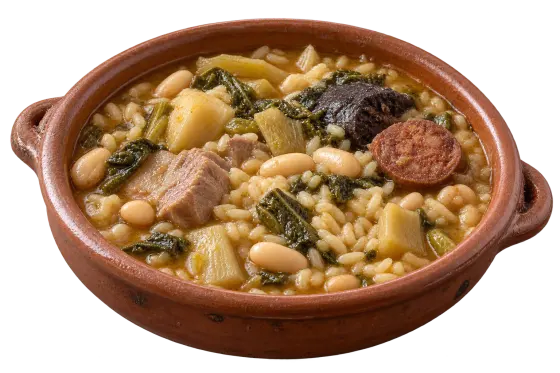
Arròs amb fesols i naps
Brothy rice with beans and turnips, cooked with the cheaper cuts of pork. It is the dish of the cold months.
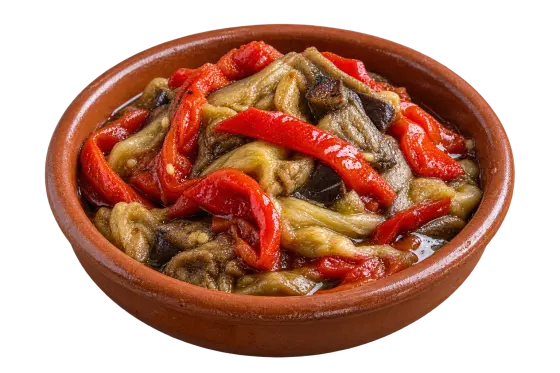
Espencat
Peppers and aubergines roasted and peeled by hand, with oil and salt.
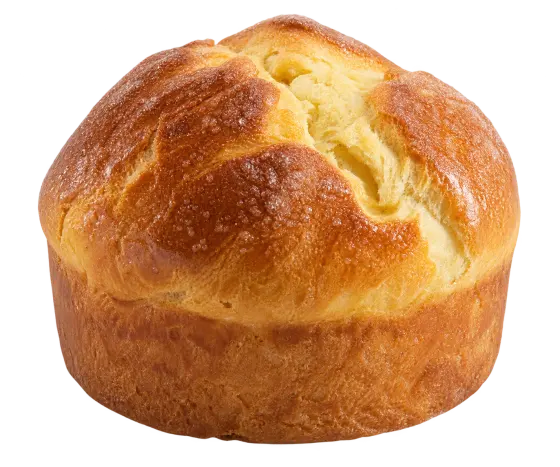
Panquemao
Tall and soft sweet bread, with a shiny sugar surface. It is eaten at Easter, with hot chocolate.
Festivals in Sagunto
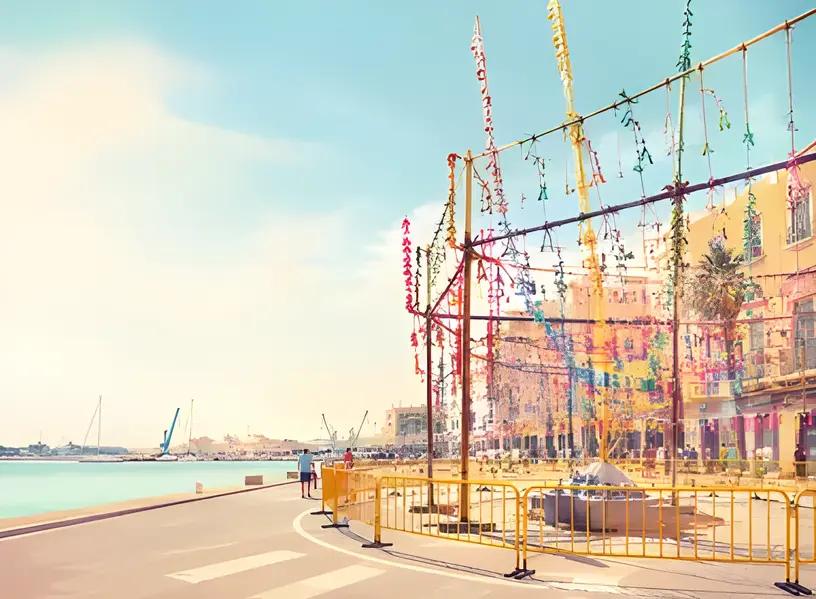
Virgen de Begoña del Puerto
in September
The patron saint of the port goes out among the houses of the steelworkers, which is what this part of the city was for a hundred years.
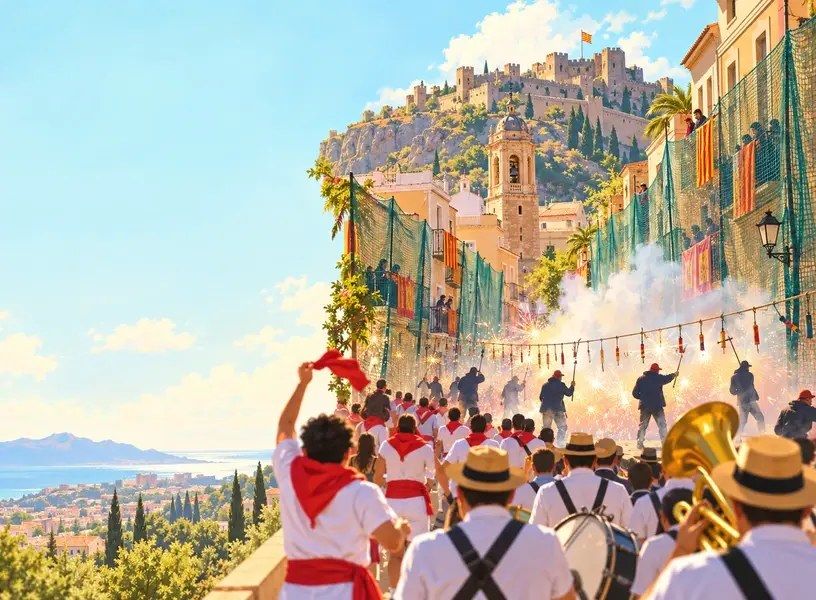
Fiestas Patronales
the second half of July
The peñas, the band and the «cordà»: fireworks are set off in the middle of the street, with houses protected by nets.
What to see in Sagunto
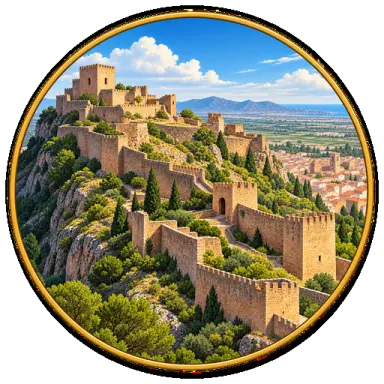
Castell de Sagunt
Almost a kilometre of walls on the ridge of the hill, divided into seven parade grounds from seven different eras.
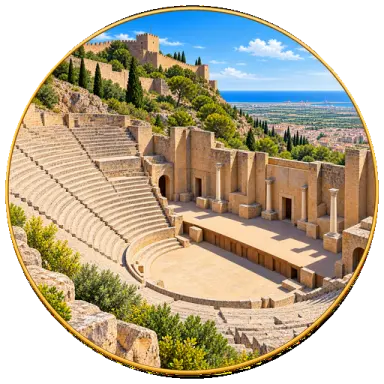
Teatre Romà
1st-century theatre carved into the side of the hill, with the stage open to the sea.
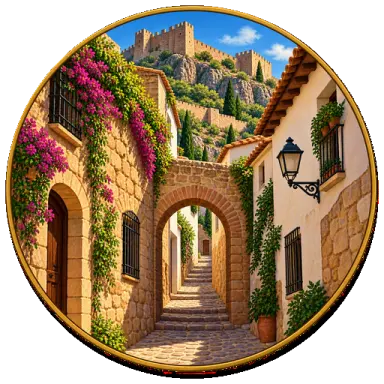
Judería
The medieval Jewish quarter, uphill towards the castle, closed by a low gate.
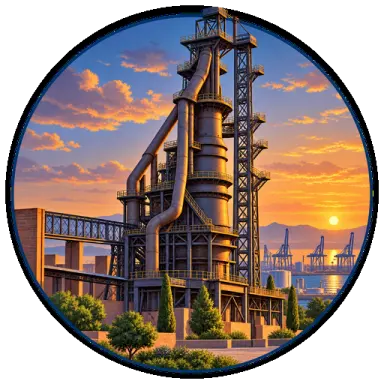
Alt Forn núm. 2
The blast furnace of Puerto de Sagunto, sixty-five metres high, preserved intact with its pipes.
Where Sagunto comes from
The siege that started a war
5th century BC
Arse
Iberian city on the hill, with its own mint.
219 BC
The siege
Hannibal besieges it for eight months: its fall sparks the Second Punic War.
1st century
Saguntum
Rebuilt by the Romans, who give it the theatre and the forum.
1902 → today
Steel
The Puerto steel complex is born: the city splits between the hill and the sea.
Want to learn Spanish by travelling across Spain?
In Aula every lesson is a city lighting up on the map — Sagunto is one of them. Two hundred lessons from A1 to C2, free, starting from your level.
Start from Sagunto →