
Valencia
Valencia
«Valencia es la cuna oficial del plato tradicional paella valenciana.»Valencia is the official cradle of the traditional dish paella valenciana.
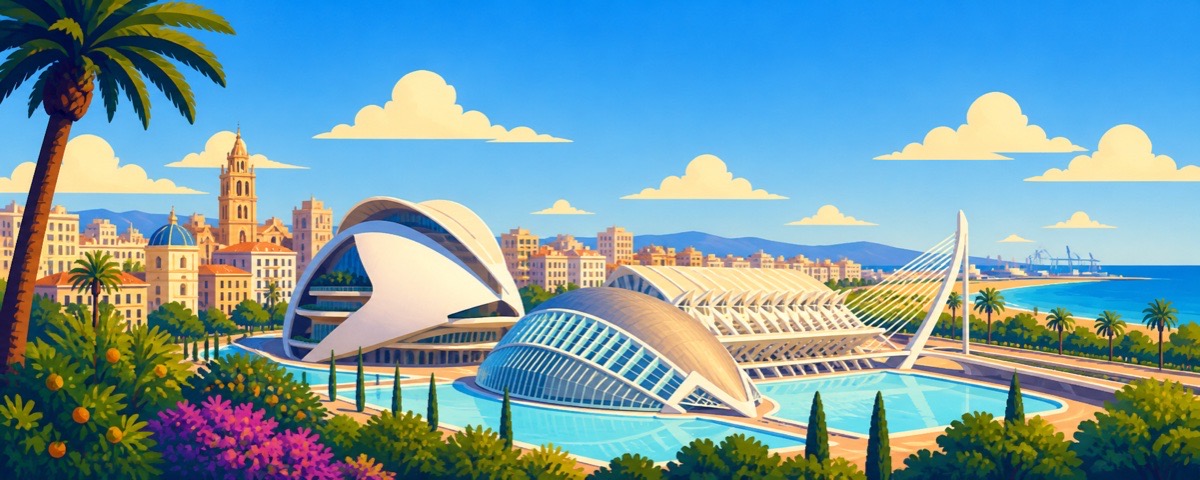
Valencia is the third largest city in Spain by population and the capital of the community that bears its name, overlooking the Mediterranean at the mouth of the Turia. The historic centre preserves the Lonja de la Seda and the towers of the ancient walls, while the riverbed, diverted after the 1957 flood, has become a nine-kilometre-long park that runs through the entire city.
Did you know
For one year it was capital.
In 1936, during the Civil War, Valencia was the capital of the Spanish Republic and hosted the government for almost a year.
How they talk in Valencia
In the city, you can hear both Castilian and Valencian; «bon dia», «gràcies» and «adéu» appear naturally on signs and in speech. «Xe» is a very recognisable Valencian interjection, used to call out or express surprise.
xe
sounds like “sheh”
Interjection that can express surprise, enthusiasm, joy, or irritation. Used as an autonomous exclamation or to call attention, with a value determined by the tone and the situation.
Everyday life in Valencia
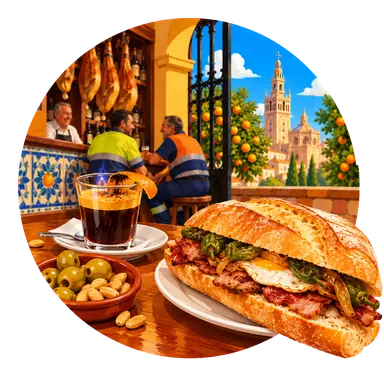
The ten o'clock «esmorzaret»
Between nine and eleven-thirty, people stop working and have the second meal of the day: a large sandwich, olives, peanuts and a «cremaet» at the end. It is not a snack: it is a serious thing, and bars have a specific menu for it.
«Un almuerzo con blanc i negre, por favor.» — An almuerzo with the black and white sausage, please.
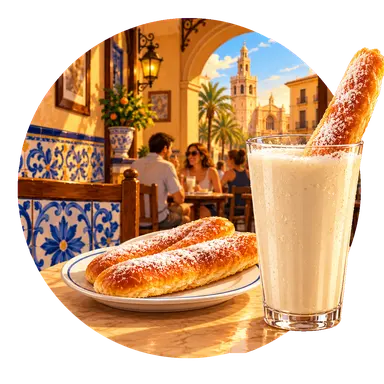
The afternoon «horchata»
Around six o'clock, people go to an «horchatería» to drink cold chufa horchata, with «fartons» for dipping. It is an afternoon snack, not a breakfast, and the historic horchaterías in the centre are over a hundred years old.
«Una horchata con fartons, por favor.» — An horchata with fartons, please.
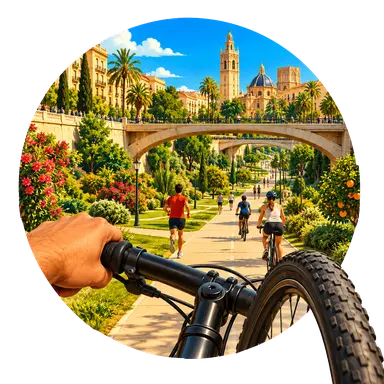
The river that is no longer there
The Turia was diverted after the 1957 flood, and in its bed the city created a nine-kilometre-long park. People run there, cycle there and pass through it to get from one side to the other: it crosses the city below street level.
«El río ahora es un parque.» — The river is now a park.
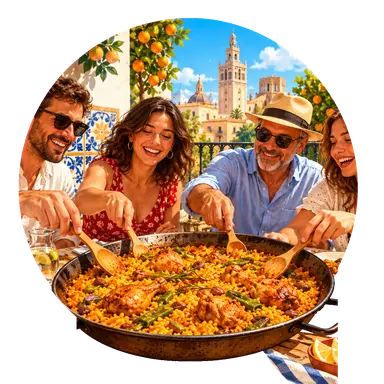
«Paella» is for midday
It is never eaten in the evening, and almost never alone: it is made on Sunday, in a group, and brought to the table in the pan in which it is cooked. Asking for it at dinner is the fastest way to be identified as a foreigner.
«La paella se come a mediodía.» — Paella is eaten at midday.
What to eat in Valencia
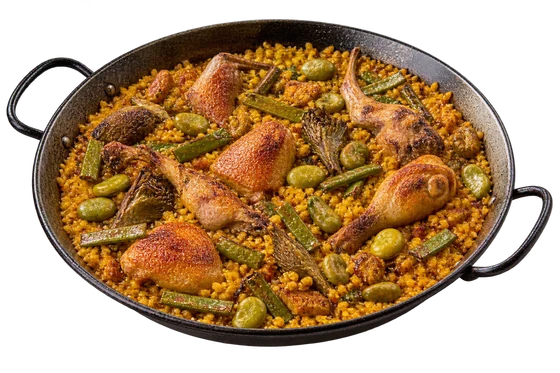
Paella valenciana
Rice, chicken, rabbit, flat green beans, «garrofó», tomato and saffron, cooked in a wide, shallow pan. The real one has no fish or chorizo, and is eaten at midday.
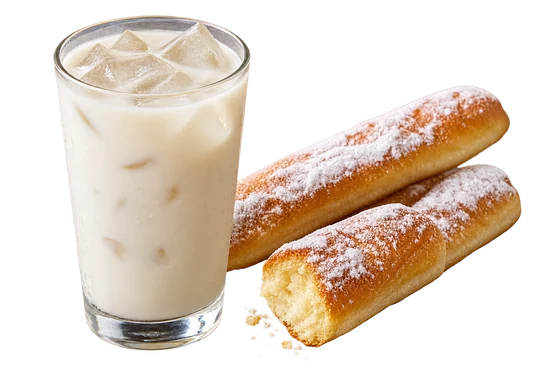
Horchata con fartons
Cold drink made of «chufa», water and sugar, served with «fartons», long and soft pastries for dipping. It is drunk in the afternoon, not at breakfast.
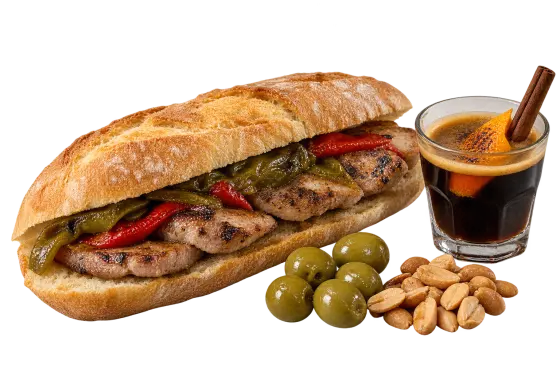
Esmorzaret
The second breakfast of the morning: a large sandwich with meat or omelette, olives, peanuts and a «cremaet» at the end. It is had between nine and eleven-thirty.
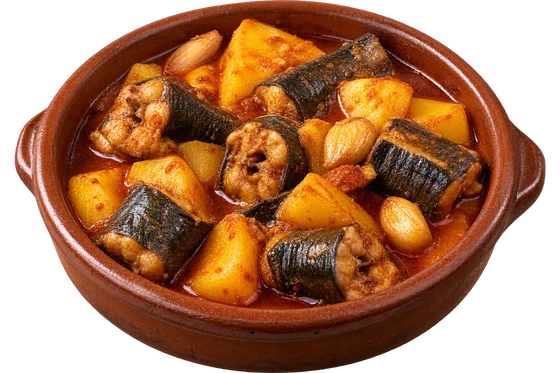
All i pebre
Eel stew with potatoes, garlic, dried pepper and paprika, born among the fishermen of the Albufera. It is eaten in the pan in which it is cooked.
Festivals in Valencia
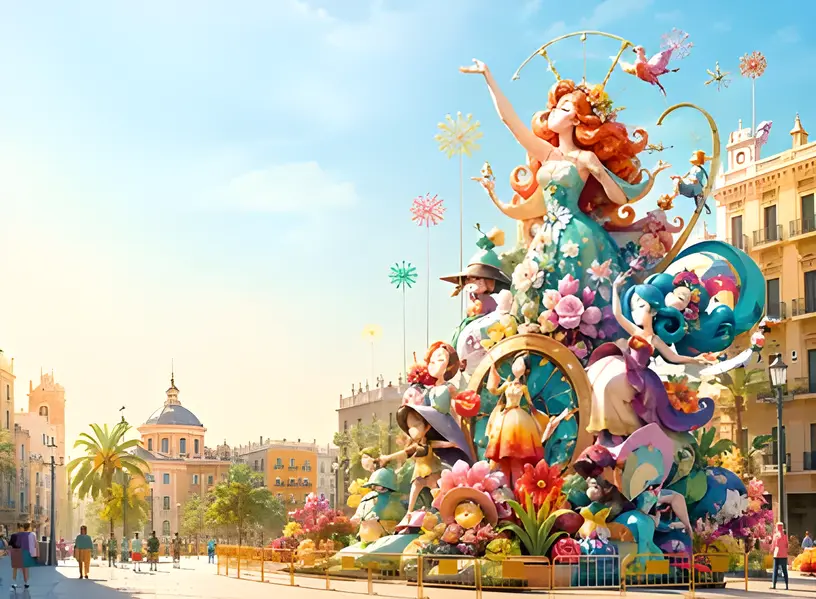
Fallas
from 15 to 19 March
Huge cardboard figures set up in the streets and burned all together on the night of the 19th.
What to see in Valencia
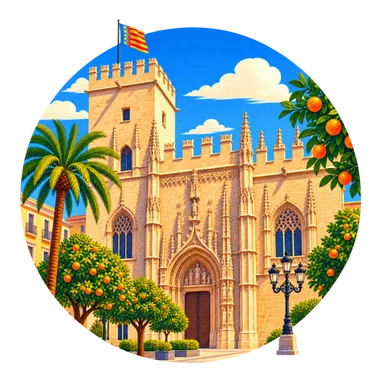
Lonja de la Seda
The silk market, built between 1482 and 1548, is one of the most important civil Gothic buildings in Europe. The hall of twisted columns was the place where Valencian merchants made contracts, standing, without any desks.
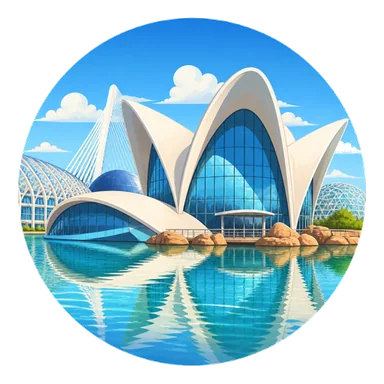
Ciudad de las Artes y las Ciencias
The complex designed by Santiago Calatrava and Félix Candela in the old Turia riverbed, opened from 1998 onwards. The science museum, oceanographic park, planetarium and opera house stand inside shallow pools of water.
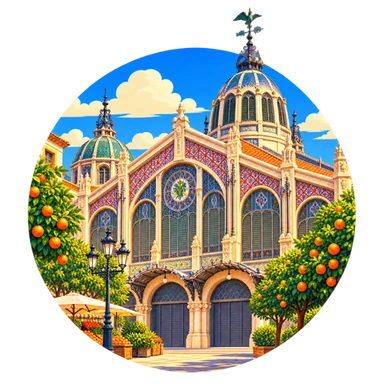
Mercado Central
Covered market from 1928, one of the largest in Europe still in operation, with almost a thousand stalls under stained glass and iron domes.
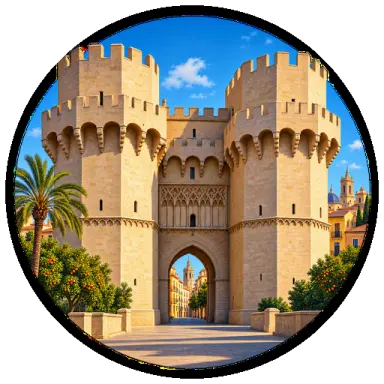
Torres de Serranos
Fortified gate from 1398, one of the two remaining of the twelve that opened the medieval walls. You can climb to the top and see the old town from above.
Where Valencia comes from
Founded for soldiers on leave
138 BC
Valentia
Decimus Junius Brutus founds it for veterans of the Lusitanian wars: «valentia» means valour.
711–1238
Balansiya
A very rich Muslim city, with the huerta irrigated by canals that are still in use.
1238
The conquest
James I takes it: the kingdom of Valencia is born, with its own laws and language.
15th century
The golden age
Silk and trade make it one of the richest cities in the Mediterranean: the Lonja dates from this time.
Born here: Joaquín Sorolla, painter.
Want to learn Spanish by travelling across Spain?
In Aula every lesson is a city lighting up on the map — Valencia is one of them. Two hundred lessons from A1 to C2, free, starting from your level.
Start from Valencia →