
Andalucía
Córdoba
«Córdoba es famosa por su gran Mezquita-Catedral.»Cordoue est célèbre pour sa grande Mezquita-Catedral.
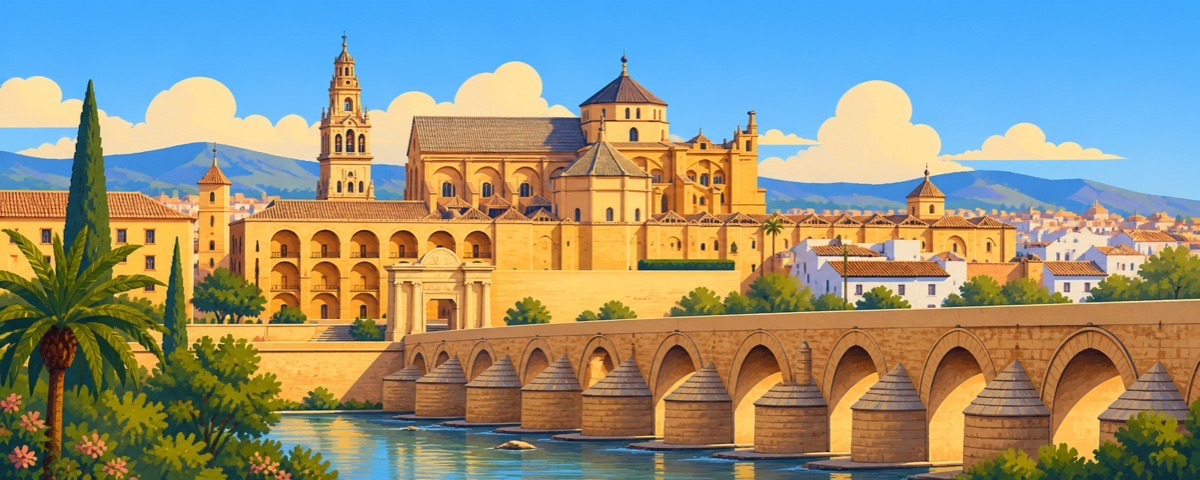
Cordoue s'élève dans la plaine sur la rive droite du Guadalquivir et fut la capitale du califat omeyyade avant de devenir une ville de province. Le centre historique est organisé autour de la Mezquita, avec un tissu de ruelles étroites et de cours intérieures qui remonte à l'implantation islamique, tandis que la ville moderne s'est développée vers le nord, au-delà de la voie ferrée.
Le savais-tu ?
En l'an mille, la plus grande
Au Xe siècle, Cordoue fut l'une des villes les plus grandes et les plus avancées du monde, centre mondial de culture et de philosophie.
Comment on parle à Córdoba
The Cordoban «ceceo»
In part of the province, the «s» is pronounced like the Castilian «z»: «casa» sounds like «caza». It is the opposite of the Sevillian «seseo», and it changes from neighbourhood to neighbourhood.
pego
A trifle or something of little importance. Colloquial use: «decir/hacer un pego» for a phrase or action considered silly.
La vie quotidienne à Córdoba
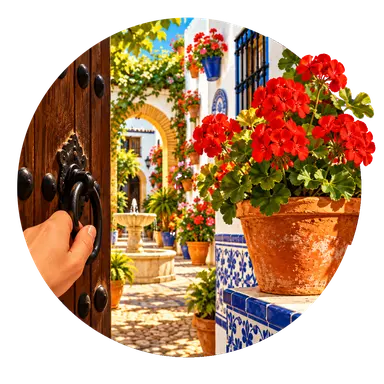
The patio is a house that opens up
In May, the private courtyards of San Basilio open to anyone: you push a gate, enter and find a family sitting among their geraniums. You don't pay anything, and the residents tell you how many years they've had that pot.
«¿Se puede pasar a ver el patio?» — Is it possible to go in and see the patio?
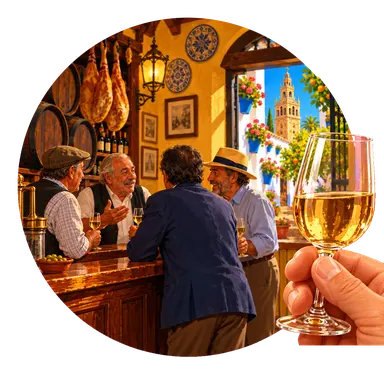
The tertulia in the tabernas
The old tabernas are not restaurants: you go in, order a Montilla at the counter and talk. The «tertulia» is a group conversation that goes on for hours, and in certain places it is always held at the same time with the same people.
«Nos quedamos de tertulia un rato.» — We're staying for a chat for a while.
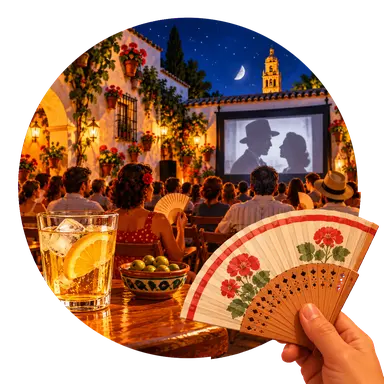
The «cine de verano» at eleven
Córdoba is one of the hottest cities in Europe: in July temperatures exceed forty degrees for weeks, and between two and seven there is no one in the street. Life moves to the night, and the open-air cinema in the patio begins when the heat drops.
«¿A qué hora empieza la peli?» — What time does the film start?
Que manger à Córdoba
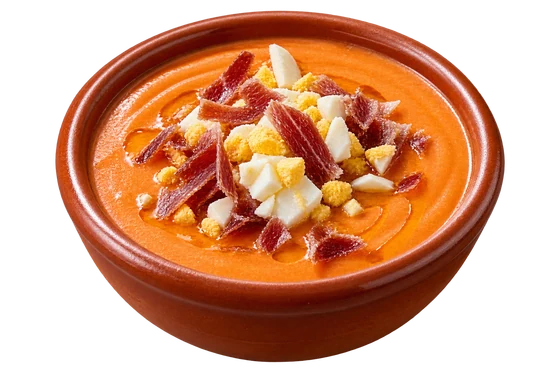
Salmorejo cordobés
A cold cream of tomato, bread, garlic and oil, thicker and more orange than gazpacho, served with chopped hard-boiled egg and «jamón».

Flamenquín
A roll of pork loin wrapped in Serrano ham, breaded and fried, cut into slices.
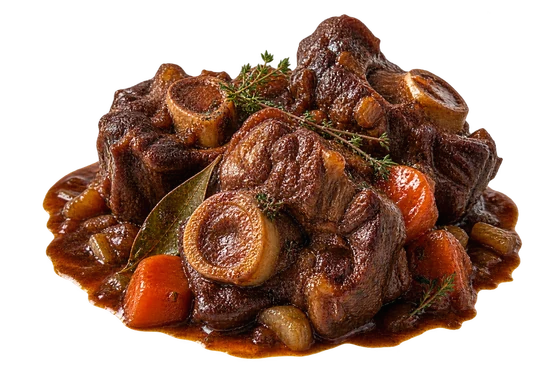
Rabo de toro
Oxtail stewed for a long time in wine until it falls off the bone, served with potatoes.
Les fêtes à Córdoba
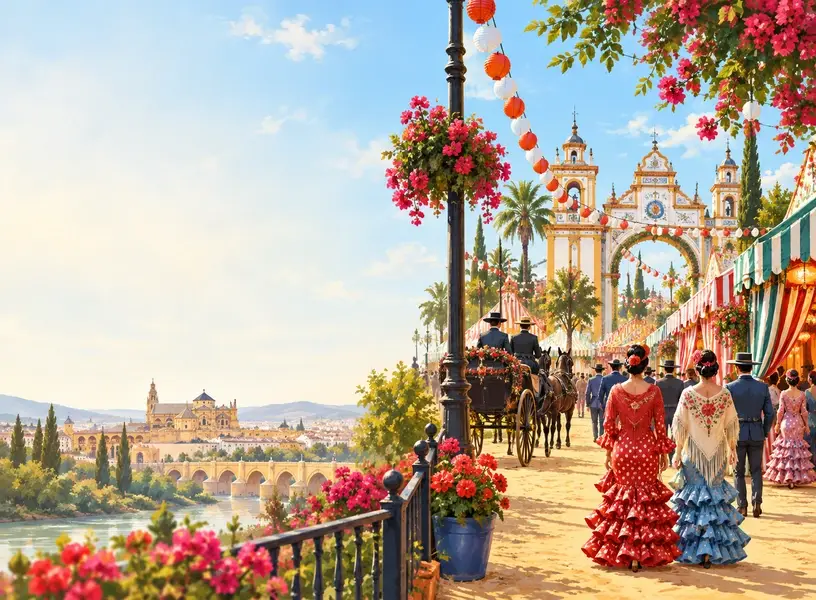
Feria de Nuestra Señora de la Salud
the last week of May
The «casetas» of the Arenal, the horses and the flamenco dresses: it comes right after the patios, and the city has two festivals in one month.
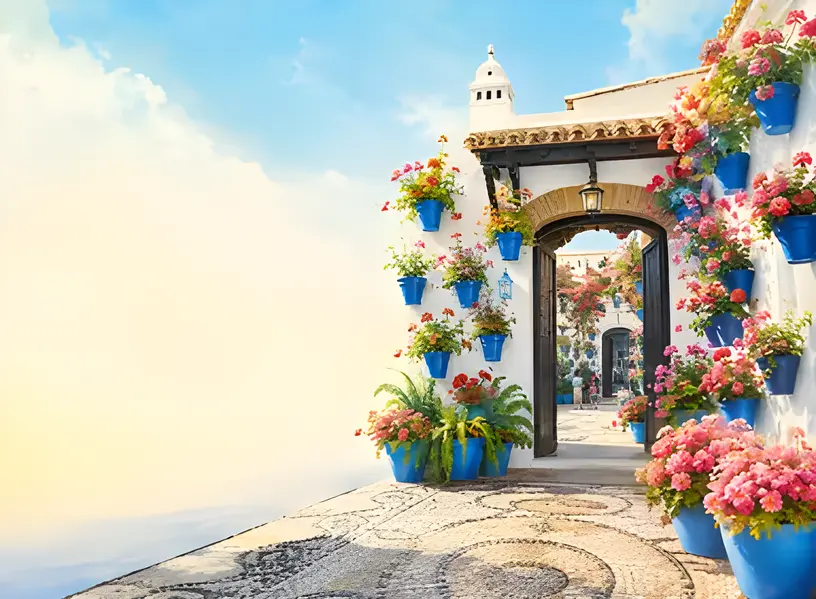
Patios de Córdoba
the first two weeks of May
Private courtyards open to the public, covered in flowering pots, and are visited for free.
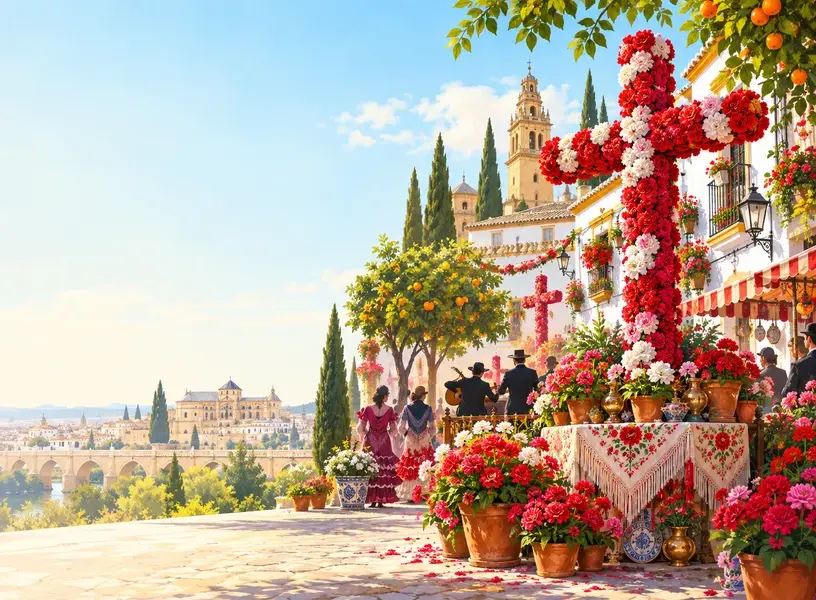
Cruces de Mayo
the first days of May
Carnation crosses in the city centre squares, each with its own music and bar.
Que voir à Córdoba
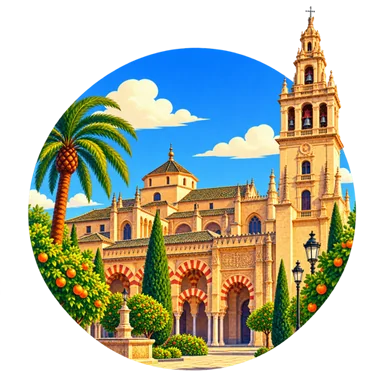
Mezquita
A building layered from the 8th to the 18th century. In the prayer hall, the 856 columns and the white and red arches lead to the Christian cathedral built inside the mosque from 1523.
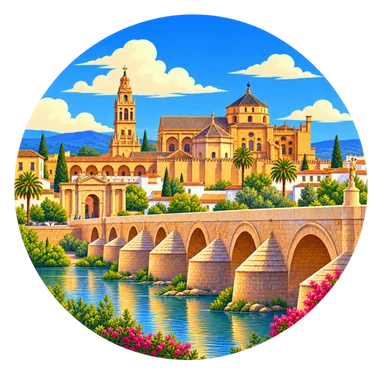
Roman Bridge
Built in the 1st century BC over the Guadalquivir and rebuilt several times: sixteen arches that connect the Mezquita to the Torre de la Calahorra.
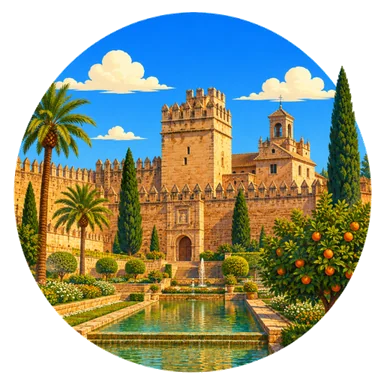
Alcázar Cristianos
The Alcázar de los Reyes Cristianos, from the 14th century: it was a royal residence, then the headquarters of the Inquisition. The terraced gardens with long pools are the part that stays in your mind.
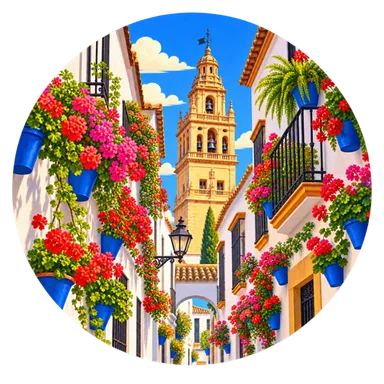
Calleja de las Flores
A very narrow white alley that opens into a small square: from there, framed by the walls, you can see the tower of the Mezquita.
D'où vient Córdoba
It was the largest city in the West
8th century BC
Turdetani settlement
A settlement on the bank of the Betis, at the point where the river could be forded.
169 BC
Corduba
Capital of Roman Baetica: Seneca was born here and the Via Augusta passes through.
756–1031
Qurtuba
Capital of the emirate and then the caliphate: one of the most populous cities in the world.
1236 → today
Córdoba
Fernando III conquers it; the mosque becomes a cathedral and the city returns to being a provincial town.
Né ici : Seneca, Stoic philosopher.
Tu veux apprendre l'espagnol en voyageant à travers l'Espagne ?
Dans Aula, chaque leçon est une ville qui s'allume sur la carte — Córdoba en fait partie. Deux cents leçons du niveau A1 au C2, gratuites, en commençant par ton niveau.
Commencer par Córdoba →