
Andalucía
Huelva
«Huelva es la provincia productora de fresas más importante.»Huelva est la province productrice de fraises la plus importante.
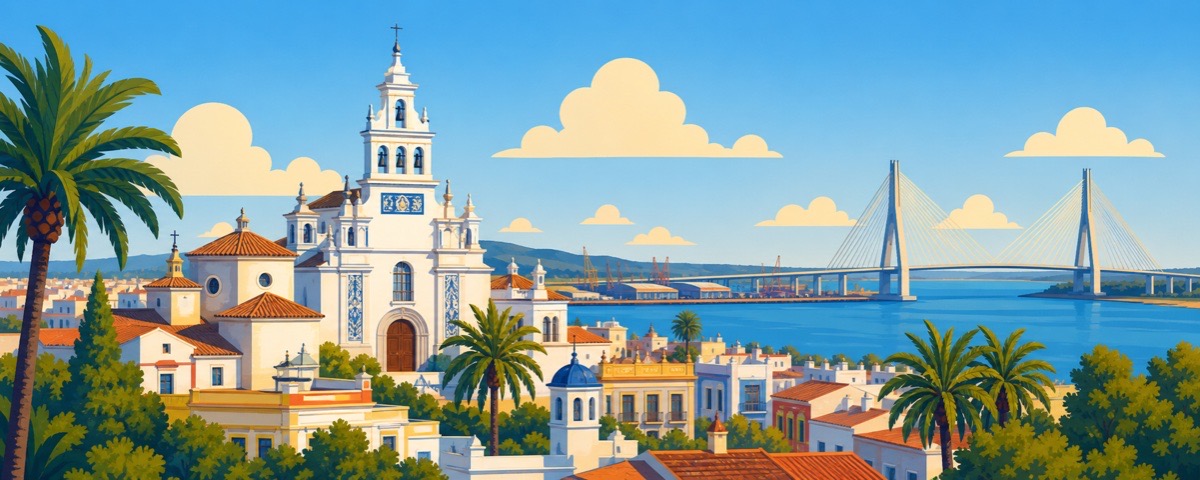
Huelva se situe entre les embouchures du Tinto et de l'Odiel, dans une zone d'estuaires et de marais près de la frontière avec le Portugal. La ville moderne est née autour de l'activité minière et portuaire, avec les structures en fer laissées par les compagnies britanniques du XIXe siècle, et conserve peu d'édifices anciens car le tremblement de terre de 1755 l'a durement frappée.
Le savais-tu ?
Le départ du premier voyage
Christophe Colomb est parti des environs de Huelva pour son premier voyage historique à la découverte du Nouveau Monde en 1492.
Comment on parle à Huelva
Local words
The Huelva dialect often aspirates the final «s» and shares much of its vocabulary with the rest of western Andalusia. «Choquero» is the nickname for the inhabitants of Huelva and comes from «choco», the cuttlefish, a signature product of the area.
hartible
se dit «artiblé»
A tiresome, insistent person or someone capable of tiring others out. Colloquial adjective or noun for someone who insists, annoys, or becomes exasperating.
La vie quotidienne à Huelva
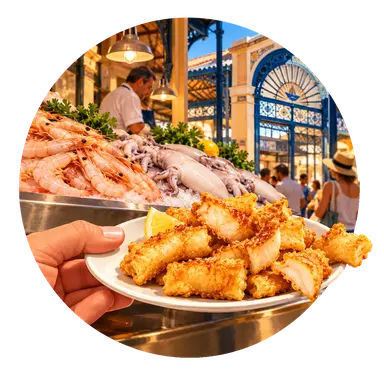
The «choco» gives the inhabitants their name
At the Mercado del Carmen you can see what this coast provides: white prawns, clams and above all the cuttlefish, which is called «choco» here. It is so iconic that the people of Huelva are called «choqueros».
«Unos chocos fritos, por favor.» — Some fried cuttlefish, please.
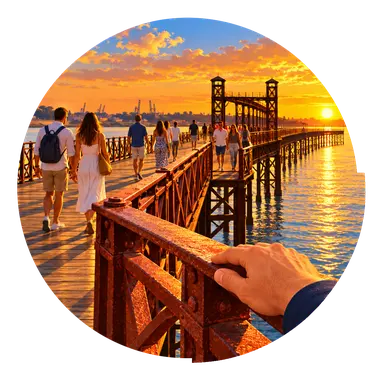
The walk on the iron pier
The Muelle del Tinto stretches for hundreds of metres into the estuary and has become the evening promenade: you walk to the end and back. At sunset, it is full of people walking above the water.
«Damos un paseo por el muelle.» — Let's go for a walk on the pier.
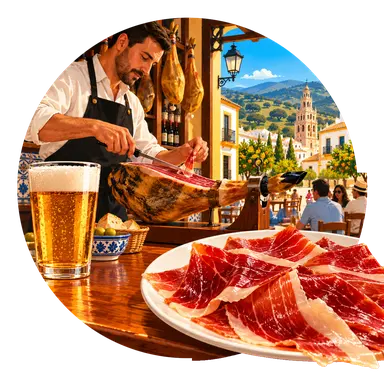
The ham comes from the mountains
The jamón from the Sierra de Aracena is made an hour's drive to the north, where the pigs roam free among the oak trees. In the city, you buy it freshly sliced in bars, and asking for «de bellota» means asking for the kind from pigs that have eaten acorns.
«Un plato de jamón de Jabugo.» — A plate of Jabugo ham.
Que manger à Huelva
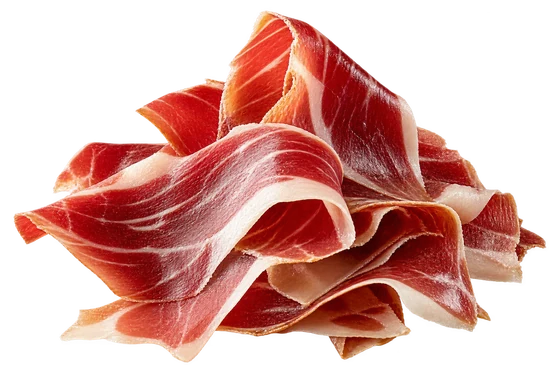
Jamón de Jabugo
Ham from Iberian pigs raised in the wild in the sierra and fed on acorns. It is hand-carved into very thin slices.
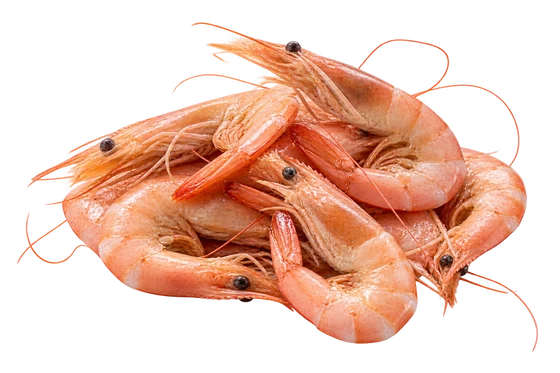
Gambas blancas de Huelva
White Atlantic prawns, simply boiled in salted water and served lukewarm.
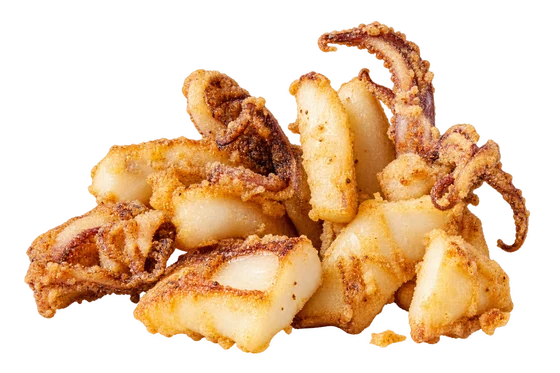
Choco frito
Sliced and fried cuttlefish. The name is so deeply rooted that the inhabitants of Huelva are called «choqueros».
Les fêtes à Huelva
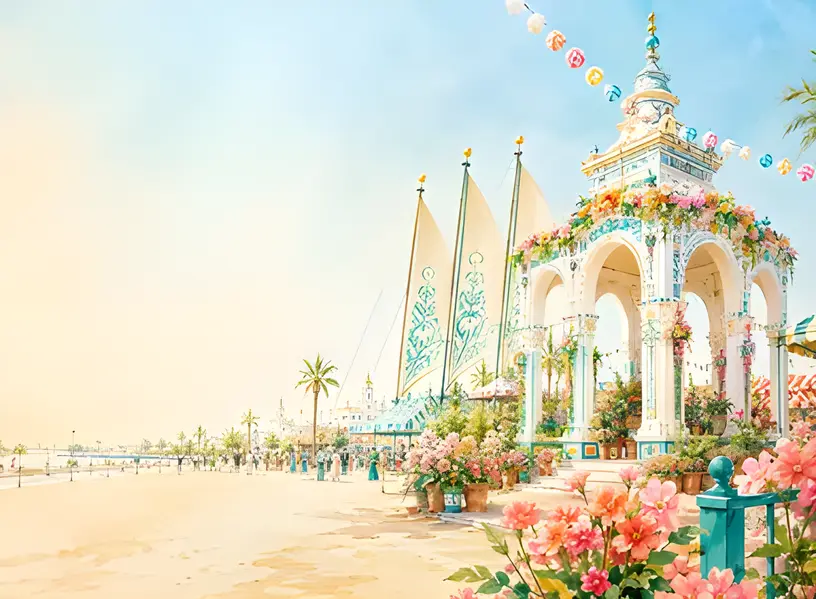
Fiestas Colombinas
the days around 3 August
Commemorating the day the three caravels departed from here: concerts at the Recinto Colombino and the city takes to the streets for a week.
Que voir à Huelva
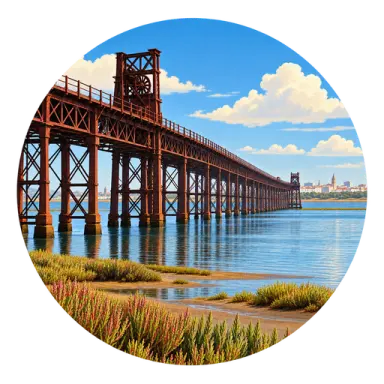
Muelle del Tinto
A loading pier built in 1874 by the Rio Tinto Company to ship ore: a curved metal structure that extends into the Odiel estuary. Restored in 2007, you can walk along it.
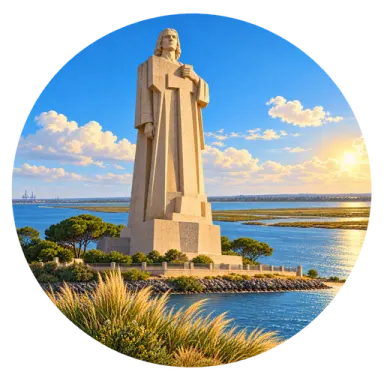
Monumento a Colón
A thirty-seven-metre-high statue at the tip of the Río Tinto, donated by the United States in 1929, where the three caravels set sail in 1492.
D'où vient Huelva
Between two rivers and a mine
9th century BC
Onoba
Foundation linked to Tartessos and the Phoenicians, between the Tinto and Odiel estuaries.
Roman era
Onuba Aestuaria
Port from which the ore from the Riotinto mines was exported.
8th–13th century
Welba
A small taifa and later a border town of little importance.
1755 → 19th century
Huelva
The Lisbon earthquake almost levels it; the Rio Tinto Company rebuilds it around the mining industry.
Tu veux apprendre l'espagnol en voyageant à travers l'Espagne ?
Dans Aula, chaque leçon est une ville qui s'allume sur la carte — Huelva en fait partie. Deux cents leçons du niveau A1 au C2, gratuites, en commençant par ton niveau.
Commencer par Huelva →