
Andalucía
Jaén
«Jaén produce una gran cantidad de aceite de oliva.»Jaén produit une grande quantité d'huile d'olive.
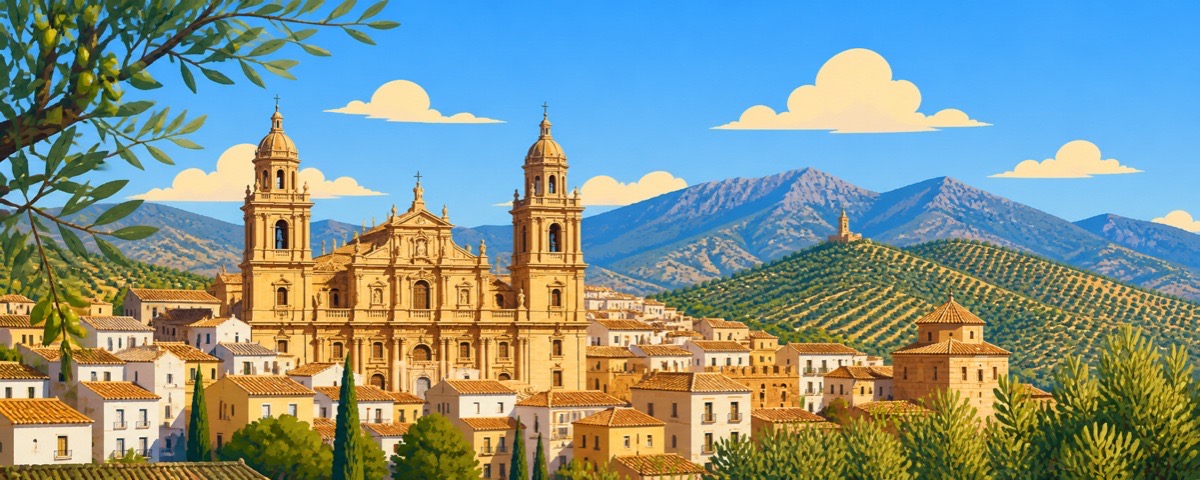
Jaén est le chef-lieu d'une province couverte d'oliveraies, adossée au flanc de la montagne qui soutient le château de Santa Catalina. Le centre historique monte en pente autour de la cathédrale Renaissance, avec des rues étroites et raides, tandis que la partie moderne s'étend en bas vers la plaine d'où commence la mer d'oliviers.
Le savais-tu ?
Plus d'huile que toute l'Italie
La province de Jaén produit à elle seule une quantité d'huile d'olive supérieure à celle de pays entiers comme l'Italie.
Comment on parle à Jaén
Local words
The Jiennense dialect often aspirates the final «s» and retains a very rich agricultural vocabulary linked to olive growing. «Tajo», «varear» and «tajos de aceituna» frequently appear in the speech of families connected to the countryside.
melenchón
se dit «mélentchone»
Traditional oral song from the province of Jaén, historically performed in a circle. It is sung and danced in groups around the lumbres, especially during the traditions of San Antón; the term is common in the vocabulary of many inhabitants of the province.
La vie quotidienne à Jaén
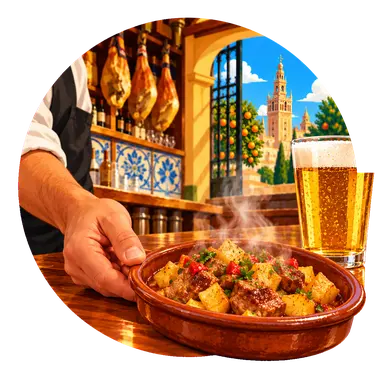
The «tapa» is hot and free
Like in Granada, the tapa comes with your drink and costs nothing. Here, however, it is usually cooked: a small plate of whatever is in the kitchen that day, and it changes with every round.
«Una caña, y la tapa que toque.» — A beer, and whatever tapa comes with it.
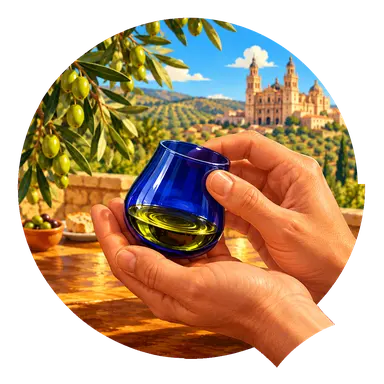
Olive oil is tasted on its own
In the province with the most olive groves in the world, oil is not just a condiment: it is tasted from a glass, warmed in the hand, as one does with wine. For breakfast, bread is simply drizzled with oil, with nothing else on top.
«Una tostada con aceite, por favor.» — Toast with olive oil, please.
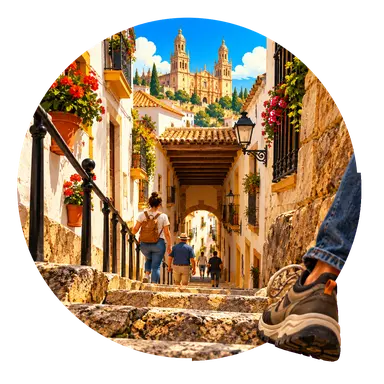
The «cuestas» of the centre
Jaén is built on the side of a mountain: the streets in the centre are steep and narrow, and to get from one square to another you go down and then back up. Those who live here know the covered passages that cut through entire blocks.
«Se sube andando, pero es cuesta arriba.» — You go on foot, but it's all uphill.
Que manger à Jaén
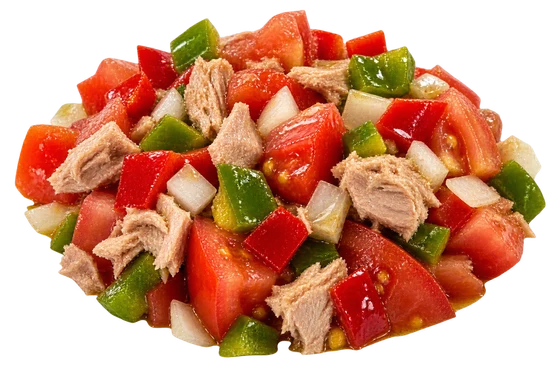
Pipirrana
A crushed salad of tomato, green pepper, cucumber and onion, dressed only with extra virgin olive oil and salt.

Ochío
A round bread roll seasoned with oil and «pimentón», which turns the crust red. It is eaten plain or filled.
Les fêtes à Jaén
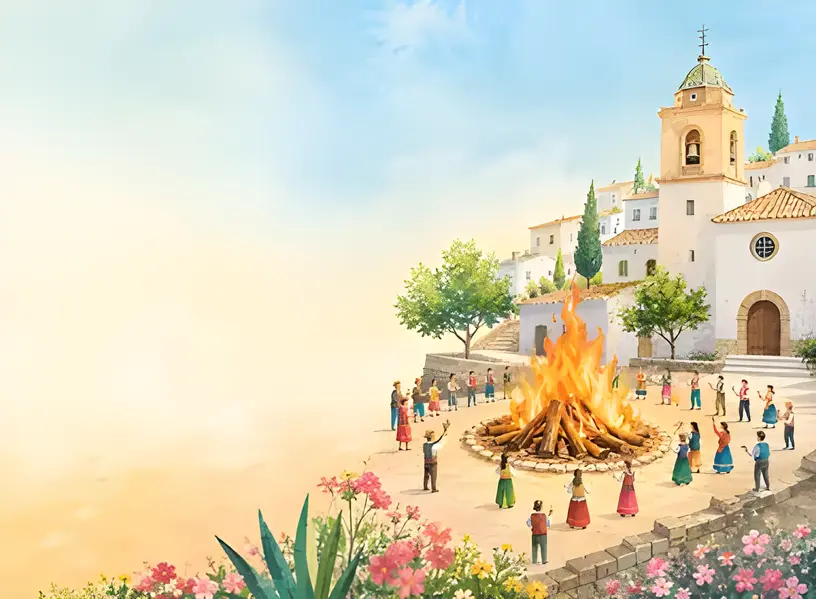
Lumbres de San Antón
16 January
In every neighbourhood a bonfire is lit and meat is roasted over it: the city spends the coldest night of the year outside, around the fire.
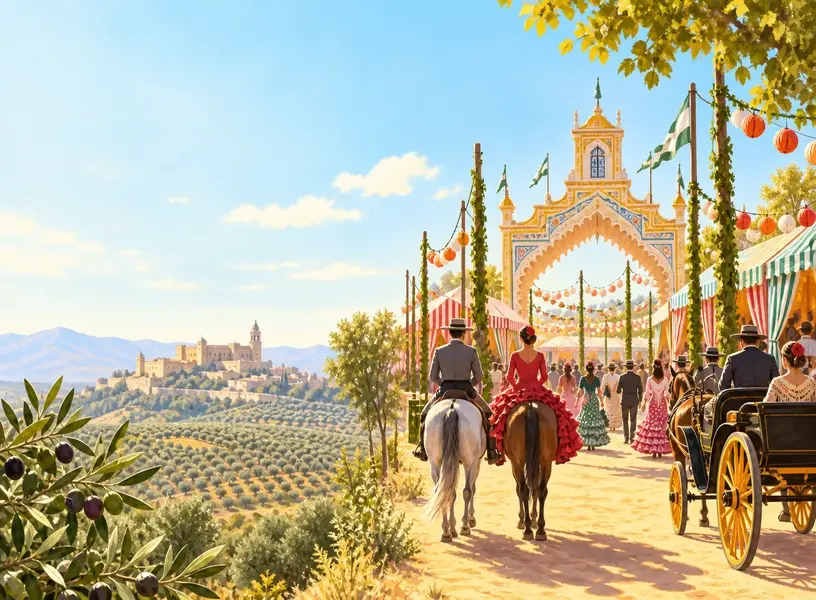
Feria de San Lucas
the week around 18 October
The autumn fair, the last big one in Andalusia: it arrives just as the olive harvest is about to begin.
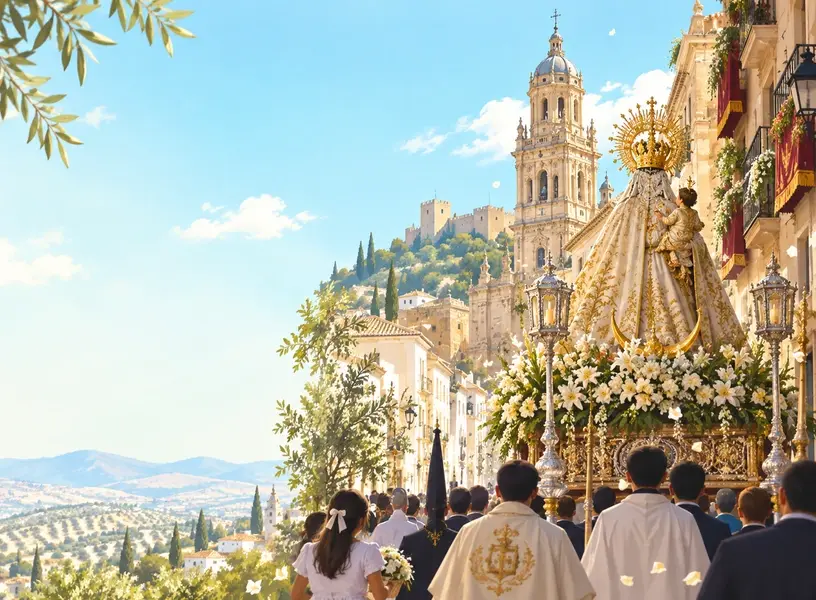
Virgen de la Capilla
11 June
The patron saint goes out into the streets of the centre at night, and the procession commemorates the 1430 apparition in Calle Maestra.
Que voir à Jaén
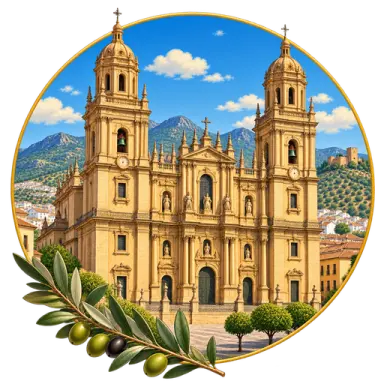
Cathedral
The Catedral de la Asunción, a Renaissance masterpiece by Andrés de Vandelvira, built over the aljama mosque: it houses the «Santo Rostro», the veil of Veronica.
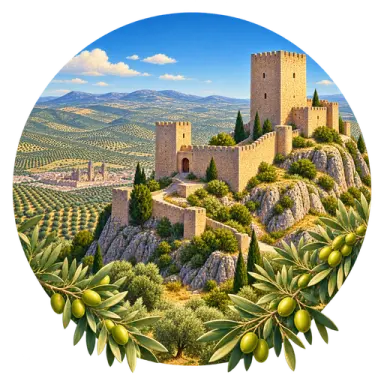
Castillo de Santa Catalina
On the mountain above the city, an Arab and later Christian fortress: from there you can see the sea of olive trees that stretches to the horizon in every direction.
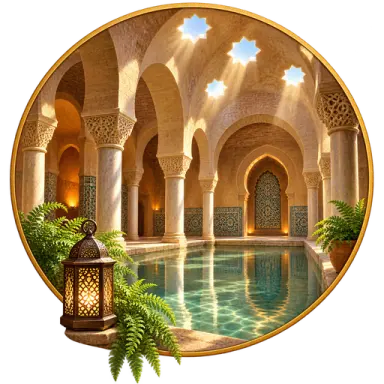
Arab Baths
Under the Palacio de Villardompardo, dating from the 11th century: among the largest and best-preserved in Western Europe, with star-shaped skylights in the vaults.
D'où vient Jaén
The city of caravans
Iberian era
Auringis
Iberian oppidum on the hill, in the middle of the silver mines.
Roman era
Aurgi
Roman municipality, a crossroads between Baetica and the Meseta.
8th–13th century
Yayyan
The Arabic name means «caravan route», and that is what has remained.
1246 → today
Jaén
Fernando III captures it; for two and a half centuries it is the Christian base against Granada.
Tu veux apprendre l'espagnol en voyageant à travers l'Espagne ?
Dans Aula, chaque leçon est une ville qui s'allume sur la carte — Jaén en fait partie. Deux cents leçons du niveau A1 au C2, gratuites, en commençant par ton niveau.
Commencer par Jaén →