
Andalucía
Málaga
«Málaga es la ciudad natal del pintor Pablo Picasso.»Malaga est la ville natale du peintre Pablo Picasso.
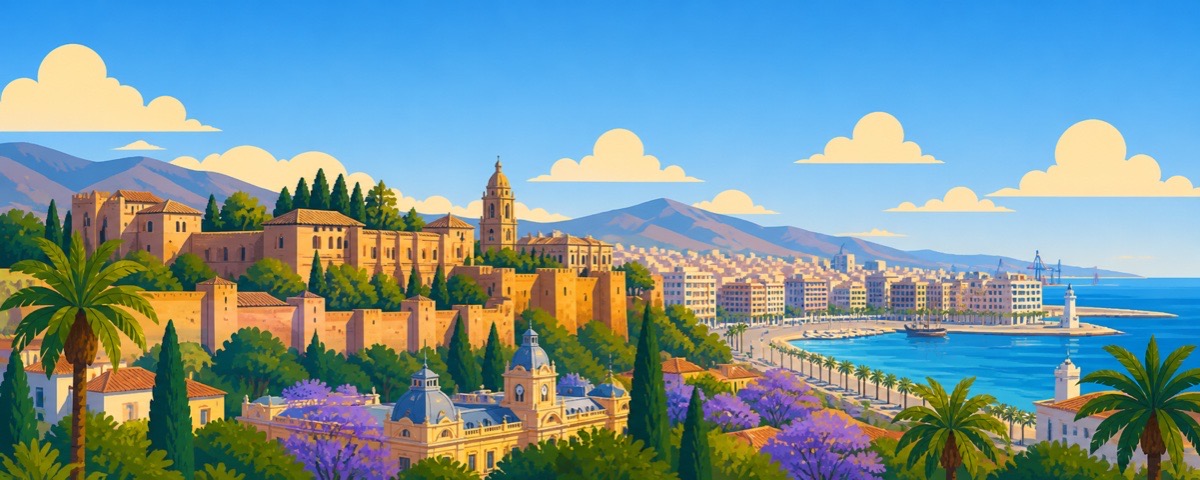
Malaga est le port principal de la Costa del Sol et le chef-lieu de sa province, étendue entre la mer et les collines qui la ferment au nord. Le noyau ancien conserve l'Alcazaba arabe et le théâtre romain à ses pieds, tandis que la bande côtière et le port restructuré accueillent la ligne de musées et de promenades qui a changé le visage de la ville.
Le savais-tu ?
Antonio Banderas a encore un théâtre
Le célèbre acteur Antonio Banderas est né à Malaga et possède encore un théâtre dans le centre historique de la ville.
Comment on parle à Málaga
The malagueño «cantiñeo»
Here the sentence rises and falls with a sing-song intonation that is recognisable throughout Spain. And you hear «quillo» as a filler word, a contraction of «chiquillo».
aliquindoi
se dit «alikinndoï»
Attention; stay alert. Used especially in the expression «estar al aliquindoi» to invite someone to pay attention.
La vie quotidienne à Málaga
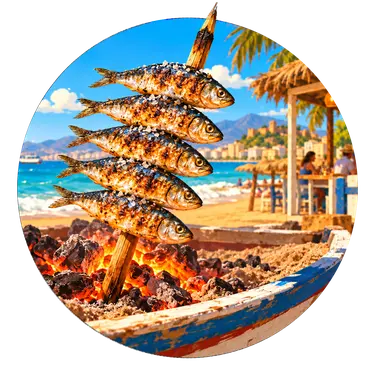
Espetos are made in the sand
Sardines are not fried in the kitchen: five or six are skewered on a cane and planted in the sand next to a boat full of burning wood. The fire is to the side and never underneath, and whoever turns them does it by eye, without a clock.
«Un espeto de sardinas, por favor.» — One skewer of sardines, please.
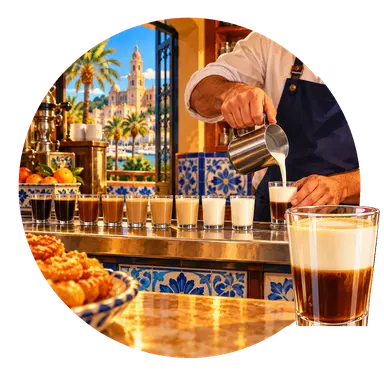
Coffee is ordered by proportion
In Málaga you don't ask for «with milk»: you ask what proportion is coffee. There are nine names, from «solo» which is all coffee to «nube» which is almost all milk, and the diagram with the nine measures hangs on the wall in almost every bar.
«Un mitad, por favor.» — A half and half, please.
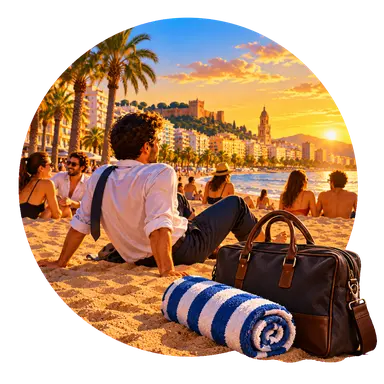
The beach after the office
La Malagueta is a quarter of an hour's walk from the centre, and in summer people go there after work instead of at the weekend. At eight in the evening the sand is full of people who have just left the office, staying until it gets dark.
«Me bajo a la playa al salir del trabajo.» — I'm heading down to the beach after work.
Que manger à Málaga
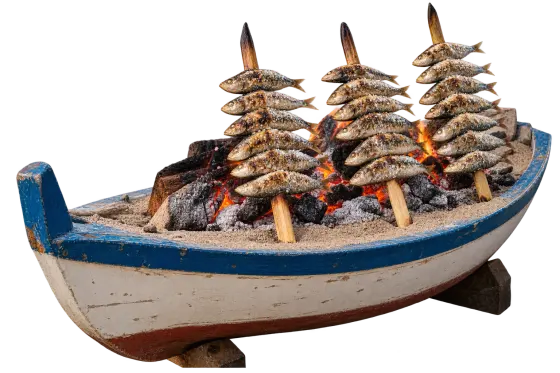
Espetos de sardinas
Sardines skewered on a cane and roasted on the side next to the embers, in a boat full of sand. They are not fried in the kitchen: they are made outside, on the beach.
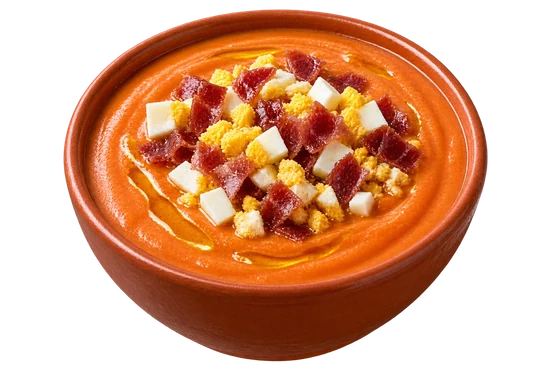
Porra antequerana
A cold cream of tomato, bread, garlic and oil, thicker than gazpacho, served with hard-boiled egg and ham.
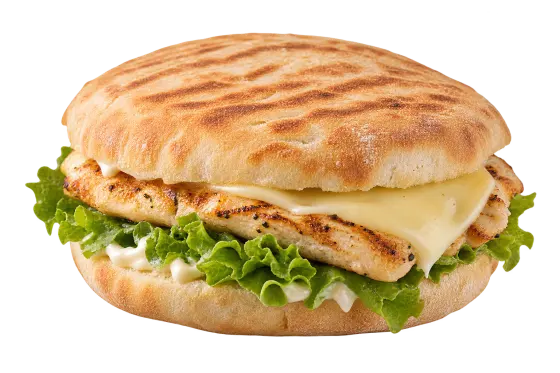
Campero
A round, flattened and toasted sandwich, with chicken or pork loin, cheese, lettuce and mayonnaise. It is the savoury snack found in bars.
Les fêtes à Málaga
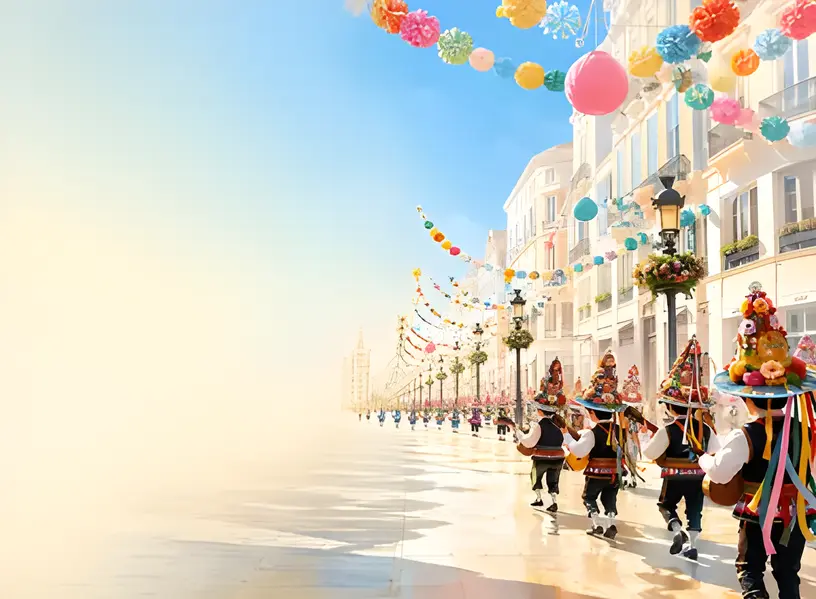
Feria de Málaga
the week around 19 August
By day in the centre, by night at the Cortijo de Torres: two parties in the same week.
Que voir à Málaga
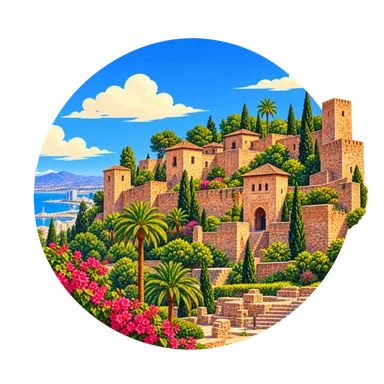
Alcazaba
An 11th-century fortress that rises from the city with courtyards, walls and towers, overlooking the 1st-century BC Roman Theatre that lies at its feet.
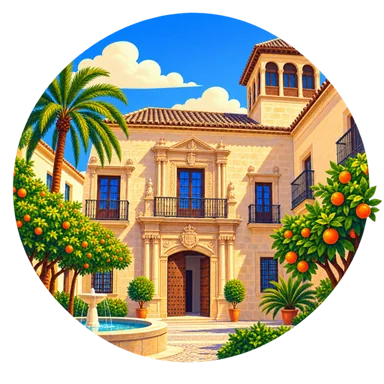
Museo Picasso
Located in the 16th-century Palacio de Buenavista. Picasso was born in Málaga in 1881, and the museum houses works donated by his family.
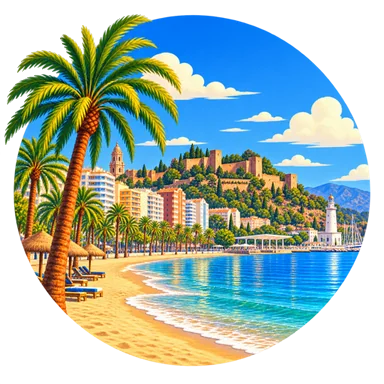
Malagueta
The city beach, just east of the port. It is where people eat «espetos», and where the malagueños go on foot after work.
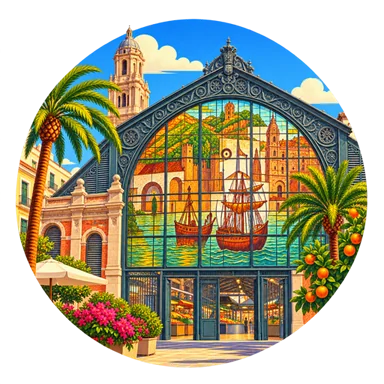
Atarazanas Market
The covered market, inside a building that was a Nasrid arsenal: the marble arch of the entrance remains from the Arab structure.
D'où vient Málaga
Almost three thousand years of port
8th century BC
Malaka
Founded by the Phoenicians as a trading post, at the mouth of the Guadalmedina.
Roman era
Malaca
Roman city with its theatre, excavated at the foot of the hill.
8th–15th century
Mālaqa
Port of the Kingdom of Granada: the Alcazaba and the castle of Gibralfaro were built.
1487 → today
Málaga
Taken by the Catholic Monarchs; the 19th century made it industrial, the 20th century touristy.
Né ici : Pablo Picasso, painter.
Tu veux apprendre l'espagnol en voyageant à travers l'Espagne ?
Dans Aula, chaque leçon est une ville qui s'allume sur la carte — Málaga en fait partie. Deux cents leçons du niveau A1 au C2, gratuites, en commençant par ton niveau.
Commencer par Málaga →