
Aragón
Huesca
«Huesca está muy cerca de los Pirineos.»Huesca is very close to the Pyrenees.
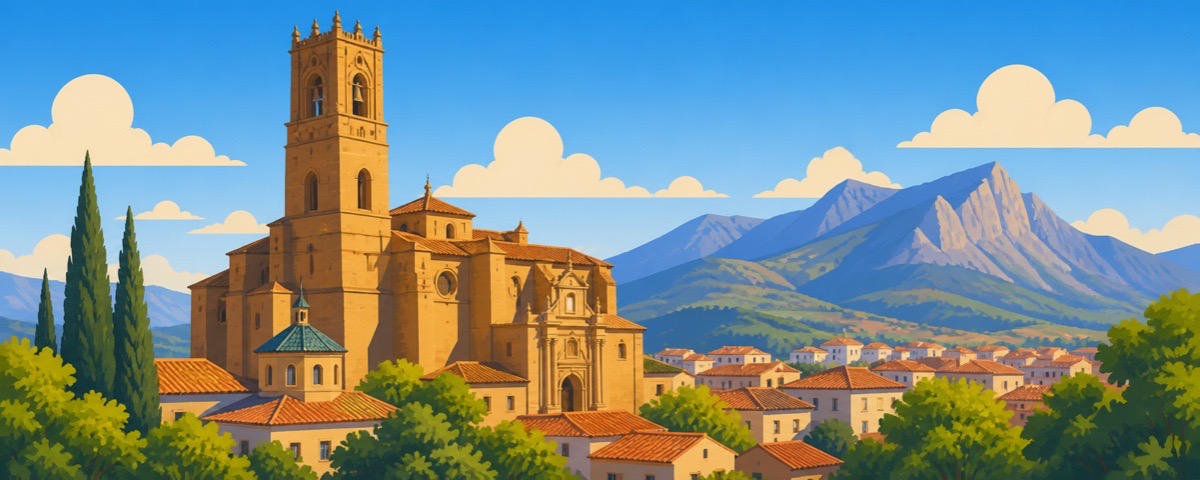
Huesca is the capital of the northernmost province of Aragon, situated on a plain at the foot of the Pyrenees. It was the capital of the Kingdom of Aragon after the conquest of 1096 and the seat of a university that lasted five centuries; the historic centre is still contained within the circuit of the ancient walls.
Le savais-tu ?
The bell made of heads.
The legend of the 'Bell of Huesca' tells that a king had twelve rebellious nobles beheaded using a giant bell as a warning.
Comment on parle à Huesca
«Oscense» is the demonym and «Hoya de Huesca» is the territorial name used continuously for the region around the city. In the Alto Aragón, Aragonese varieties survive, although Castilian dominates in the city.
charrar
se dit «tcharrar»
To speak; to chat. Used in Aragonese speech to converse or talk, also in derivatives like «charrada».
La vie quotidienne à Huesca
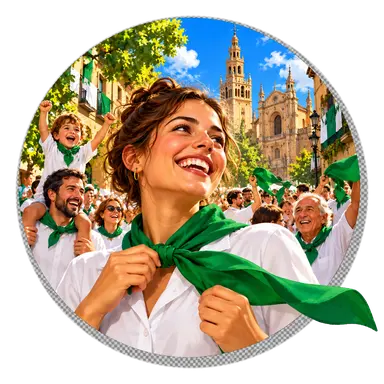
The «Fiestas de San Lorenzo» in white and green
From 9 to 15 August the whole city dresses in white with a green handkerchief around the neck, and it is not a costume for tourists: everyone wears it, from newborns to the elderly, for six days.
«Todos de blanco y verde.» — Everyone in white and green.
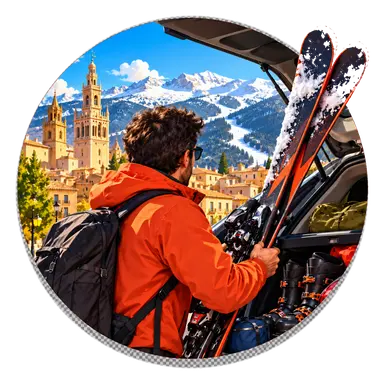
The Pyrenees in an hour
The mountains begin just a little further north, and on winter weekends the city empties out towards the slopes. Having skis in the garage here is as normal as having a bicycle.
«Los Pirineos están a una hora.» — The Pyrenees are an hour away.
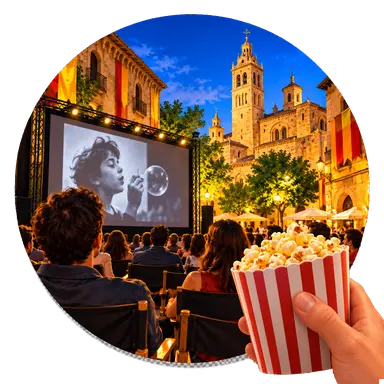
The «Festival de Cine» in June
The international short film festival has been going on for more than fifty years and is an Oscar-qualifying event: for a week you can see shorts from all over the world in the cinemas in the centre.
Que manger à Huesca
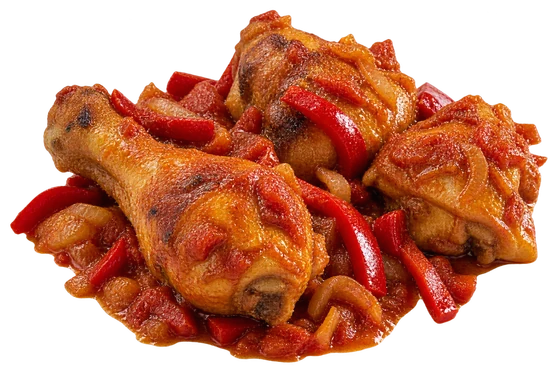
Pollo al chilindrón
Chicken slow-cooked in a sauce of tomatoes, red peppers and ham.
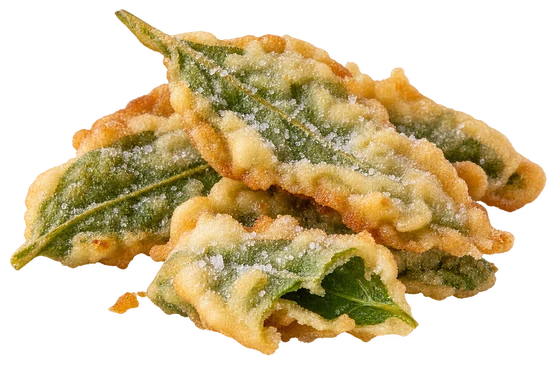
Crespillos
Borage leaves dipped in batter, fried and sprinkled with sugar. They are made in March.
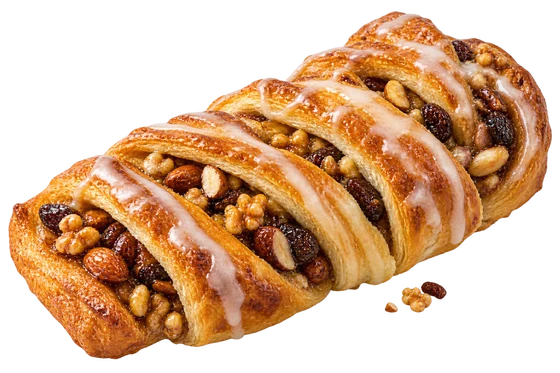
Trenza de Almudévar
Puff pastry braid with dried fruits, raisins and glaze, which is made in the nearby village.
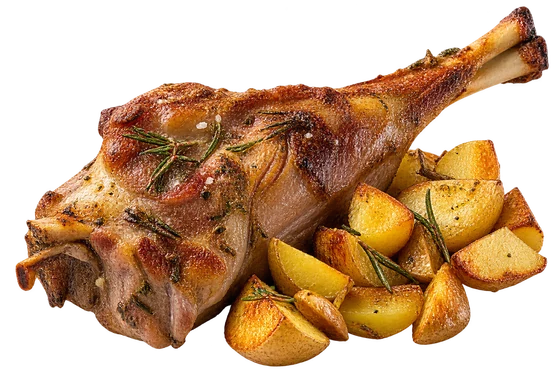
Ternasco de Aragón
Young lamb roasted with little more than salt, lard and white wine.
Les fêtes à Huesca
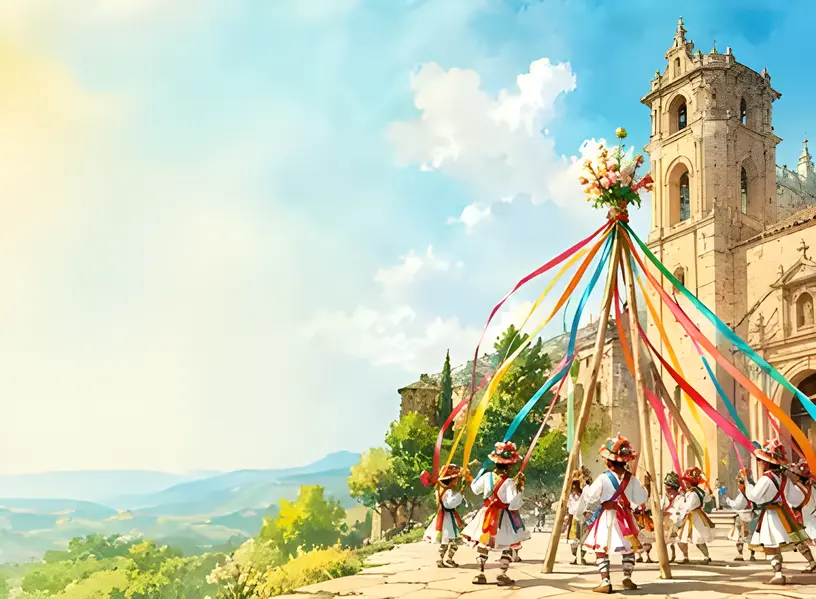
Fiestas de San Lorenzo
from 9 to 15 August
Everyone in white with a green handkerchief and a sprig of basil, and the «danzantes» dance in front of the basilica.
Que voir à Huesca
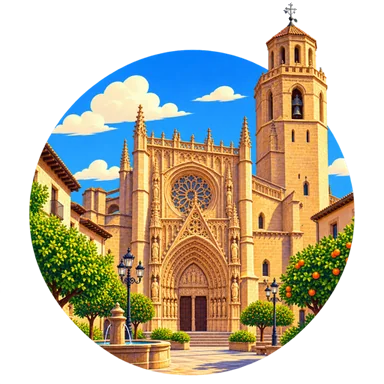
Catedral de Huesca
Gothic cathedral with an altarpiece carved from a single block of alabaster.
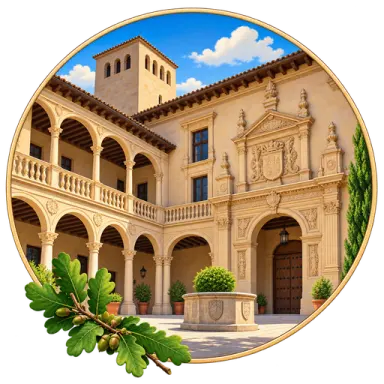
Museo de Huesca
The museum inside the ancient palace of the kings of Aragon, with the round room of the legend.
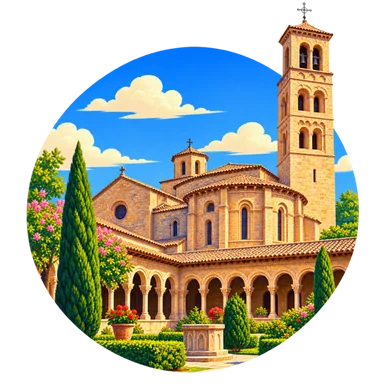
San Pedro el Viejo
Romanesque church with a cloister featuring carved capitals and two kings of Aragon buried inside.
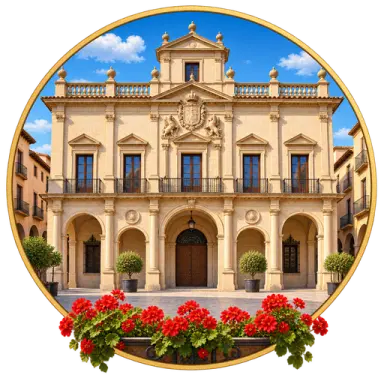
Ayuntamiento
The Renaissance brick town hall, with the painting of the bell inside.
D'où vient Huesca
The bell made of heads
Iberian era
Bolskan
City of the Sedetani with its own mint; Sertorius opens a school there for the children of the Iberian chiefs.
1096
The conquest
Pedro I takes it after the battle of Alcoraz: it becomes the capital of the kingdom of Aragon.
1136
The bell
The legend of the «campana de Huesca»: Ramiro II has the rebellious nobles beheaded and arranges their heads in a circle.
1354–1845
The university
Five centuries of university, then the closure: the city remains the provincial capital.
Tu veux apprendre l'espagnol en voyageant à travers l'Espagne ?
Dans Aula, chaque leçon est une ville qui s'allume sur la carte — Huesca en fait partie. Deux cents leçons du niveau A1 au C2, gratuites, en commençant par ton niveau.
Commencer par Huesca →