
Aragón
Zaragoza
«Zaragoza es famosa por la gran Basílica del Pilar.»Zaragoza is famous for the large Basilica del Pilar.
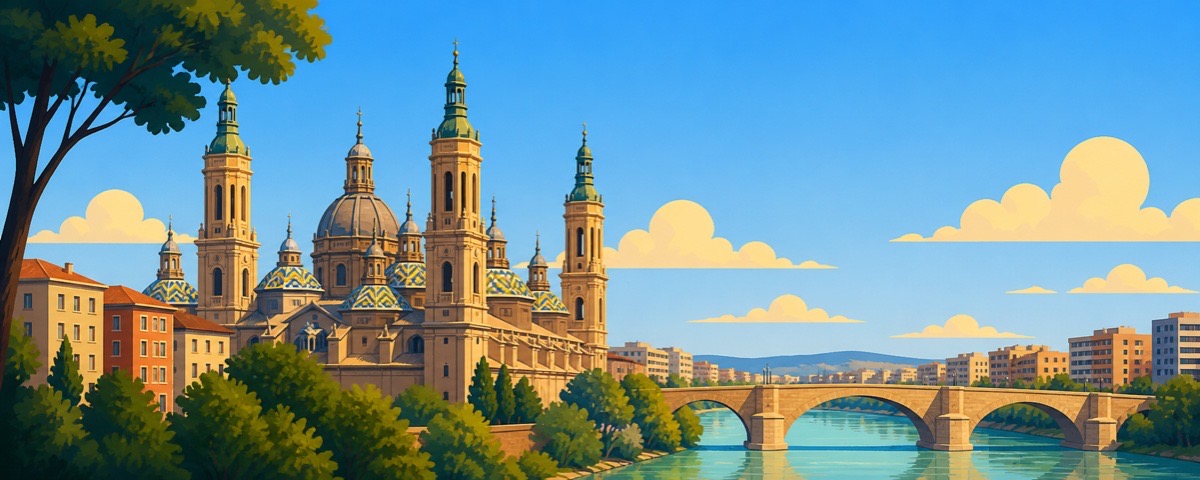
Zaragoza is the capital of Aragon and the fifth largest Spanish city by population, located on the banks of the Ebro halfway between Madrid and Barcelona. Its skyline is defined by the Basilica del Pilar overlooking the river, and in the centre, a Roman theatre, a Taifa kingdom palace, and brick Mudéjar churches coexist.
Le savais-tu ?
The first Marian sanctuary of Christianity.
Zaragoza is home to the Basilica del Pilar, the first Marian sanctuary of Christianity, famous for its green-tiled domes.
Comment on parle à Zaragoza
«Co» is a colloquial vocative strongly associated with Zaragoza and derives from «chico». «Maño» is the most recognisable informal nickname for Aragonese people and is also used with an affectionate tone.
charrar
se dit «tcharrar»
To speak; to chat. Used in Aragonese speech to converse or talk, also in derivatives like «charrada».
La vie quotidienne à Zaragoza
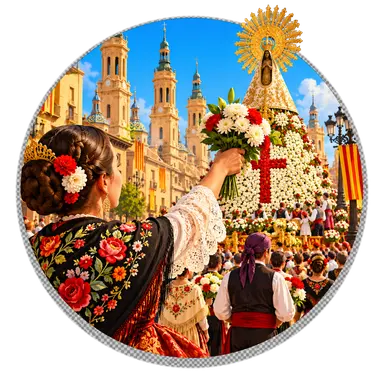
The «Ofrenda de Flores» on 12 October
Hundreds of thousands of people in regional costume parade for hours carrying a bouquet of flowers to the Virgen del Pilar, which end up on a pyramidal mantle fifteen metres high. You sign up in groups and wait for your turn all day.
«¿Vas a la ofrenda de flores?» — Are you going to the flower offering?
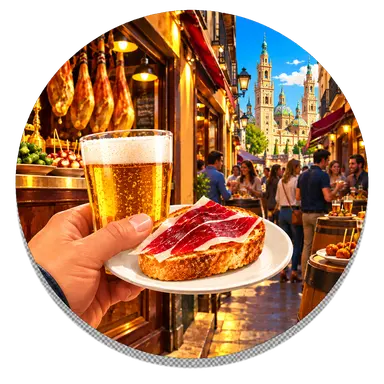
The «tubo» for tapas
A network of narrow streets behind the Plaza del Pilar where bars are packed one next to the other: you go in, have one thing, and move on to the next. Every place has its specialty and people know it.
«¿Nos vamos de tubo?» — Shall we go for a round in the Tubo?
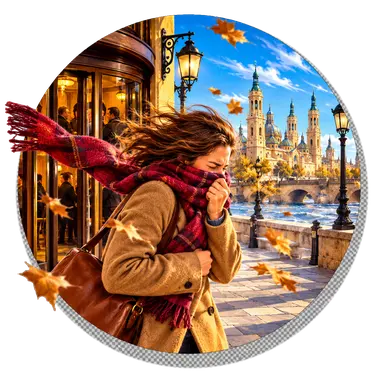
The «cierzo» that sweeps the city
The north-westerly wind arrives dry and freezing from the Ebro valley, blows for days, and makes winter feel much colder than the thermometer says. Bar doors have double vestibules for this reason.
«Hoy sopla el cierzo.» — Today the cierzo is blowing.
Que manger à Zaragoza
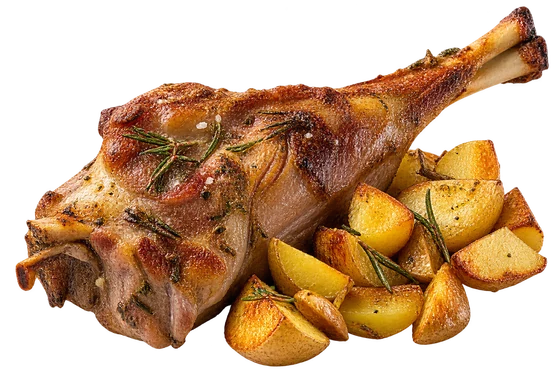
Ternasco de Aragón
Young lamb roasted in the oven with little more than salt, lard, and white wine.
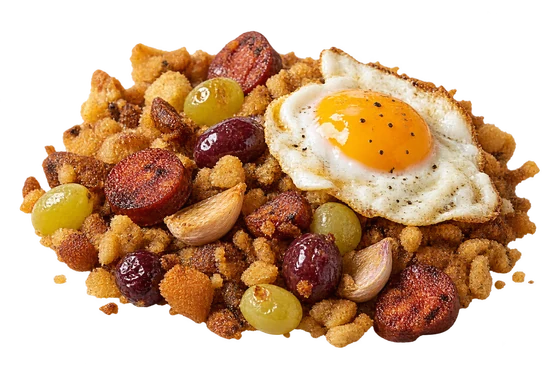
Migas aragonesas
Stale bread crumbled and sautéed with garlic, bacon, and grapes, until it separates into grains.
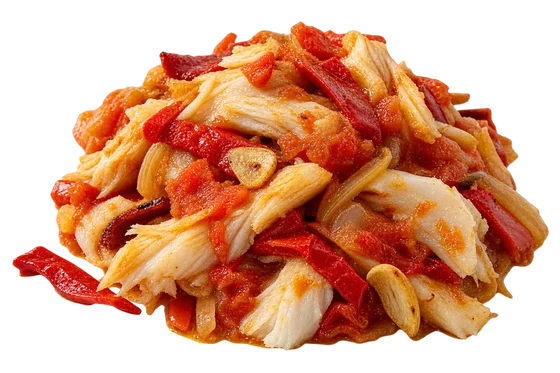
Bacalao al ajoarriero
Shredded salt cod with garlic, peppers, and tomato, cooked slowly in the pan.
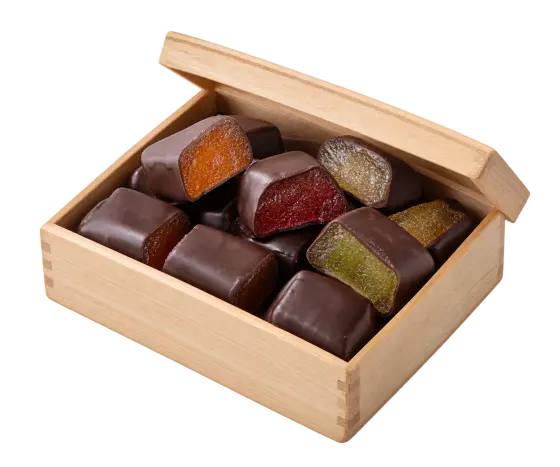
Frutas de Aragón
Candied fruit covered in dark chocolate, in a wooden box.
Les fêtes à Zaragoza
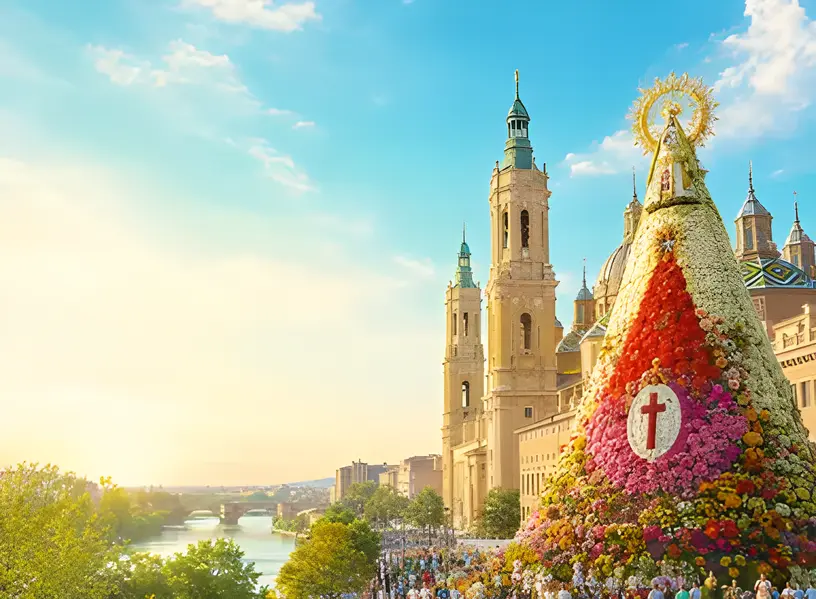
Fiestas del Pilar
the week of 12 October
Nine days of celebration around the flower offering, with giants, «cabezudos», and the square full from morning to night.
Que voir à Zaragoza
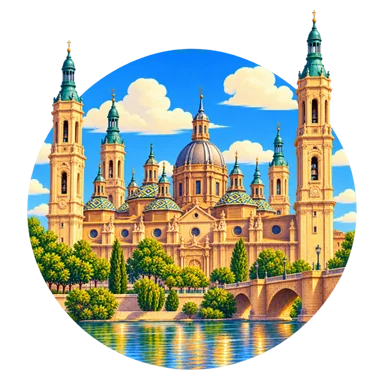
Basílica del Pilar
The Baroque basilica on the Ebro, with eleven tiled domes and the column of the apparition inside.
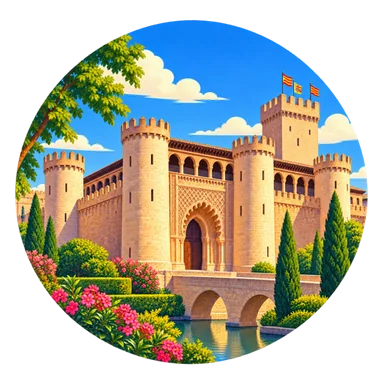
Aljafería
Palace of an 11th-century taifa kingdom, housing the Aragonese parliament inside.
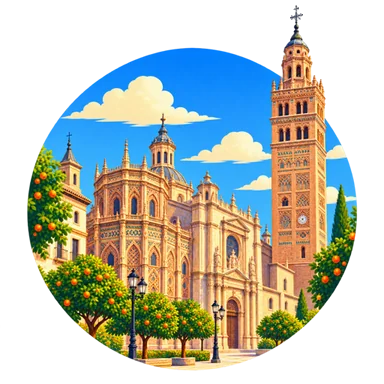
La Seo
The old cathedral, with the external Mudéjar wall that reads like a carpet stood on end.
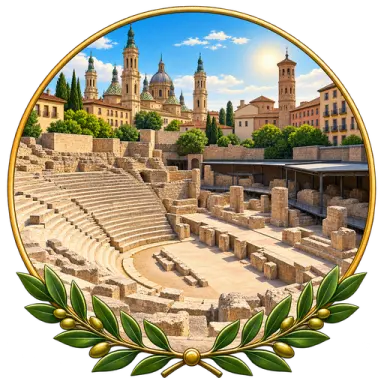
Teatro Romano
1st-century theatre for six thousand spectators, rediscovered in 1972 by demolishing a building.
D'où vient Zaragoza
The name is that of Caesar Augustus
14 BC
Caesaraugusta
Augustus founds it for veterans and gives it his own name: from there, corrupted, comes «Zaragoza».
714–1118
Saraqusta
Capital of a very wealthy taifa kingdom: the Aljafería is from that time.
1118
The conquest
Alfonso I the Battler takes it: it becomes the capital of the kingdom of Aragon.
1808
The two sieges
The city resists the French army twice, house by house, and emerges destroyed.
Tu veux apprendre l'espagnol en voyageant à travers l'Espagne ?
Dans Aula, chaque leçon est une ville qui s'allume sur la carte — Zaragoza en fait partie. Deux cents leçons du niveau A1 au C2, gratuites, en commençant par ton niveau.
Commencer par Zaragoza →