
Baleares
Formentera
«Formentera tiene playas de arena blanca y agua transparente.»Formentera has white sand beaches and transparent water.
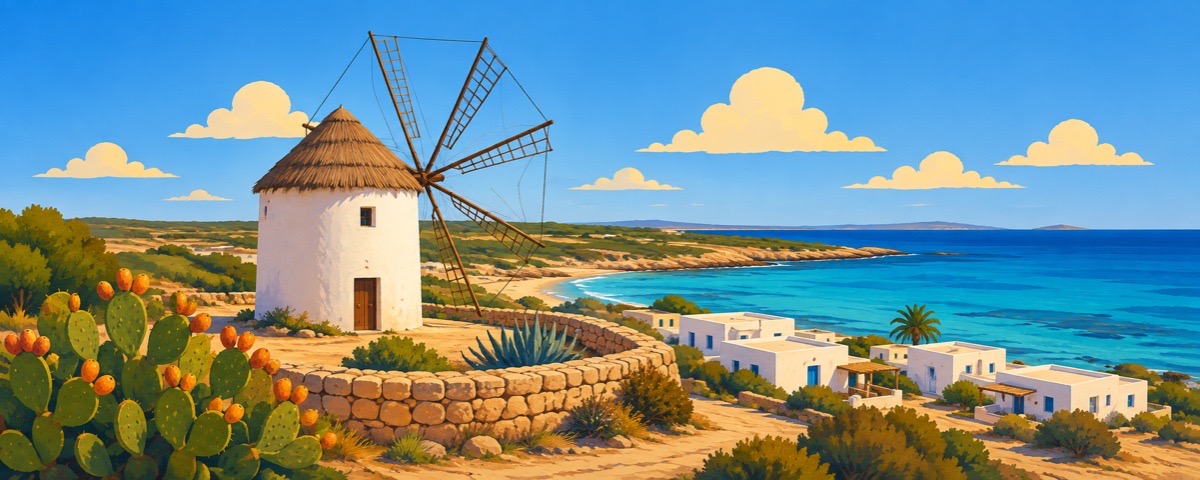
Formentera is the smallest and lowest of the Balearic Islands, an hour by ferry south of Ibiza. It remained uninhabited for two centuries due to pirate raids and was only repopulated in 1697; today it lives off tourism, with white sand beaches and no airport.
Le savais-tu ?
The lighthouse in a Verne novel.
The famous La Mola lighthouse inspired the writer Jules Verne to write the novel 'Hector Servadac'.
Comment on parle à Formentera
The local Catalan shares many features with Eivissenc, including 'sa/es' articles. «Peix sec» means dried fish and indicates a traditional product of the island.
idò
se dit «ido»
Then; so; well. Conjunction and discourse marker very common in Balearic Catalan, used to connect or introduce a response.
La vie quotidienne à Formentera
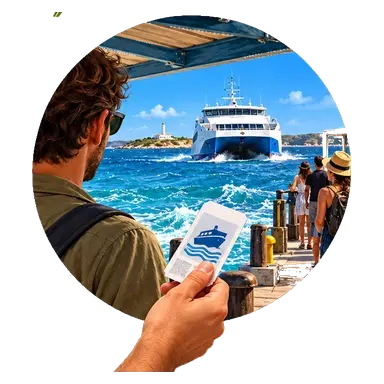
You only arrive by boat
There is no airport: you pass through Ibiza by ferry, half an hour at sea, and on windy days you stay on land. Those who live there organise appointments based on the ferry timetable.
«Solo se llega en barco.» — You only arrive by boat.
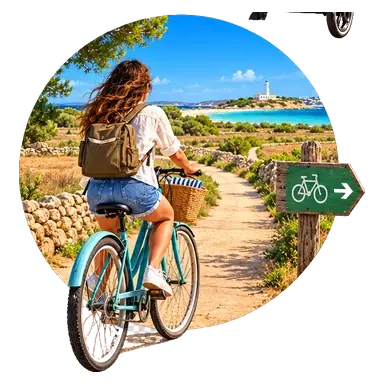
By bicycle everywhere
The island is twenty kilometres long and flat, and you get around by bike on marked paths called «camins verds»: many residents do not use a car to go to work.
«Aquí se va en bicicleta.» — Here you go by bicycle.
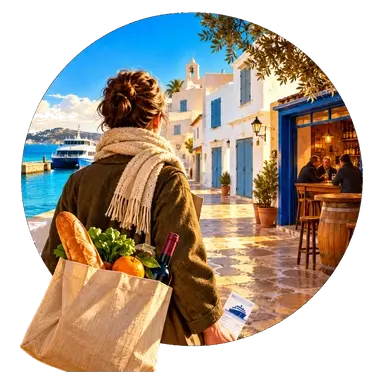
Winter with three thousand people
Off-season the island returns to a few thousand inhabitants, almost everything closes and a few bars remain open: the big shopping is done in Ibiza, taking the ferry and returning the same day.
Que manger à Formentera
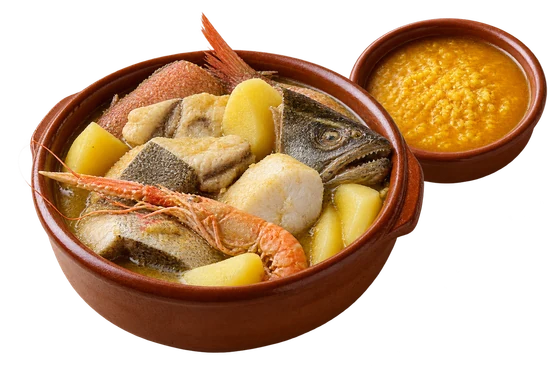
Bullit de peix
Boiled fish and potatoes served with alioli; then rice is made with the broth.
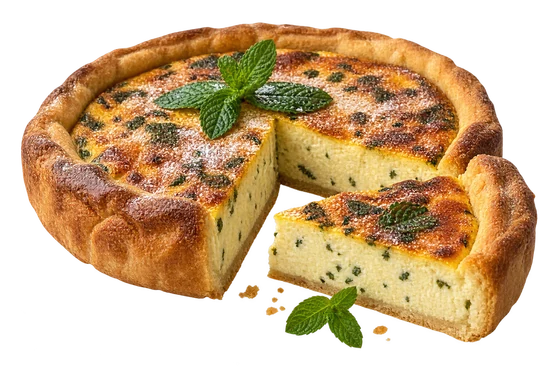
Flaó
Fresh cheese and mint cake, with aniseed pastry.
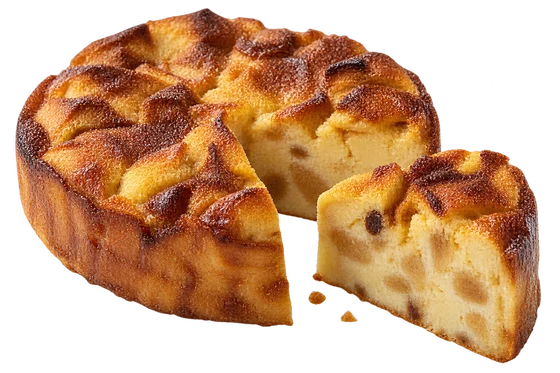
Greixonera
Dessert made with leftover ensaimadas, eggs and milk, baked in the earthenware pot that gives it its name.
Les fêtes à Formentera
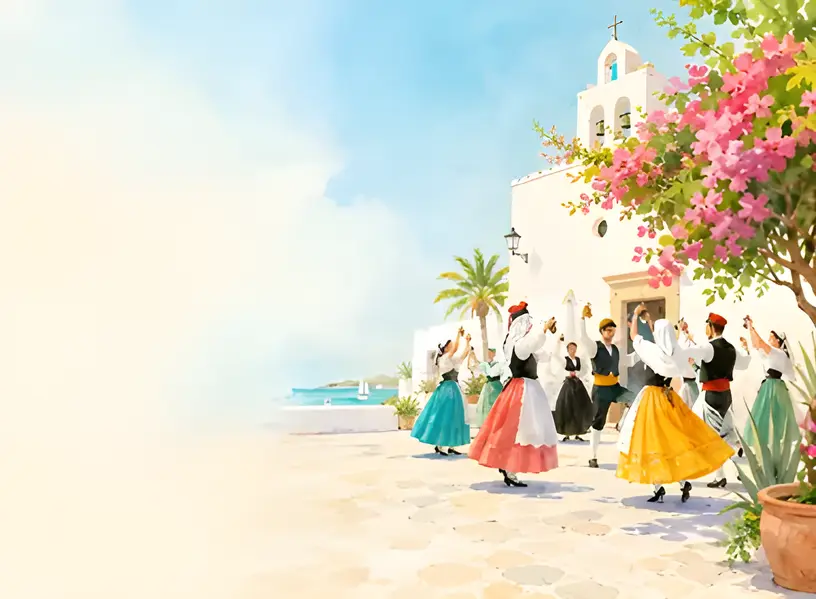
Festes de Sant Jaume
the 25th of July
The patronal festival in Sant Francesc: the island gathers in the square, and for one evening everyone knows each other.
Que voir à Formentera
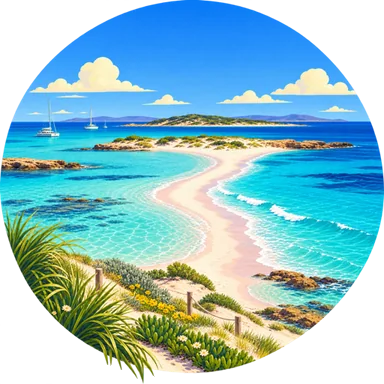
Ses Illetes
The beach on the sand spit to the north, with shallow water and small islands in front.
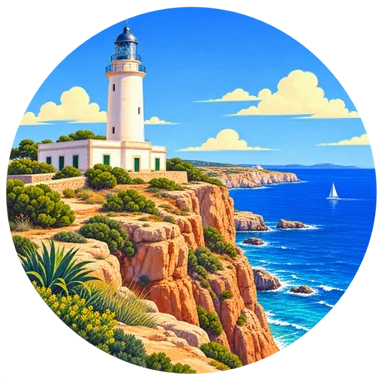
Far de la Mola
The lighthouse on the cliff two hundred metres above the sea, at the end of the island.
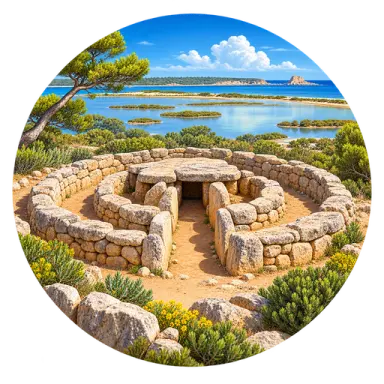
Ca na Costa
A four-thousand-year-old megalithic tomb, with stone slabs still standing.
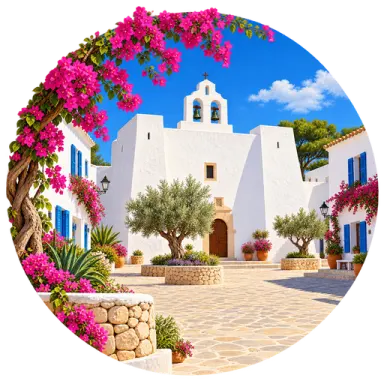
Sant Francesc Xavier
The fortified church of 1738, white and windowless, which was also the village refuge.
D'où vient Formentera
Two centuries with no one
2000 BC
Ca na Costa
A megalithic tomb: the sign that the island was already inhabited back then.
14th–17th century
The pirates
The looting empties it: for two centuries the island remains without inhabitants.
1697
The repopulation
Marc Ferrer receives permission to repopulate it: the fortified church is built.
1960 → today
The Sixties
The hippies arrive, and after them the tourism that the island knows today.
Tu veux apprendre l'espagnol en voyageant à travers l'Espagne ?
Dans Aula, chaque leçon est une ville qui s'allume sur la carte — Formentera en fait partie. Deux cents leçons du niveau A1 au C2, gratuites, en commençant par ton niveau.
Commencer par Formentera →