
Castilla y León
Segovia
«Segovia conserva un gran acueducto romano de piedra.»Segovia preserves a large Roman stone aqueduct.
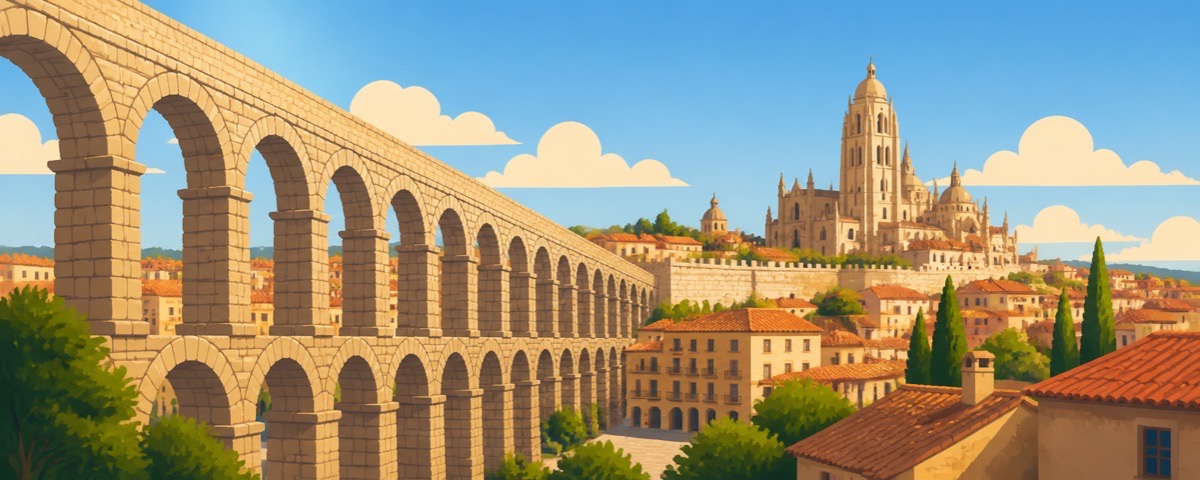
Segovia stands on a rocky spur between two rivers, at the foot of the Sierra de Guadarrama, at an altitude of one thousand metres. It is crossed by a Roman aqueduct with one hundred and sixty-seven arches built without mortar, and the old town stretches for a kilometre from the aqueduct to the Alcázar, which occupies the tip of the spur.
Le savais-tu ?
No mortar between the stones.
The immense Roman aqueduct was built without using mortar or cement, held together only by the weight of the blocks.
Comment on parle à Segovia
«Cochinillo» here refers to suckling pig roasted whole and has a very precise gastronomic meaning. The local Castilian preserves a rural lexicon linked to the sierra and the meseta.
La vie quotidienne à Segovia
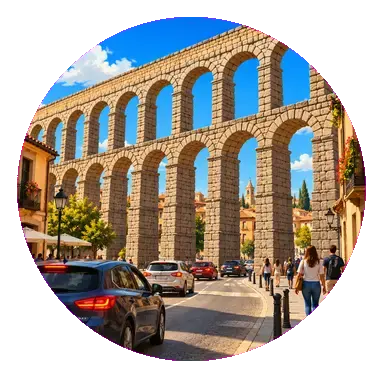
The aqueduct in the middle of traffic
One hundred and sixty-seven arches without a drop of mortar cross the city, and cars and pedestrians pass under them every day: it is a two-thousand-year-old structure used like a junction.
«Pasamos por debajo del acueducto.» — We pass under the aqueduct.
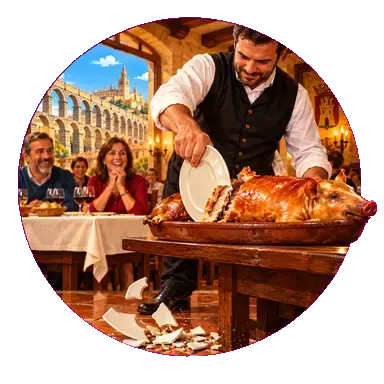
The «cochinillo» cut with a plate
The suckling pig is cut with the edge of a ceramic plate, to show how tender it is, and then the plate is broken on the floor: it is done in the dining room, in front of the customers.
«Lo cortan con un plato.» — They cut it with a plate.
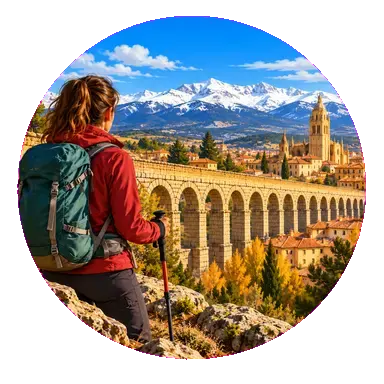
The snowy sierra behind
The Sierra de Guadarrama closes the horizon to the south and stays white until spring: the people of Segovia go there to walk, and the cold that comes from there is the character of winter.
Que manger à Segovia
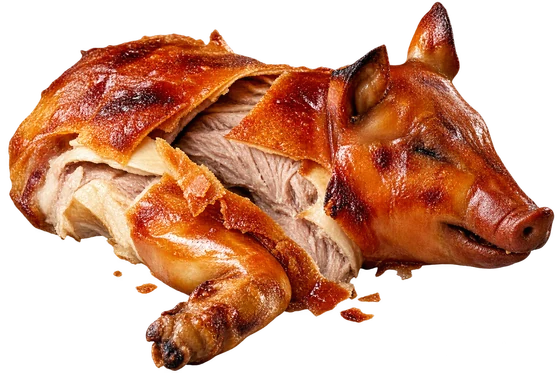
Cochinillo asado
Suckling pig cooked in a wood-fired oven, with skin so crispy that it is cut with a plate.
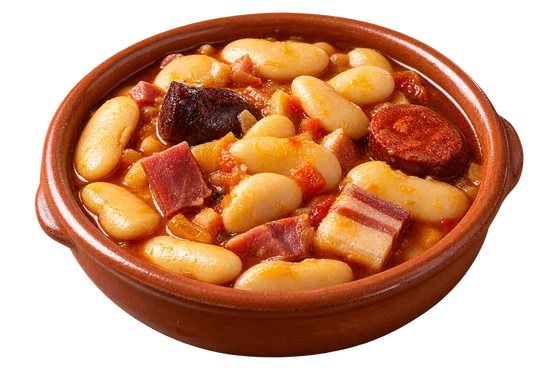
Judiones de La Granja
Large white beans grown nearby, cooked with pig's ear and trotter.
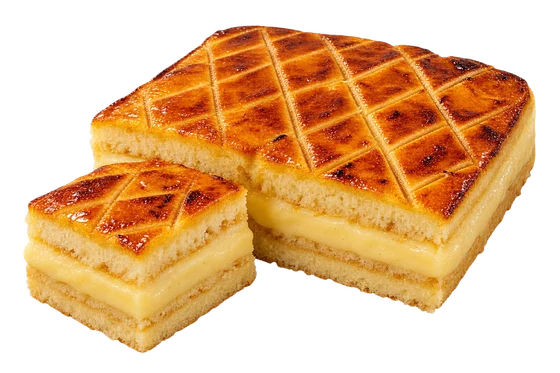
Ponche segoviano
Layered cake of sponge cake and cream, covered with marzipan and burnt sugar in a checkerboard pattern.
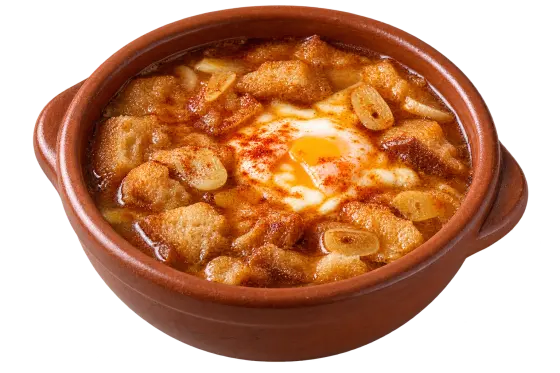
Sopa castellana
Bread, garlic, paprika and broth, with an egg cracked inside at the last moment.
Les fêtes à Segovia
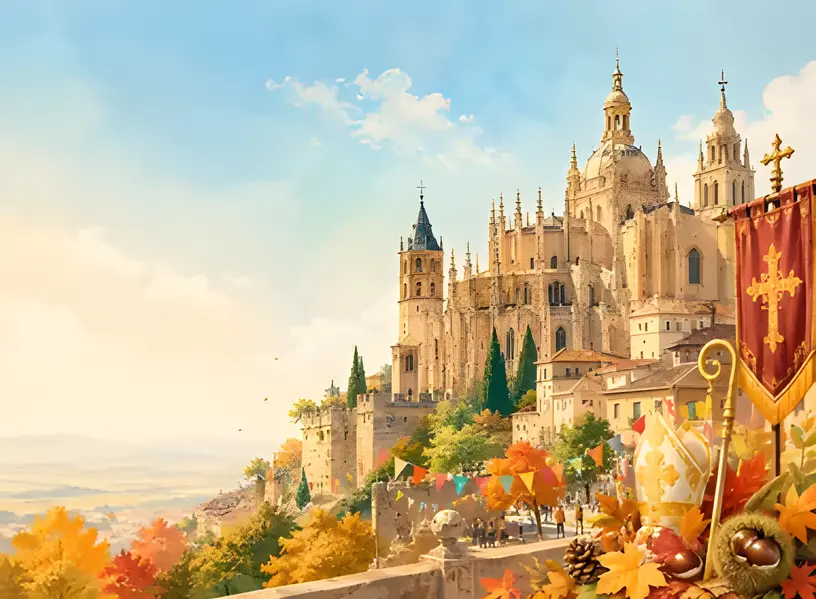
San Frutos
25 October
The patron saint, and the stone page that turns: in the cathedral cloister the saint's «cuchillada» is turned, and whoever sees it turn will have a good year.
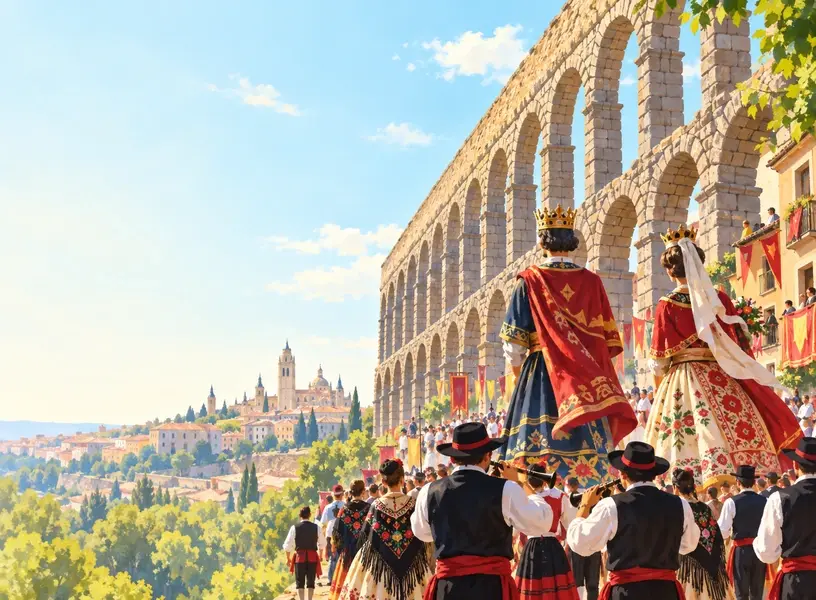
Fiestas de San Juan y San Pedro
from 24 to 29 June
The giants dance to the sound of the dulzaina under the aqueduct, and the city spends a week in the streets.
Que voir à Segovia
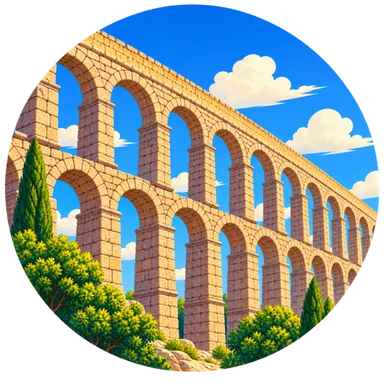
Acueducto de Segovia
One hundred and sixty-seven arches that have stood for two thousand years without a drop of mortar.
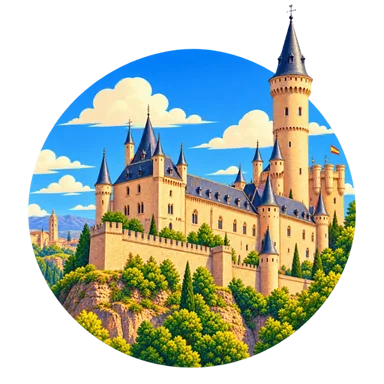
Alcázar de Segovia
The castle on the spur between two rivers, shaped like the bow of a ship.
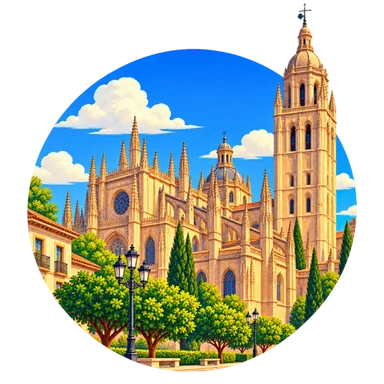
Catedral de Segovia
The last Gothic cathedral built in Spain, when the Renaissance had already finished in Italy.
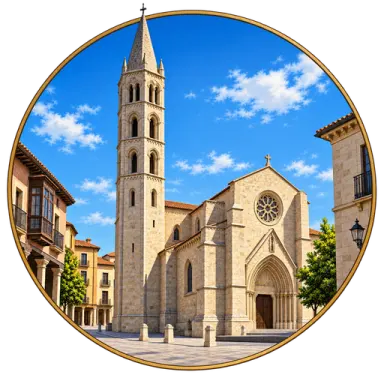
Iglesia de la Vera Cruz
Twelve-sided church, like those of the Templars, with another small church inside.
D'où vient Segovia
Two thousand years without a drop of mortar
1st century
The aqueduct
The Romans build the aqueduct that brings water from the sierra for seventeen kilometres.
11th century
The repopulation
Alfonso VI repopulates it after centuries on the frontier; the Jewish quarter is born.
15th–16th century
Wool
Segovia cloth is sold throughout Europe; in 1474 Isabella is proclaimed queen in the Alcázar.
18th century → today
The decline
The wool crisis depopulates it; in the twentieth century the city lives on what it built before.
Tu veux apprendre l'espagnol en voyageant à travers l'Espagne ?
Dans Aula, chaque leçon est une ville qui s'allume sur la carte — Segovia en fait partie. Deux cents leçons du niveau A1 au C2, gratuites, en commençant par ton niveau.
Commencer par Segovia →