
Castilla y León
Zamora
«Zamora tiene muchas iglesias de estilo románico.»Zamora has many Romanesque-style churches.
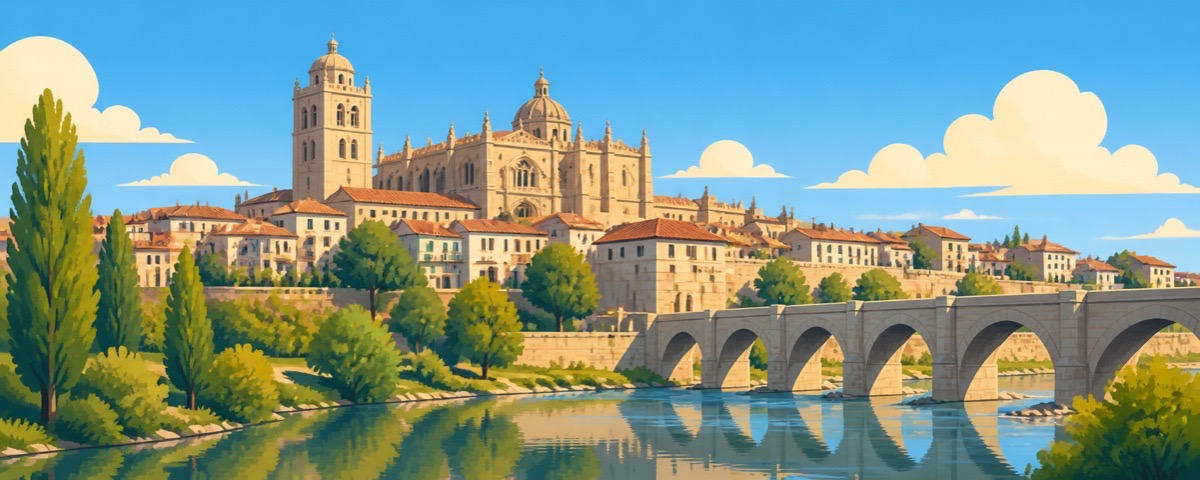
Zamora stands on the right bank of the Duero, in the west of Castile, a short distance from the Portuguese border. It was a frontier stronghold for two centuries, and within the same walled enclosure it preserves more than twenty Romanesque churches: no other European city has so many in such a small space.
Le savais-tu ?
More Romanesque than any city.
Zamora is the city with the highest number of catalogued Romanesque churches per square metre in Europe.
Comment on parle à Zamora
«Sayagués» refers to both the Sayago area and a traditional variety of Leonese spoken in the province. Castilian dominates in the city, but the rural vocabulary of Zamora preserves words from the Astur-Leonese area.
La vie quotidienne à Zamora
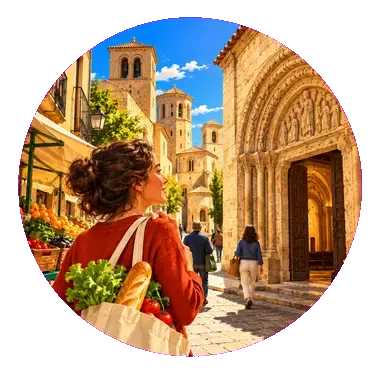
Twenty-four Romanesque churches in the centre
Zamora has the highest concentration of urban Romanesque architecture in Europe: you pass by 12th-century churches while going shopping, and many are open.
«Hay una iglesia en cada calle.» — There is a church on every street.
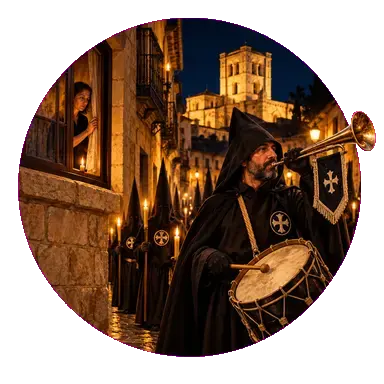
Semana Santa in silence
The processions in Zamora are austere and nocturnal, with the «Merlú» touring the city calling the brotherhood members with a trumpet and drum: you listen from the windows, in the dark.
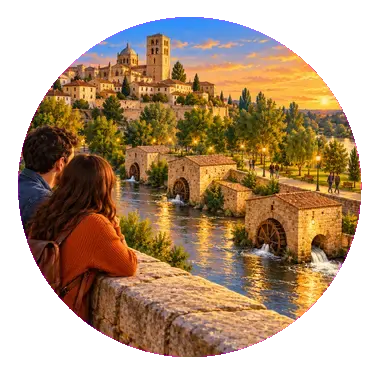
The Duero under the «aceñas»
The medieval water mills still stand in the river below the city, and can be seen from the stone bridge: the banks are a park, and people go there to walk in the evening.
Que manger à Zamora
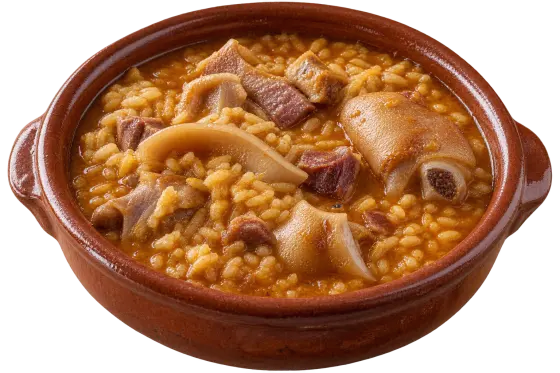
Arroz a la zamorana
Rice cooked with pork parts, ear and trotter, thick and brothy, served in an earthenware pot.
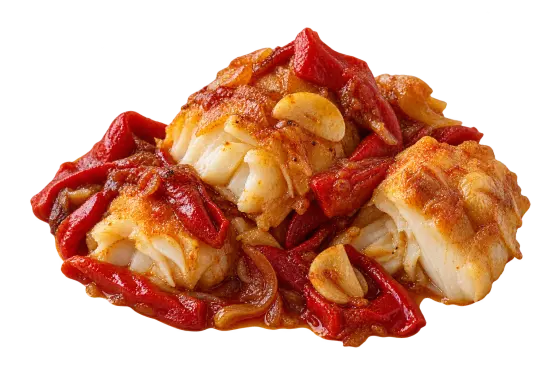
Bacalao a la tranca
Salt cod with garlic, paprika and peppers, cooked slowly until it flakes.
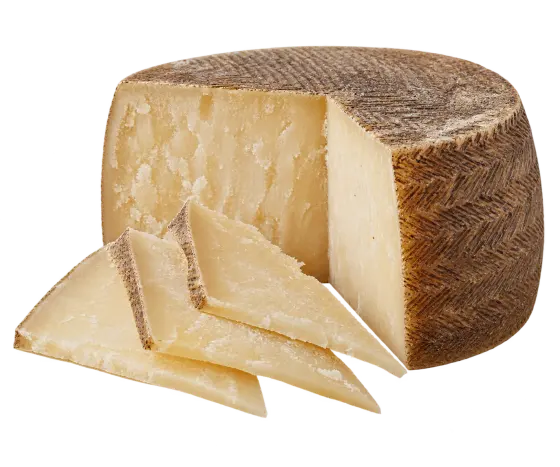
Queso zamorano
Aged sheep's milk cheese from the province, dry and sharp, sliced thinly.
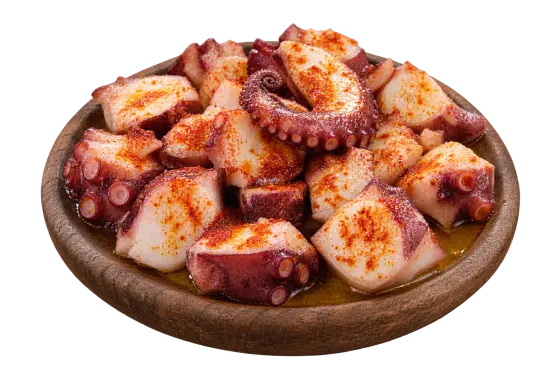
Pulpo a la sanabresa
Boiled octopus seasoned with oil and paprika, like in Galicia but cooked in the lake district.
Les fêtes à Zamora
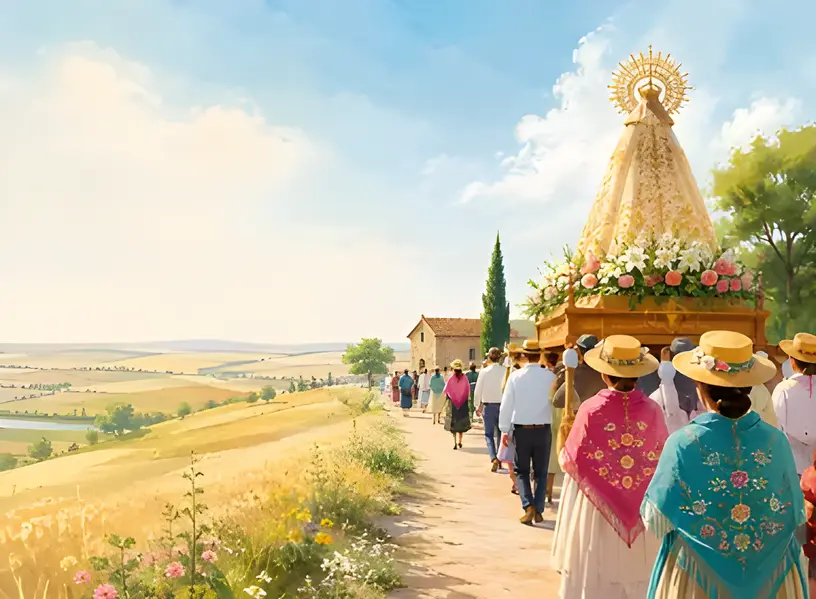
Romería de la Hiniesta
Whit Monday
You walk to the village of Hiniesta, twelve kilometres, and return with the Virgin singing.
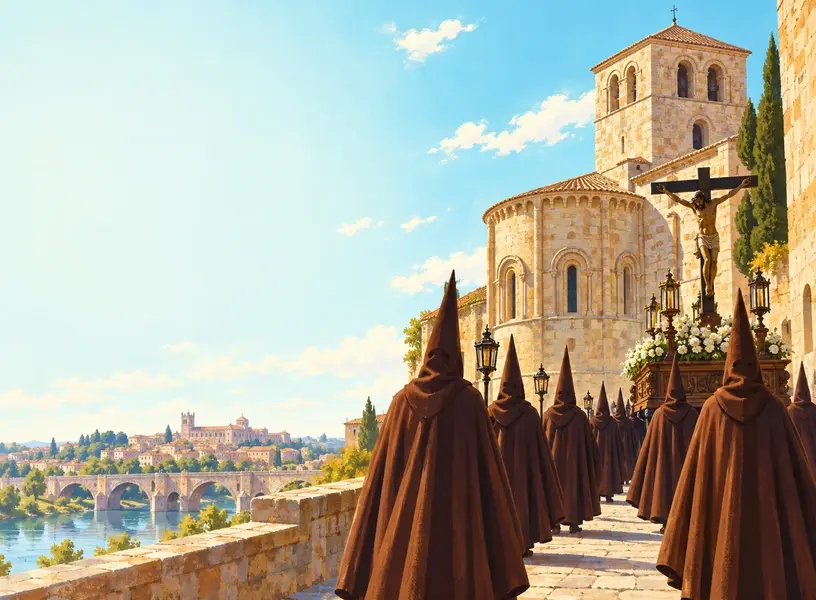
Semana Santa de Zamora
Easter week
The processions take place at night and in silence, with the farmers' «capas pardas», among the Romanesque churches: only footsteps are heard.
Que voir à Zamora
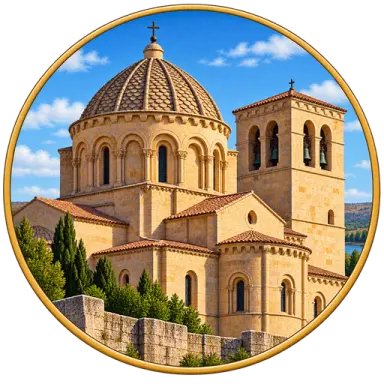
Catedral de Zamora
A Romanesque cathedral with a stone-scaled dome that is unique in Spain.
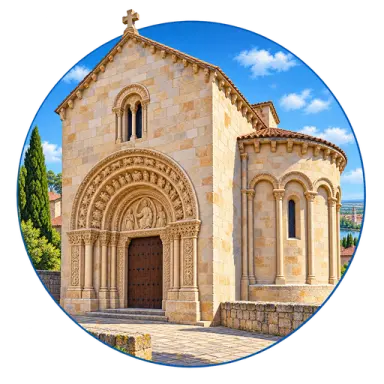
Iglesia de la Magdalena
A small Romanesque church with a south portal covered in carved flowers and vines.
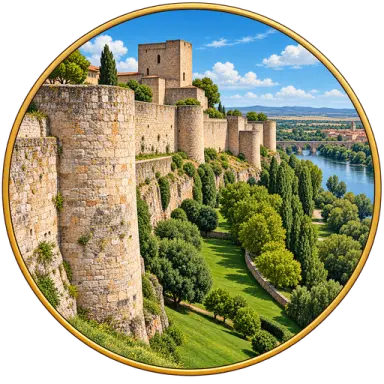
Castillo y murallas
The castle on the spur and the walls below which King Sancho II was killed.
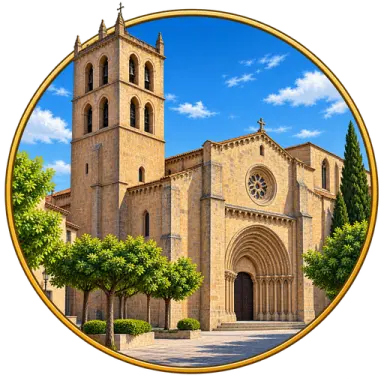
Puente de Piedra
The medieval bridge over the Duero, with sixteen arches, from which you can see the entire city.
D'où vient Zamora
The city of Romanesque architecture
Roman era
Ocellum Durii
Settlement at the ford of the Duero, along the Vía de la Plata.
893
The repopulation
Alfonso III fortifies it: it becomes a border stronghold against the Muslims.
1072
The siege
Sancho II besieges the city defended by his sister Urraca and is killed under the walls.
12th century
The twenty-four churches
More than twenty Romanesque churches are built within the same enclosure.
Tu veux apprendre l'espagnol en voyageant à travers l'Espagne ?
Dans Aula, chaque leçon est une ville qui s'allume sur la carte — Zamora en fait partie. Deux cents leçons du niveau A1 au C2, gratuites, en commençant par ton niveau.
Commencer par Zamora →