
Murcia
Águilas
«Águilas celebra un carnaval muy famoso y declarado de interés turístico.»Águilas celebrates a very famous carnival declared of tourist interest.
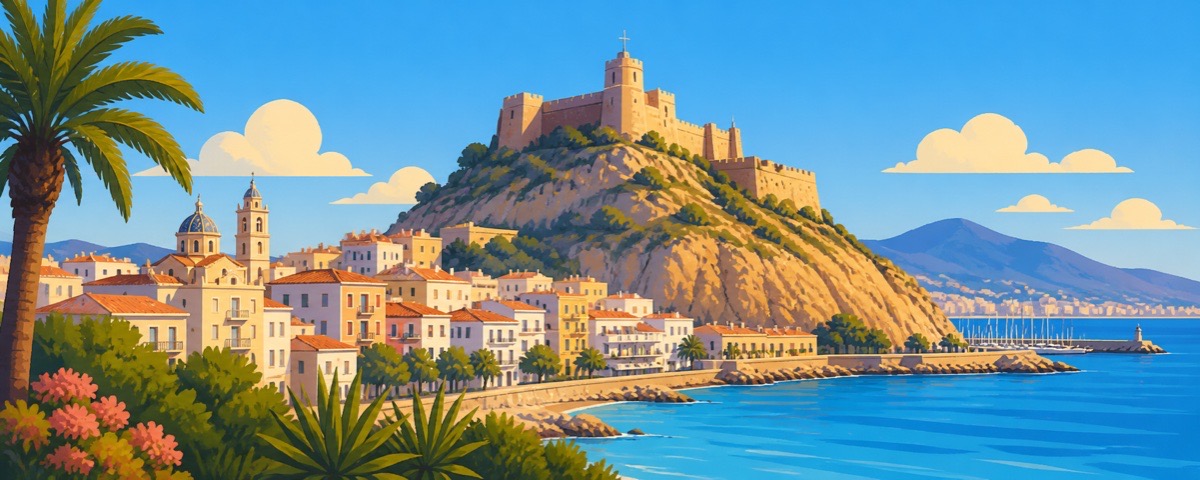
Águilas is the southernmost municipality in the Murcia region, overlooking the Mediterranean in a succession of bays enclosed by arid headlands. The town was redesigned in the 18th century with a regular layout, and fishing, greenhouse farming, and small-scale tourism still coexist around the port.
Le savais-tu ?
A carnival of international interest.
The Carnival of Águilas is so spectacular that it has been officially declared a festival of international tourist interest.
Comment on parle à Águilas
Coastal speech often aspirates the final «s» and retains nautical vocabulary. «Moraga» indicates a collective preparation of sardines or other fish cooked over embers, a word very much linked to the south-eastern coast.
acho
se dit «atcho»
Hey; friend; boy, as a call or interjection. In informal speech it calls the interlocutor or introduces surprise, protest, complicity, and other reactions according to the intonation.
La vie quotidienne à Águilas

The carnival of Águilas
It lasts a week, it is prepared for months and the city empties of normality: the troupes parade at night and people dance in the street until dawn. It is declared of international tourist interest.
«El carnaval dura una semana entera.» — The carnival lasts a whole week.

The «Cuatro Calas» with nothing
South of the town, four coves one after the other have neither houses nor kiosks: you get there by a dirt road and bring your own drinking water. It is the last piece of the Murcian coast left like this.
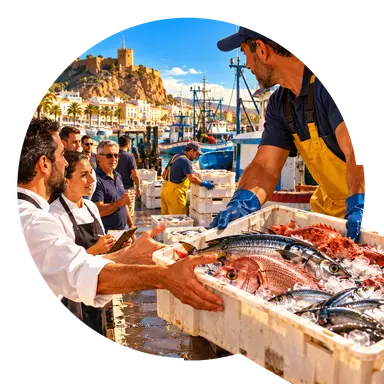
The «lonja» is finished by nine
The boats return early and the fish is sold in the lonja: by nine it is already finished. The restaurants on the pier buy there, and the menu changes with what has arrived.
«A las nueve ya no queda pescado.» — At nine there is no fish left.
Que manger à Águilas
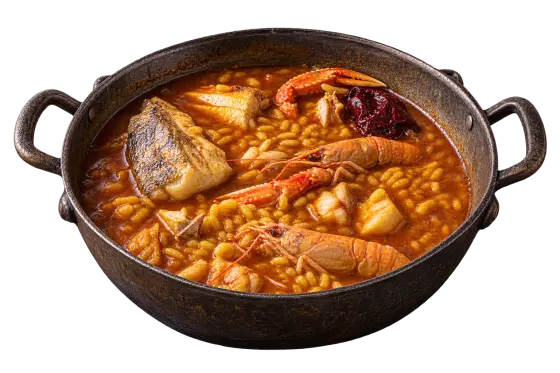
Caldero
Rice cooked in rockfish broth, served with alioli on the side.
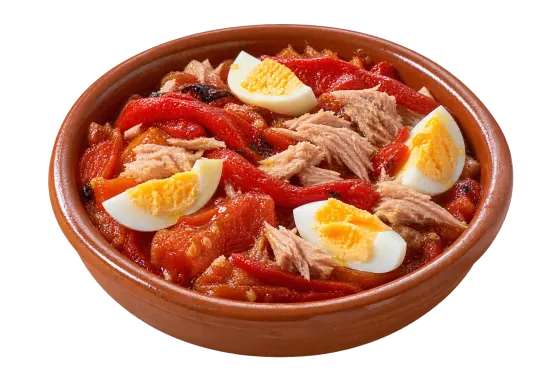
Mojete
Roasted and peeled peppers and tomatoes, dressed with oil, tuna and hard-boiled egg.
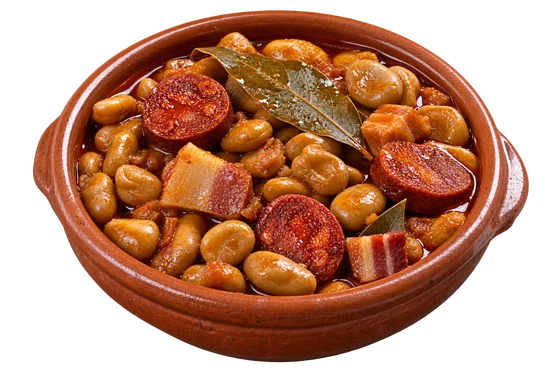
Michirones
Dried broad beans stewed with ham, chorizo and chilli pepper.
Les fêtes à Águilas
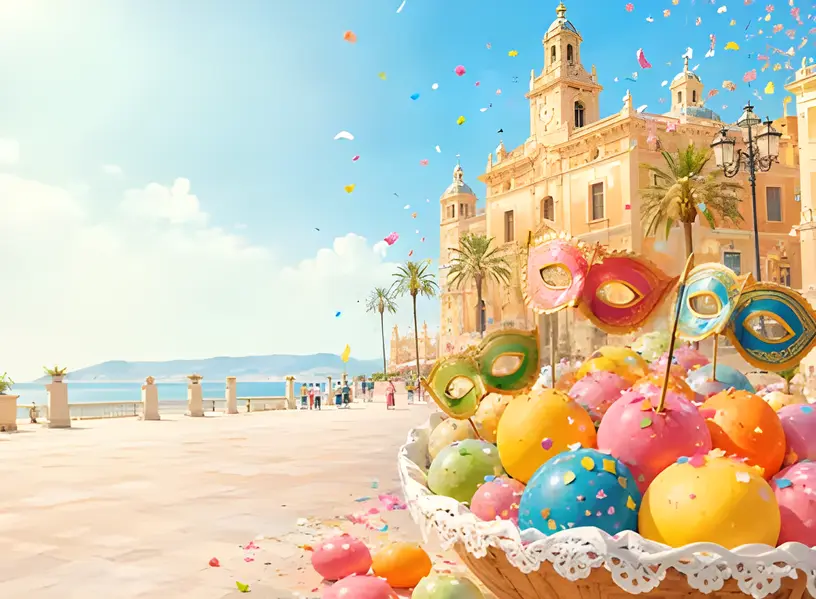
Carnaval de Águilas
between February and March
People throw «cuerva», the spiced wine, and throw «cascarones» full of confetti at each other: it lasts a week and no one sleeps.
Que voir à Águilas

Castillo de San Juan
18th-century fortress on the headland that divides the two bays, built against pirates.
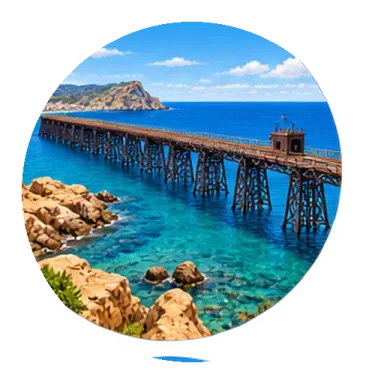
Embarcadero del Hornillo
Mining pier from 1903: the train would come out of a tunnel in the mountain and unload straight into the holds.
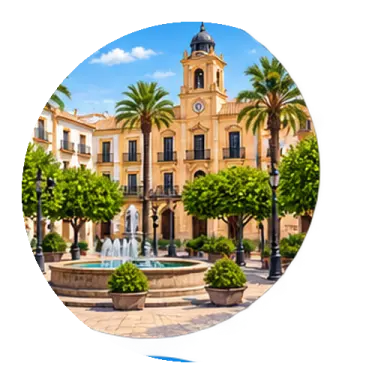
Plaza de España
The town square, covered by enormous ficus trees, with the music kiosk in the centre.

Cuatro Calas
Four coves one after the other south of the town, without a house and without a kiosk.
D'où vient Águilas
Refounded from scratch by Charles III
Roman era
The tanks
Roman facilities for salting fish along the coast, of which the tanks remain.
16th–18th century
The pirates
Barbary incursions empty the coast: the place remains almost uninhabited.
1765
The refoundation
Charles III has it rebuilt in a grid pattern around the port, with the castle to defend it.
19th century
The ore
The mining railway and the Hornillo pier connect it to the mines of the sierra.
Tu veux apprendre l'espagnol en voyageant à travers l'Espagne ?
Dans Aula, chaque leçon est une ville qui s'allume sur la carte — Águilas en fait partie. Deux cents leçons du niveau A1 au C2, gratuites, en commençant par ton niveau.
Commencer par Águilas →