
País Vasco
San Sebastián
«San Sebastián tiene la famosa playa de la Concha.»San Sebastián has the famous La Concha beach.
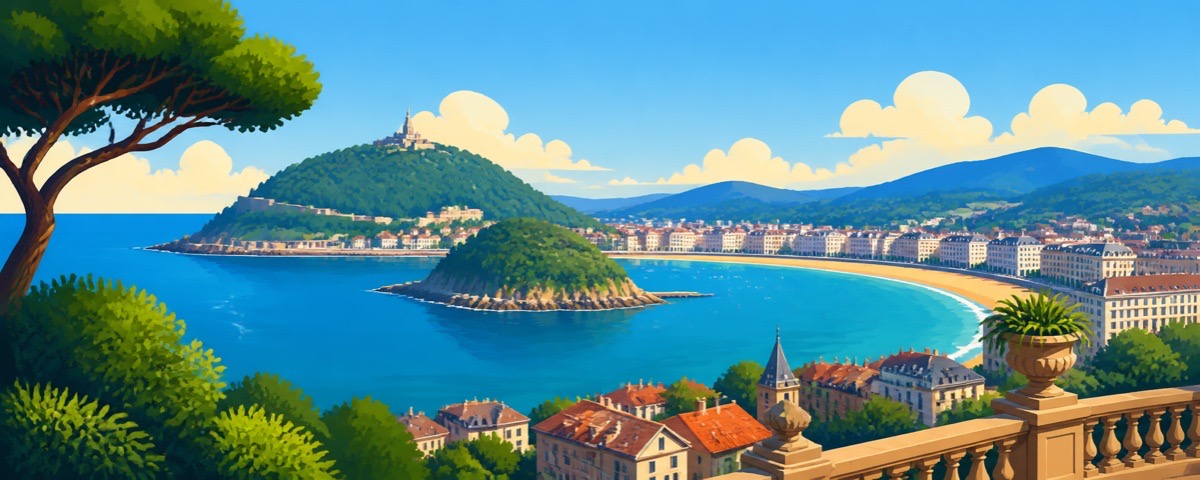
San Sebastián is located in an almost circular bay on the Basque coast, twenty kilometres from the French border. It was almost entirely burnt down in 1813 and rebuilt from scratch; from the mid-19th century, when the court began to spend the summer there, it became the most famous seaside town in Spain.
Le savais-tu ?
Among the most starred in the world.
San Sebastián boasts one of the highest concentrations of Michelin-starred restaurants in the world, in addition to the very famous tradition of pintxos in the bars of the centre.
Comment on parle à San Sebastián
«Donostia» is the Basque name of the city and «donostiarra» the demonym used in both languages. «Pintxo», «zurito» and «txakoli» are everyday gastronomic words.
agur
se dit «agour»
Greeting used to take leave and, depending on the context, also to say hello. Short greeting formula in Basque, very recognizable in the daily life of the Basque Country.
La vie quotidienne à San Sebastián
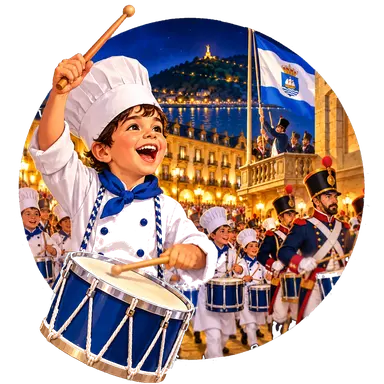
The «Tamborrada» of 20 January
At midnight the flag is raised and for twenty-four hours thousands of people play the drum through the streets, dressed as cooks or Napoleonic soldiers. You don't sleep, and there are even children's drums.
«A medianoche empiezan los tambores.» — At midnight the drums begin.
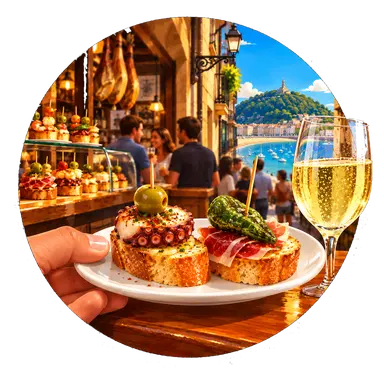
The «pintxos» of the Parte Vieja
You go in, you order one or two pintxos and a txakoli, and you leave: changing bars is the rule, and staying in just one all evening is seen as strange.
«Uno aquí y nos vamos al siguiente.» — One here and we go to the next one.
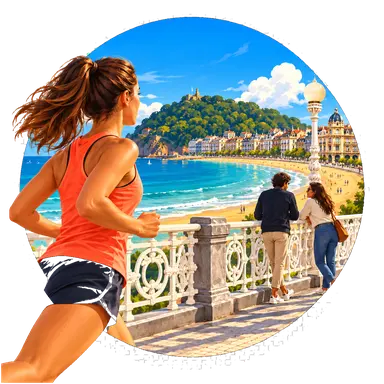
The «Concha» like a square
The shell-shaped bay has a promenade with a white railing that is walked at any time and in any weather: people walk, run and make appointments «at the railing».
«Nos vemos en la barandilla.» — See you at the railing.
Que manger à San Sebastián
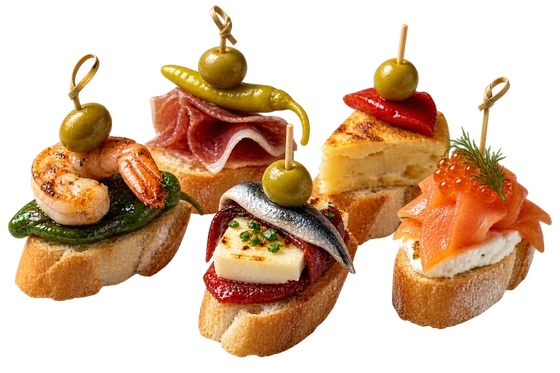
Pintxos
Bites balanced on a slice of bread, held by a toothpick. You count the toothpicks at the end.
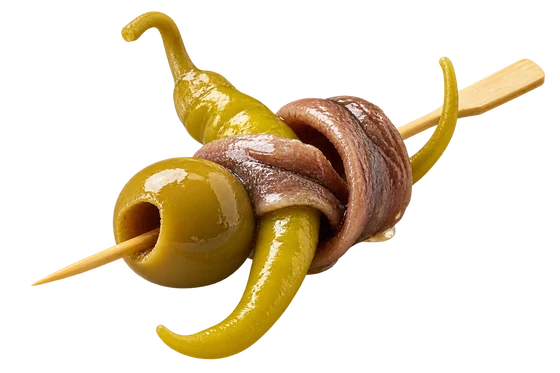
Gilda
Olive, anchovy and green chilli pepper skewered on a toothpick: the first pintxo, and still the most drunk.
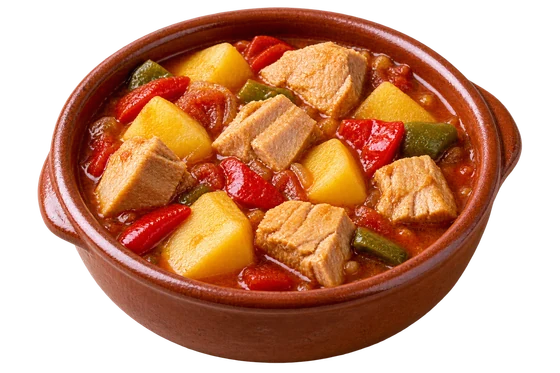
Marmitako
Tuna soup with potatoes, onion and «choricero» pepper, created on fishermen's boats.
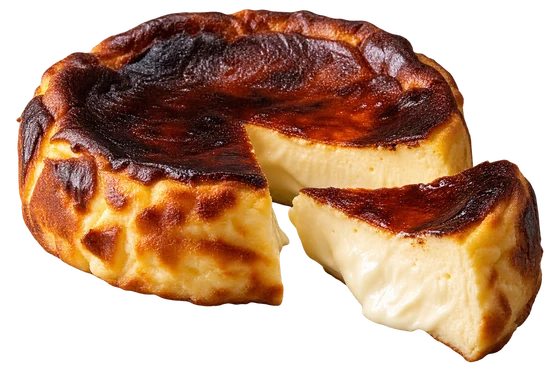
Tarta de queso vasca
Cheesecake baked in a very hot oven until it burns on the surface and remains liquid in the centre.
Les fêtes à San Sebastián
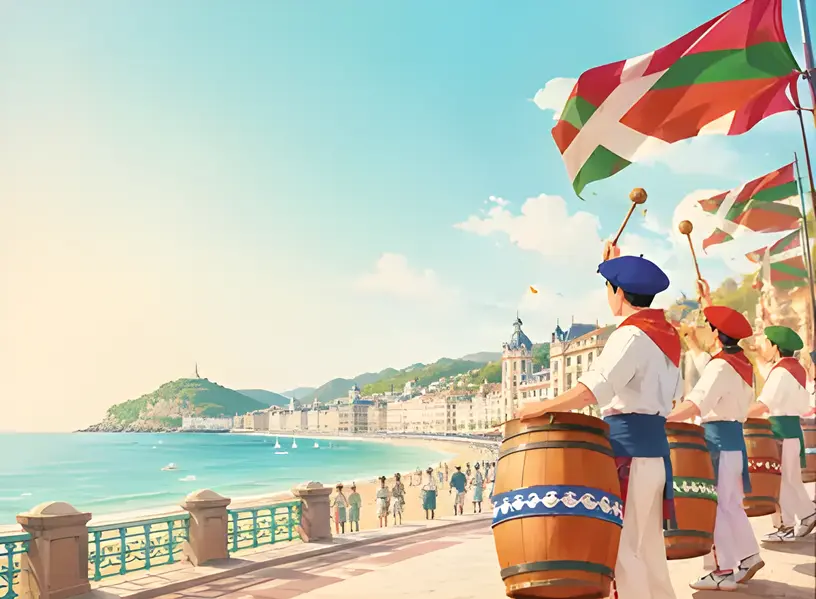
Tamborrada
20 January
Twenty-four hours of drums: it starts at midnight by raising the flag and doesn't stop until the following midnight.
Que voir à San Sebastián
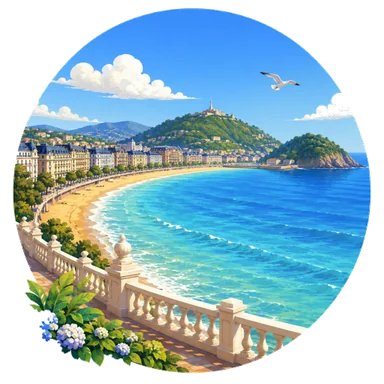
La Concha
The shell-shaped bay, almost closed, with the white railing that has become the symbol of the city.
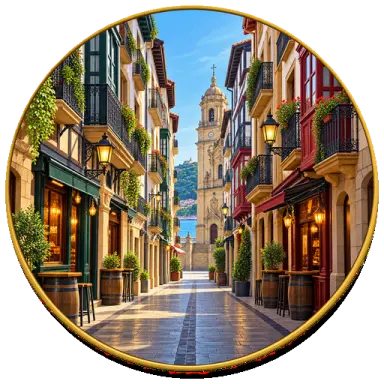
Parte Vieja
The highest concentration of pintxo bars in the world, in a few narrow streets.
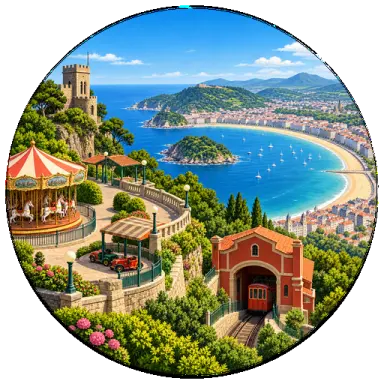
Monte Igueldo
The 1912 amusement park at the top of the mountain, with the original funicular and the view over La Concha.
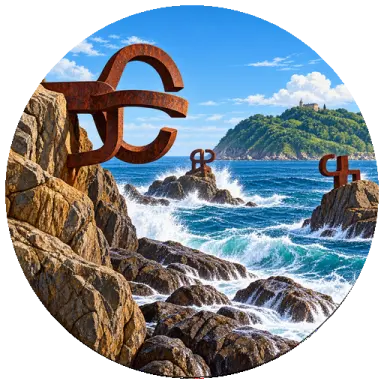
Peine del Viento
The three steel forms by Chillida embedded in the rock, where the bay ends.
D'où vient San Sebastián
Burnt in 1813, reborn as a seaside city
1180
The fuero
Sancho the Wise of Navarre gives it the fuero: it is born as a port of the Navarrese kingdom.
1813
The fire
Anglo-Portuguese troops sack and burn it: few houses are saved.
1845
The queen
Isabella II comes here to bathe in the sea, and behind her arrives the whole court.
1863
The walls down
The walls are torn down and the Ensanche is built: it is the city seen today.
Tu veux apprendre l'espagnol en voyageant à travers l'Espagne ?
Dans Aula, chaque leçon est une ville qui s'allume sur la carte — San Sebastián en fait partie. Deux cents leçons du niveau A1 au C2, gratuites, en commençant par ton niveau.
Commencer par San Sebastián →